· space brief · 7 min read
Tianlong-3 Fails on Debut; SpaceX Wins $178.5M Space Force Contract | KeepTrack Space Brief
China's Tianlong-3 rocket failed during ascent on debut launch Friday. SpaceX secured $178.5M Space Force contract for missile tracking satellite launches beginning 2027.

Top Stories
China’s Tianlong-3 Rocket Fails on First Launch
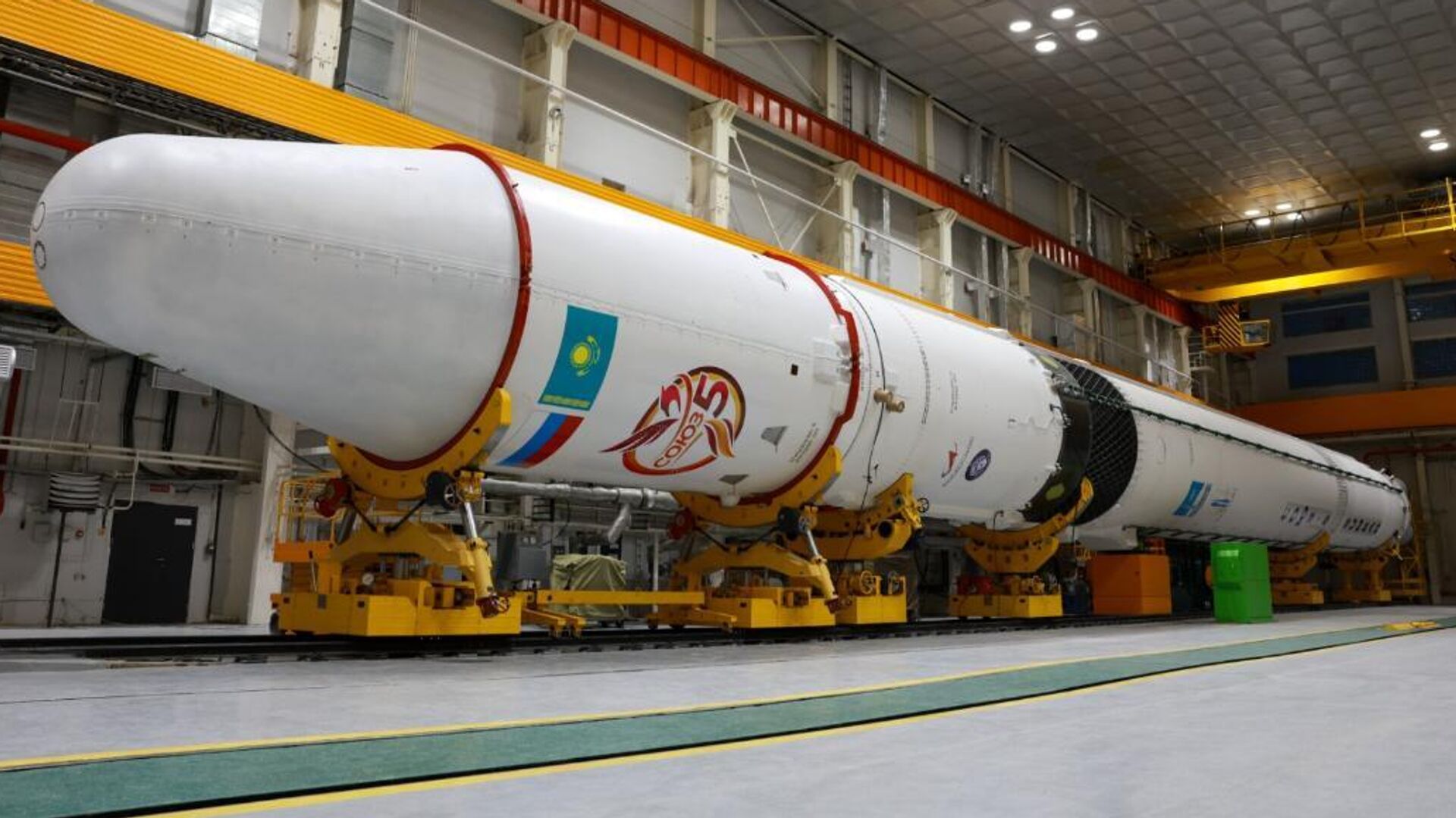
Space Pioneer’s Tianlong-3 rocket failed during its debut launch on Friday, suffering an anomaly in the ascent phase. It’s a significant setback for the Chinese commercial launch sector, which has been expanding rapidly with multiple new entrants competing alongside CASC.
No payload details have been confirmed. The failure adds Tianlong-3 to a short but growing list of Chinese commercial vehicles that have stumbled on their first flight attempts.
Read the full story: SpaceNews
SpaceX Wins $178.5M Space Force Contract for Missile Tracking Satellite Launches
Space Force awarded SpaceX a $178.5 million contract to launch missile tracking satellites, with launches beginning in 2027. The satellites are part of the Space Force’s missile warning and tracking architecture.
The contract aligns with ongoing SDA constellation buildout. Tracking assets in that architecture are directly relevant to KeepTrack users monitoring low-Earth orbit — the SDA’s Tranche layers are progressively filling out the LEO tracking picture.
Read the full story: Teslarati
SDA’s Sandhoo Expected to Lead Space Force Missile Warning and Tracking Portfolio
Gurpartap “GP” Sandhoo, currently SDA acting director, is likely to take over the Space Force’s missile warning and tracking portfolio, according to industry sources. Whether he retains the SDA acting director role under a double-hat arrangement is unconfirmed but considered the near-term default.
The move would consolidate two high-priority Space Force functions under one leader at a time when missile tracking satellite procurement is accelerating. The SDA’s Tranche 2 and beyond satellites are central to that mission.
Read the full story: Breaking Defense
Atlas V Lifts Heaviest Payload Yet for Amazon’s Project Kuiper
ULA’s Atlas V launched its heaviest payload to date from Cape Canaveral’s Pad 41 on Saturday at 1:46 a.m. EDT (0546 UTC), carrying the fifth batch of Amazon Project Kuiper broadband satellites to low Earth orbit.
Project Kuiper is building toward a 3,200-satellite constellation. As these satellites populate LEO, they join an increasingly congested catalog worth monitoring in KeepTrack’s satellite browser.
Read the full story: Spaceflight Now
Trump’s FY2027 Defense Budget Requests $1.5 Trillion, Includes Golden Dome
The White House’s fiscal year 2027 defense budget request totals $1.5 trillion — a record. The request includes funding for the Golden Dome missile defense initiative along with expanded missile procurement across multiple programs.
Space-based missile warning infrastructure is expected to be a beneficiary, consistent with the concurrent SDA leadership changes and the new SpaceX launch contract. The budget still requires congressional action.
Read the full story: Breaking Defense
Pentagon Acquisition Reform Stalled Without Civilian-Style Budget Flexibility, Analyst Argues
Defense analyst Bill Greenwalt argues that Defense Secretary Pete Hegseth’s push for faster, more commercial-style acquisition will fail unless Congress grants the Pentagon the flexible budget authorities already available to civilian agencies. Current DoD budget structures require funds to be tied to specific programs, limiting the kind of rapid pivoting that commercial procurement demands.
The argument has direct implications for space acquisition programs, where cost and schedule overruns have historically been tied to rigid annual budget cycles.
Read the full story: Breaking Defense
Satellite of the Day
Strela 3 (Kosmos-2467)
Strela 3, officially designated Kosmos-2467, is a Russian military communication satellite that has been relaying secure messages for over a decade. Launched on September 8, 2010, from the Plesetsk Cosmodrome aboard a Rokot vehicle, this compact satellite was manufactured by RESH and is operated by KVR (Russian Airspace Command). At just 225 kilograms and 1.6 meters long with a 7-meter antenna span, Strela 3 exemplifies efficient military spacecraft design—proving that effective communication doesn’t require massive platforms.
The satellite operates in a highly inclined polar-like orbit, ideal for providing communication coverage across Russia’s vast territory and military operations at northern latitudes. Strela 3 is part of the larger Strela constellation, a series of small, redundant communication relays designed for resilience and continuous coverage. Its cylindrical body, powered by solar cells and batteries, carries the Strela-3 No. 156L communication payload. For space domain awareness professionals tracking Russian military assets, Strela 3 remains an active and notable component of Russia’s military space infrastructure.
| Detail | Value |
|---|---|
| NORAD ID | 37153 |
| Operator | KVR (Russia) |
| Launch Date | September 8, 2010 |
| Orbit | Highly inclined, 82.45° inclination |
| Purpose | Military Communication |
| Status | Active |
Track this satellite in real-time: Track Strela 3
Upcoming Space Launches
April 5
- SpaceX Falcon 9 Block 5:
- Starlink Group 17-35 from Space Launch Complex 4E, Vandenberg Space Force Base, CA, USA (23:03 UTC) A batch of 25 Starlink V2 Mini Optimized satellites launching to low Earth orbit. Booster B1103 will land on drone ship Of Course I Still Love You in the Pacific Ocean. Watch Live Launch Preview
April 7
-
Northrop Grumman Space Systems Minotaur IV:
- STP-S29A from Space Launch Complex 8, Vandenberg Space Force Base, CA, USA (11:30 UTC) A U.S. Department of Defense Space Test Program mission delivering up to 200 kg of cubesats to low Earth orbit. The primary payload, STPSat-7, is an ESPA-class satellite hosting multiple technology demonstration payloads, including the U.S. Naval Research Laboratory’s LARADO instrument, which uses lasers to detect and characterize lethal non-trackable orbital debris.
-
China Aerospace Science and Technology Corporation Long March 8:
- Unknown Payload from Commercial LC-1, Wenchang Space Launch Site, People’s Republic of China (13:24 UTC) Details to be determined. The Long March 8 is capable of delivering up to 5,000 kg to a 700 km Sun-synchronous orbit and is based on the Long March 7 first stage with a liquid hydrogen upper stage.
April 8
-
SpaceX Falcon 9 Block 5:
- Cygnus CRS-2 NG-24 from Space Launch Complex 40, Cape Canaveral Space Force Station, FL, USA (12:51 UTC) A Northrop Grumman Cygnus cargo spacecraft, named the S.S. Steven R. Nagel in honor of the late NASA astronaut who flew four Space Shuttle missions, will be delivered to the International Space Station under NASA’s Commercial Resupply Services program. Watch Live
-
China Aerospace Science and Technology Corporation Long March 6A:
- Unknown Payload from Launch Complex 9A, Taiyuan Satellite Launch Center, People’s Republic of China (19:30 UTC) Details to be determined. The Long March 6A is China’s first rocket equipped with solid rocket boosters, augmenting a first stage powered by two YF-100 engines.
April 9
- Avio S.p.A Vega-C:
- Solar wind Magnetosphere Ionosphere Link Explorer (SMILE) from Ariane Launch Area 1 (ELV), Guiana Space Centre, French Guiana (06:29 UTC) A joint mission between the European Space Agency and the Chinese Academy of Sciences, SMILE will operate in a highly elliptical Earth orbit for three years, using four science instruments to study how Earth’s magnetosphere and ionosphere respond to the solar wind — improving our understanding of solar and geomagnetic storms and space weather phenomena. Watch Live
April 10
-
SpaceX Falcon 9 Block 5:
- Starlink Group 17-21 from Space Launch Complex 4E, Vandenberg Space Force Base, CA, USA (02:39 UTC) A batch of 25 Starlink V2 Mini Optimized satellites launching to low Earth orbit. Booster B1103 will land on drone ship Of Course I Still Love You in the Pacific Ocean. Watch Live
-
China Rocket Co. Ltd. Smart Dragon 3:
- Unknown Payload from South China Sea (Launch Location 1), Haiyang Oriental Spaceport (11:00 UTC) Details to be determined. Smart Dragon-3 is a commercial solid-fuel orbital rocket developed by a subsidiary of the state-owned China Aerospace Science and Technology Corporation group.
April 12
- SpaceX Falcon 9 Block 5:
- Starlink Group 10-24 from Space Launch Complex 40, Cape Canaveral Space Force Station, FL, USA (06:57 UTC) A batch of 29 Starlink satellites launching to low Earth orbit as part of SpaceX’s broadband mega-constellation. Watch Live
Schedule Changes
- New launches added: Smart Dragon 3 carrying an unknown payload has been added with a To Be Confirmed status, targeted for April 10 at 11:00 UTC from the Haiyang Oriental Spaceport. SpaceX Falcon 9 Block 5 carrying Starlink Group 10-24 has been added with a Go for Launch status, targeted for April 12 at 06:57 UTC from Cape Canaveral Space Force Station.
- Status update: The Atlas V 551 carrying Amazon Leo (LA-05) has been marked Launch Successful and has been removed from the upcoming launches calendar.
- Status update: The Northrop Grumman Space Systems Minotaur IV carrying STP-S29A has been updated from To Be Determined to Go for Launch, confirming its April 7 launch window.
Note: Launch dates and times are subject to change due to technical or weather considerations.

Maurice Stellarski