· space brief · 5 min read
Space Brief 16 Sep 2025
Today's brief highlights the impact of military spending and technology competition on the space economy, new satellite connectivity partnerships, and defense spending pledges in Europe.
📰Top Stories
Escalating Military Budgets and Tech Races Transform Space Economy
The expanding defense budgets and intense competition in direct-to-device technology are pivotal drivers of growth in the global space economy, as explained by Novaspace CEO Pacôme Révillon at the World Space Business Week. This shift is coupled with heightened activity in mergers and acquisitions, averaging over 50 per year in the sector. Such dynamics are reshaping commercial strategies and capabilities in space-related ventures.
Read the full story: SpaceNews
Partnership Boosts Secure Satellite Connectivity for Defense
Madrid-based Satlink has partnered with Rivada Space Networks to provide advanced satellite connectivity for Spain’s defense and enterprise sectors. This collaboration leverages Rivada’s planned LEO constellation, backed by over $17 billion in global commitments, to enhance secure communications, marking a significant milestone in space telecommunications for defense applications.
Read the full story: spacewar.com
Sweden Increases Defense Budget in Response to Regional Tensions
In response to perceived threats from Russia, Sweden has pledged an additional $2.9 billion in defense spending for 2026. The investment will focus on air defense, rocket artillery, and other combat capabilities for the Swedish Army, Air Force, and Navy, reflecting a strategic enhancement of Sweden’s military infrastructure.
Read the full story: Breaking Defense
Denmark Opts for European Air Defense System
Denmark has decided to integrate Europe’s SAMP/T system for its long-range air defense needs, moving away from the Patriot system. This choice aligns with Denmark’s strategy to develop a multi-layered defense network, representing the largest defense investment in the nation’s history.
Read the full story: Breaking Defense
U.S. Army Adopts Venture Capital Model for Tech Innovation
The U.S. Army’s FUZE program is embracing a venture-capital-style approach to invest early in promising military technologies. This initiative focuses on rapid technology upgrades, providing a platform for continued innovation and enhancement of military capabilities. The program director emphasizes the importance of a spiralized development approach to ensure tech readiness and adaptability.
Read the full story: Breaking Defense
🛰️Satellite Spotlight
- Satellite Name: METEOR 1-27
- NORAD ID: 09903
- Launch Date: April 5, 1977
- Mission: Meteorological observations and data collection.
- Orbit: Low Earth Orbit (LEO)
- Operator: GUKOSR/GMS
- Fun Fact: The METEOR satellites have been crucial in providing weather data, including real-time images and atmospheric measurements, helping to improve weather forecasting and climate monitoring.
Track this satellite in real-time on our web app: Track METEOR 1-27
🌌Space Weather
Next 24 Hours
-
Radio Blackouts Probability
- Minor: 30
- Major: 5
- Risk: None
-
Solar Radiation
- Probability: 1
- Risk: None
-
Geomagnetic Storming
- Scale: 1
- Impact: minor
- Activity: Moderate
-
Impact Summary
- No risk of radio blackouts means uninterrupted satellite communication for users.
- No solar radiation storm risks allow ground-based operations and satellite performance to continue smoothly.
- Moderate geomagnetic activity could result in minor effects on satellite operations, but generally, impacts are expected to be limited. Periods of G1 (Minor) geomagnetic storming are anticipated, potentially affecting high-frequency radio communications and satellite positioning.
- Isolated R1-R2 (Minor-Moderate) radio blackouts are possible through 18 Sep, which might intermittently impact communication in specific areas.
Long Term Forecast
- Forecast of Solar and Geomagnetic Activity 15 September - 11 October 2025
- Solar activity is expected to remain low with isolated chances for M-class solar flares throughout the period, presenting minimal risk to satellite operators.
- Proton events are not expected at geosynchronous orbit, reducing concerns for radiation hazards.
- High levels of electron flux at geosynchronous orbit are forecast for 18-21 Sep and 06-11 Oct, which may impact satellite operations and increase drag on Low Earth Orbit (LEO) satellites.
- Geomagnetic field activity is expected to reach G2 (Moderate) levels on 15 Sep, leading to more potential disturbances in satellite operations that could affect navigation systems and data transmission.
- G1 (Minor) storm levels are likely on specific days, suggesting possible impacts on high-frequency radio communications. Quiet to unsettled conditions are anticipated for the remaining period, fostering stable operations for most satellite users.
Upcoming Space Launches
September 17
- SpaceX Falcon 9:
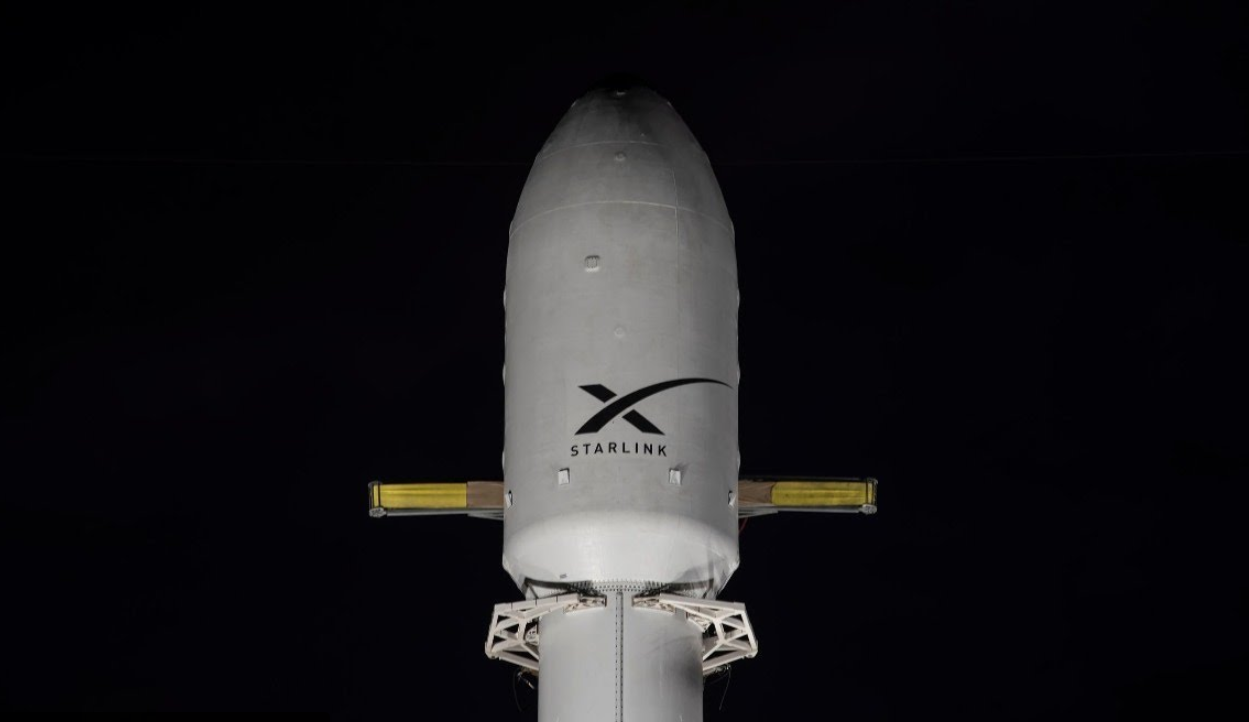
- Starlink Group 17-12 from Vandenberg SFB, CA, USA (15:41 UTC)
A batch of 24 satellites for the Starlink mega-constellation - SpaceX’s project for space-based Internet communication system.
- Starlink Group 17-12 from Vandenberg SFB, CA, USA (15:41 UTC)
September 18
-
SpaceX Falcon 9:
- Starlink Group 10-61 from Cape Canaveral SFS, FL, USA (09:30 UTC)
A batch of 28 satellites for the Starlink mega-constellation - SpaceX’s project for space-based Internet communication system.
- Starlink Group 10-61 from Cape Canaveral SFS, FL, USA (09:30 UTC)
-
Blue Origin New Shepard:
- NS-35 from Corn Ranch, Van Horn, TX, USA (12:30 UTC)
This flight will fly more than 40 scientific and research payloads to space and back, including 24 experiments from NASA’s TechRise Student Challenge.
- NS-35 from Corn Ranch, Van Horn, TX, USA (12:30 UTC)
September 21
-
SpaceX Falcon 9:
- Starlink Group 10-27 from Cape Canaveral SFS, FL, USA (09:20 UTC)
A batch of 28 satellites for the Starlink mega-constellation - SpaceX’s project for space-based Internet communication system.
- Starlink Group 10-27 from Cape Canaveral SFS, FL, USA (09:20 UTC)
-
SpaceX Falcon 9:
- NROL-48 from Vandenberg SFB, CA, USA (17:37 UTC)
Eleventh batch of satellites for a reconnaissance satellite constellation built by SpaceX and Northrop Grumman for the National Reconnaissance Office.
- NROL-48 from Vandenberg SFB, CA, USA (17:37 UTC)
September 22
- Rocket Lab HASTE:
- JENNA from Wallops Flight Facility, Virginia, USA (23:45 UTC)
Sub-orbital launch under Rocket Lab’s Hypersonic Accelerator Suborbital Test Electron (HASTE) program.
- JENNA from Wallops Flight Facility, Virginia, USA (23:45 UTC)
September 23
- SpaceX Falcon 9:
- IMAP & others from Kennedy Space Center, FL, USA (11:32 UTC)
IMAP is a NASA mission to study interactions between solar wind and the local interstellar medium. The launch also includes NOAA’s SWFO-L1 and the GLIDE mission.
- IMAP & others from Kennedy Space Center, FL, USA (11:32 UTC)
September 25
- SpaceX Falcon 9:
- Starlink Group 17-11 from Vandenberg SFB, CA, USA (01:57 UTC)
A batch of 24 satellites for the Starlink mega-constellation - SpaceX’s project for space-based Internet communication system.
- Starlink Group 17-11 from Vandenberg SFB, CA, USA (01:57 UTC)
Note: Launch dates and times are subject to change due to technical or weather considerations.

Maurice Stellarski