· space brief · 5 min read
Space Brief 30 Dec 2025
Today's briefing covers Rocket Lab's plans following a record-breaking year, efforts to recover NASA's MAVEN orbiter, and the potential relocation of space shuttle Discovery.

📰Top Stories
Rocket Lab Sets Sights on Neutron Launch in 2026
Following a historic 2025, Rocket Lab is gearing up for the debut of its Neutron rocket in 2026. This year marked Rocket Lab’s most successful to date, primarily due to the performance of its Electron rocket. As the company prepares for Neutron’s launch, expectations are high for continued innovation and success in the commercial space sector.
Read the full story: NASASpaceFlight.com
NASA Struggles to Recover MAVEN Ahead of Mars Solar Conjunction
NASA’s engineering team is racing against time to re-establish communication with the MAVEN Mars orbiter, which has been silent since December 6. As the Mars solar conjunction nears, the team collaborates with the Deep Space Network, hoping to receive a signal indicating the recovery of communications. This mission underlines the challenges of deep space operations.
Read the full story: Mars Daily
Isaacman Considers Alternatives to Moving Shuttle Discovery to Houston
NASA Administrator Jared Isaacman is exploring different options for relocating a spacecraft to Houston, potentially bypassing the immensely popular space shuttle Discovery. This openness to alternatives aims to respect public interest while meeting strategic operational goals.
Read the full story: SpaceNews
Lunar Highlights: 13 Must-See Moon Events in 2026
Space enthusiasts can look forward to an exciting 2026 filled with significant lunar events, including eclipses, supermoons, and conjunctions. Mark your calendars for these celestial phenomena, which promise to captivate skywatchers and amateur astronomers alike.
Read the full story: Space.com
Army’s New Acquisition Structure and Innovation Plans for 2026
As 2026 approaches, major changes are anticipated within the Army’s acquisition strategy, focusing on new technology implementations like drones and tank prototypes. These advancements are part of broader efforts to enhance defense capabilities and streamline operations.
Read the full story: Breaking Defense
Upcoming National Defense Strategy Overhaul in 2026
Anticipated changes in the National Defense Strategy may lead to significant shifts in troop deployment and the unveiling of new details about the Golden Dome initiative. These strategic pivots aim to address emerging global threats and reinforce the defense posture of the United States.
Read the full story: Breaking Defense
🛰️Satellite Spotlight
- Satellite Name: OPS 2112 (DSP 6)
- NORAD ID: 08916
- Launch Date: June 26, 1976
- Mission: This satellite serves an Early Warning purpose, playing a crucial role in detecting missile launches and providing critical data for national defense strategies.
- Orbit: Geostationary (GEO)
- Operator: SAMSO (Space and Missile Systems Organization)
- Fun Fact: OPS 2112 is part of the Defense Support Program (DSP), which has been integral in enhancing U.S. missile detection capabilities since the 1970s.
Track this satellite in real-time on our web app: Track OPS 2112 (DSP 6)
🌌Space Weather
Next 24 Hours
-
Radio Blackouts Probability
- Minor: 55
- Major: 10
- Risk: None
-
Solar Radiation
- Probability: 10
- Risk: None
-
Geomagnetic Storming
- Scale: 0
- Impact: none
- Activity: Low
-
Impact Summary
- Next 24 hours: No risk of radio blackouts.
- No risk of solar radiation storms.
- Geomagnetic outlook: No G1 (Minor) or greater geomagnetic storms expected through 31 Dec. G1 (Minor) geomagnetic storms likely on 01 Jan due to recurrent solar wind features combined with potential transient features.
- Radiation outlook: Slight chance for a flux above the S1 (Minor) or greater threshold due to the flaring potential of active regions on the visible solar disk.
- Radio blackout outlook: R1/R2 (Minor-Moderate) radio blackouts likely on 30-31 Dec and 01 Jan due to flare potential from the current active regions. Slight chance for isolated R3 (Strong) events during the 3-day period.
Long Term Forecast
- Impact Summary
- Forecast for Solar and Geomagnetic Activity from 29 December - 24 January:
- Solar activity expected to be predominantly low, with C-class flares expected throughout the period.
- M-class flares (R1-R2/Minor-Moderate) have a chance to likely occurrence as active regions evolve and rotate on/off the disk.
- Slight to moderate chance for X-class flares (R3-Strong or greater) during periods of enhanced active region complexity.
- No proton events expected at geosynchronous orbit.
- Greater than 2 MeV electron flux expected to reach high levels on 29-31 Dec, 03-06, and 14-24 Jan, with normal to moderate levels prevailing at other times.
- Geomagnetic activity likely to reach active levels on 01 Jan due to negative polarity CH HSS influences, and again on 02-04 Jan with positive polarity CH HSS influences.
- Active conditions likely on 09-10 and 12-14 Jan due to negative polarity CH HSS influences.
- Periods of G1 (Minor) storming likely on 17-18 Jan, with active conditions expected on 19-20 Jan associated with positive polarity CH HSS influences.
- Forecast for Solar and Geomagnetic Activity from 29 December - 24 January:
🚀Upcoming Space Launches
December 30
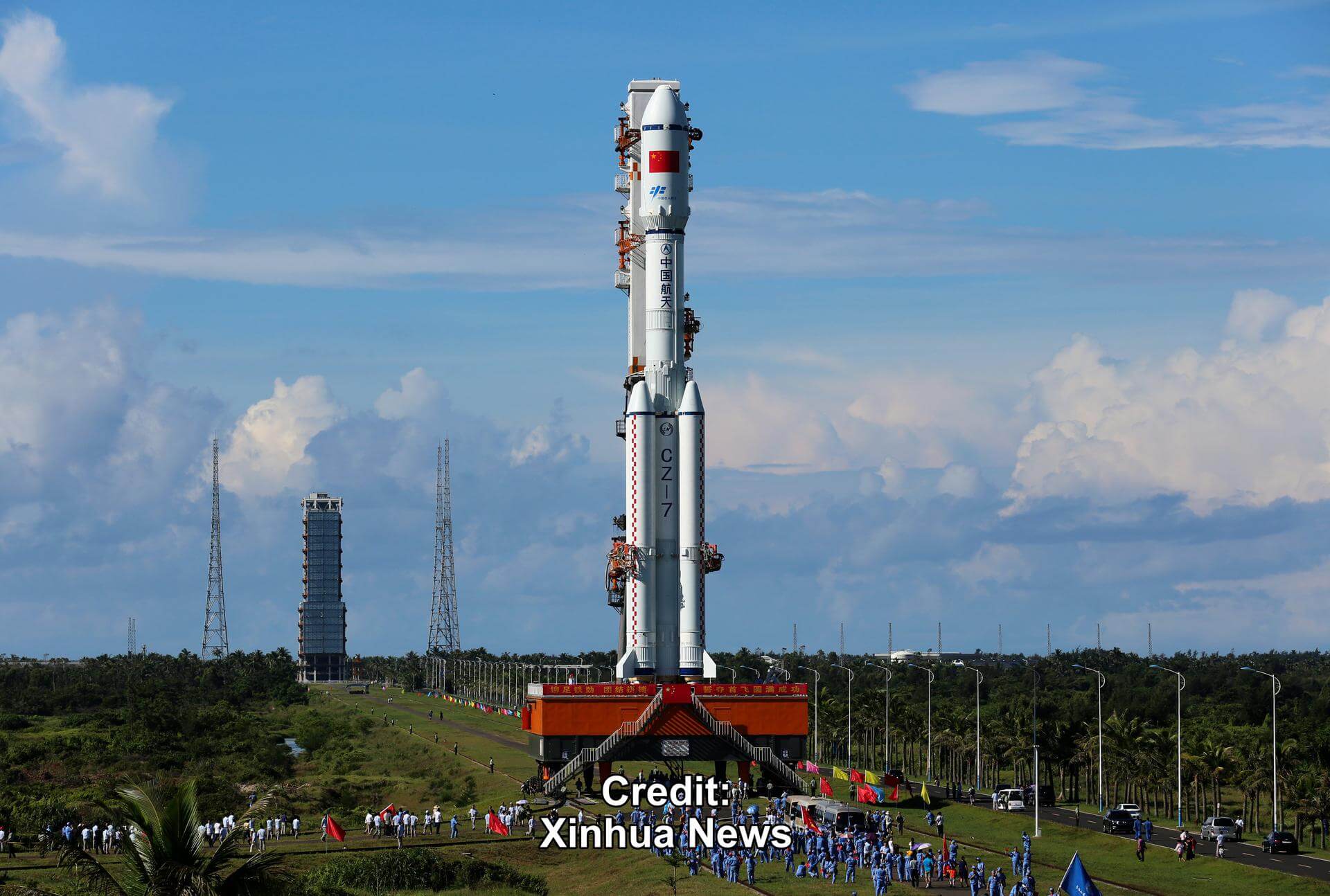
- China Aerospace Science and Technology Corporation Long March 7A:
- Unknown Payload from Wenchang Space Launch Site, People’s Republic of China (22:32 UTC)
January 1
- SpaceX Falcon 9 Block 5:
- CSG-3 from Vandenberg SFB, CA, USA (02:09 UTC) CSG-3 is an Earth observation satellite for the Italian Space Agency, part of a reconnaissance constellation using synthetic aperture radars operating in the X-band.
January 3
- SpaceX Falcon 9 Block 5:
- Starlink Group 6-88 from Cape Canaveral SFS, FL, USA (05:00 UTC) A batch of 29 satellites for the Starlink mega-constellation - SpaceX’s project for space-based Internet communication system.
January 7
- SpaceX Falcon 9 Block 5:
- Starlink Group 6-96 from Cape Canaveral SFS, FL, USA (18:55 UTC) A batch of 29 satellites for the Starlink mega-constellation - SpaceX’s project for space-based Internet communication system.
January 10
- Indian Space Research Organization PSLV-DL:
- EOS-N1 and others from Satish Dhawan Space Centre, India (04:15 UTC) Small Earth observation satellite from NewSpace India Limited (NSIL) for an “Indian strategic user”, in addition to 18 other ride-share payloads.
January 17
- Isar Aerospace Spectrum:
- Flight Two from Andøya Spaceport (00:00 UTC) Second test flight of the Isar Spectrum launch vehicle, carrying several cubesats as part of the European Space Agency’s “Boost!” program.
January 31
-
Galactic Energy Ceres-2:
- Demo Flight from Jiuquan Satellite Launch Center, People’s Republic of China (00:00 UTC) First test launch of Galactic Energy’s Ceres-2 rocket.
-
Rocket Lab Electron:
- Bridging The Swarm (NeonSat-1A) from Rocket Lab Launch Complex 1, Mahia Peninsula, New Zealand (00:00 UTC) The mission will test the constellation capabilities of the South Korean government’s Earth observation micro-satellite constellation NeonSat.
-
SpaceX Falcon 9 Block 5:
- BlueBird Block 2 #2 from Cape Canaveral SFS, FL, USA (00:00 UTC) This launch will deploy AST SpaceMobile’s Block 2 BlueBird satellites, designed to deliver substantial bandwidth capacity and support continuous cellular broadband service coverage.
Note: Launch dates and times are subject to change due to technical or weather considerations.

Maurice Stellarski