· space brief · 5 min read
Space Brief 18 Sep 2025
Today's coverage includes China's recent satellite launch, the Space Force's challenges with current tracking capabilities, and advancements in nuclear propulsion from Ohio State.

📰Top Stories
China Deploys Yaogan 45 Satellite on Long March 7A Rocket
China has successfully launched the Yaogan 45 remote-sensing satellite into orbit using a Long March 7A carrier rocket. This launch, carried out at the Wenchang Space Launch Center, marks another significant advancement for China’s space capabilities, enhancing their remote-sensing abilities for various applications.
Read the full story: SpaceDaily
Space Force Chief Critiques Satellite Tracking Speed
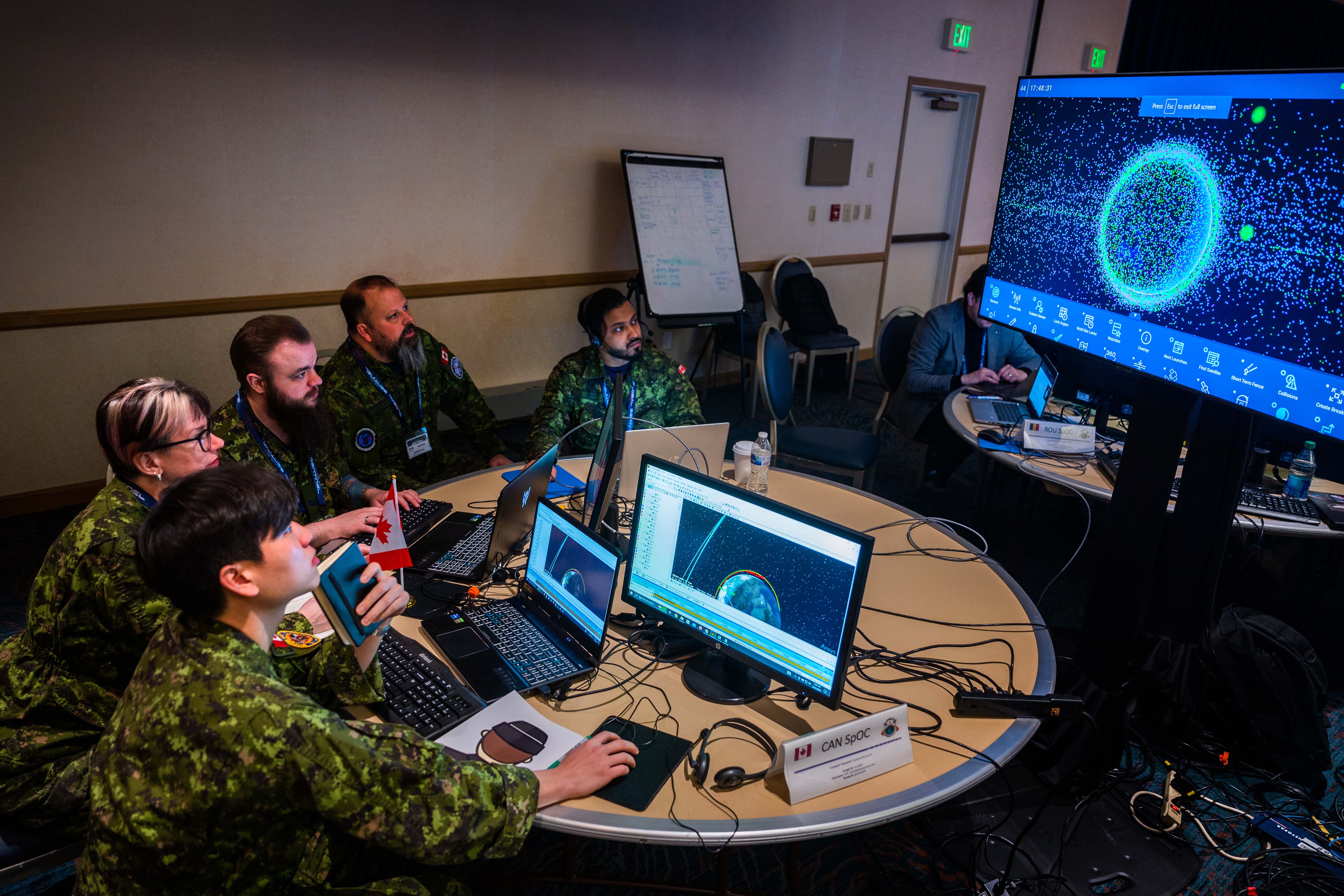
In a speech at the AMOS Conference, the U.S. Space Force Chief emphasized that current satellite tracking capabilities are inadequate for modern threats, calling for deeper partnerships with industry to enhance space domain awareness. This highlights the ongoing need for advancements in tracking technology.
Read the full story: SpaceNews
Ohio State Advances Nuclear Propulsion Research
Researchers at The Ohio State University are pioneering developments in nuclear thermal propulsion, employing liquid uranium to directly heat rocket propellant. This innovation could drastically improve propulsion efficiency, paving the way for more ambitious missions across the solar system.
Read the full story: SpaceDaily
Space Force Reorganization to Incorporate Commercial Data
The Space Force is reorganizing efforts to better integrate commercial space monitoring data into military operations. The strategy involves creating processes to supply commercial data directly to operators and establishing methods for acquiring this data, enhancing operational efficiency.
Read the full story: Breaking Defense
Space Force Speeds Up Acquisition Unit Restructuring
Efforts to reorganize Space Force acquisition units are gathering pace, with a focus on integrating acquisition officers with operational commanders through “System Deltas.” This structural change aims to streamline the acquisition process and improve coordination within the Space Force.
Read the full story: SpaceNews
Army Permits Commanders to Approve 3D-Printed Parts
The Army is enabling commanders to approve 3D-printed parts for repairs, expediting processes and providing soldiers with faster access to necessary components. This initiative emphasizes the potential of additive manufacturing to enhance military logistics and maintenance.
Read the full story: Breaking Defense
🛰️Satellite Spotlight
- Satellite Name: YAOGAN-30 05C
- NORAD ID: 43172
- Launch Date: January 25, 2018
- Mission: This satellite is believed to serve a Signals Intelligence (SIGINT) role, although exact details about its mission remain classified.
- Orbit: Low Earth Orbit (LEO)
- Operator: China (ZLZB)
- Fun Fact: YAOGAN series satellites are primarily used for reconnaissance and military purposes, showcasing China’s advancements in satellite technology and military capabilities.
Track this satellite in real-time on our web app: Track YAOGAN-30 05C
🌌Space Weather
Next 24 Hours
-
Radio Blackouts Probability
- Minor: 35
- Major: 1
- Risk: None
-
Solar Radiation
- Probability: 1
- Risk: None
-
Geomagnetic Storming
- Scale: 0
- Impact: none
- Activity: Low
-
Impact Summary
- Next 24 hours: No risk of radio blackouts.
- No risk of solar radiation storms.
- Geomagnetic outlook: No G1 (Minor) or greater geomagnetic storms are expected.
- No significant transient or recurrent solar wind features are forecast.
- Radiation outlook: No S1 (Minor) or greater solar radiation storms are expected.
- No significant active region activity favorable for radiation storm production is forecast.
- However, isolated R1-R2 (Minor-Moderate) radio blackouts remain possible until September 20.
Long Term Forecast
- Impact Summary
- Forecast of Solar and Geomagnetic Activity from September 15 to October 11, 2025:
- Solar activity is expected to stay at low levels with a chance for isolated M-class flares during this period.
- No proton events are expected at geosynchronous orbit.
- The greater than 2 MeV electron flux at geosynchronous orbit is anticipated to reach high levels on September 18-21 and October 6-11 due to recurrent coronal hole high-speed stream (CH HSS) influences.
- Normal to moderate levels are expected for the remainder of the outlook period.
- Geomagnetic field activity is forecasted to reach G2 (Moderate) storm levels on September 15, with active to G1 (Minor) storm levels likely on September 16, and September 28-29, October 3-7, and October 11—all due to recurring CH HSS influences.
- Quiet to unsettled levels are expected for the remaining days in the outlook period.
🚀Upcoming Space Launches
September 18
- SpaceX Falcon 9:
- Starlink Group 10-61 from Cape Canaveral SFS, FL, USA (09:30 UTC) A batch of 28 satellites for the Starlink mega-constellation - SpaceX’s project for space-based Internet communication system.
- Blue Origin New Shepard:
- NS-35 from Corn Ranch, Van Horn, TX, USA (12:30 UTC) This flight will carry more than 40 scientific and research payloads to space and back, including 24 experiments from NASA’s TechRise Student Challenge and payloads from various universities and organizations.
- SpaceX Falcon 9:
- Starlink Group 17-12 from Vandenberg SFB, CA, USA (15:41 UTC) A batch of 24 satellites for the Starlink mega-constellation - SpaceX’s project for space-based Internet communication system.
September 21
- SpaceX Falcon 9:
- Starlink Group 10-27 from Cape Canaveral SFS, FL, USA (09:20 UTC) A batch of 28 satellites for the Starlink mega-constellation - SpaceX’s project for space-based Internet communication system.
- SpaceX Falcon 9:
- NROL-48 from Vandenberg SFB, CA, USA (17:37 UTC) Eleventh batch of satellites for a reconnaissance satellite constellation built for the National Reconnaissance Office.
September 22
- Rocket Lab HASTE:
- JENNA from Wallops Flight Facility, Virginia, USA (23:45 UTC) Sub-orbital launch under Rocket Lab’s Hypersonic Accelerator Suborbital Test Electron (HASTE) program.
September 23
- SpaceX Falcon 9:
- IMAP & others from Kennedy Space Center, FL, USA (11:32 UTC) This mission includes launching the IMAP mission to study interstellar interactions, along with other payloads including a space weather satellite and observatory missions.
September 25
- SpaceX Falcon 9:
- Starlink Group 17-11 from Vandenberg SFB, CA, USA (01:57 UTC) A batch of 24 satellites for the Starlink mega-constellation - SpaceX’s project for space-based Internet communication system.
- SpaceX Falcon 9:
- Starlink Group 10-15 from Cape Canaveral SFS, FL, USA (08:36 UTC) A batch of 28 satellites for the Starlink mega-constellation - SpaceX’s project for space-based Internet communication system.
- United Launch Alliance Atlas V 551:
- Project Kuiper (KA-03) from Cape Canaveral SFS, FL, USA (12:09 UTC) Project Kuiper is a mega constellation of satellites planned to provide broadband internet access by Amazon’s subsidiary.
Note: Launch dates and times are subject to change due to technical or weather considerations.

Maurice Stellarski