· space brief · 4 min read
Space Brief 27 Sep 2025
Today's brief covers next-generation missile defense strategies, NASA's Dream Chaser contract updates, and technological advances in Air Force cyber defense.

📰Top Stories
’Left of Launch’ Becomes the New Focus in Missile Defense
In response to evolving threats, the U.S. military is shifting its missile defense approach to an earlier stage, aiming to address threats ‘left of launch’. This initiative aims to intercept threats before they are fully operational, improving overall defense capabilities. With advancements in tracking and engagement technologies, military leaders aim to stay ahead in emerging conflicts.
Read the full story: SpaceNews
NASA Modifies Dream Chaser ISS Cargo Contract for Sierra Space
NASA has revised its Dream Chaser cargo resupply contract with Sierra Space, aligning with the company’s pivot towards defense applications. The Dream Chaser vehicle, pivotal in supplying the International Space Station, will undergo adjustments to accommodate these new strategic objectives.
Read the full story: SpaceNews
Air Force Reworks Cyber Defense Campaign
The Air Force is enhancing its defensive cyber capabilities by developing a new campaign plan aimed at synchronizing activities and focusing on protecting critical infrastructure. The integration of advanced defensive tactics is vital as digital threats become increasingly sophisticated.
Read the full story: Breaking Defense
AI in the Air Force: Speed vs. Accuracy
The Air Force is exploring AI’s potential in drafting battle plans, significantly outpacing human capabilities. However, some deficiencies in the AI-generated plans necessitate human oversight. This initiative marks a critical point in integrating AI into military operations while ensuring efficacy and safety.
Read the full story: Breaking Defense
Wilsbach Predicted as Next Air Force Chief of Staff
General Kenneth Wilsbach is anticipated to take on the role of Air Force Chief of Staff, bringing a wealth of experience from his time leading Air Combat Command. His appointment is expected to guide the Air Force through future challenges with a focus on innovation and global engagement.
Read the full story: Breaking Defense
🛰️Satellite Spotlight
- Satellite Name: ONEWEB-0119
- NORAD ID: 47265
- Launch Date: December 18, 2020
- Mission: This satellite is part of the OneWeb constellation, aimed at providing global broadband internet connectivity.
- Orbit: Low Earth Orbit (LEO)
- Operator: OneWeb
- Fun Fact: ONEWEB-0119 is equipped with a Ku-Band payload which is essential for satellite communications, allowing it to transmit and receive signals for internet services.
Track this satellite in real-time on our web app: Track ONEWEB-0119
🌌Space Weather
Next 24 Hours
-
Radio Blackouts Probability
- Minor: 25
- Major: 1
- Risk: None
-
Solar Radiation
- Probability: 1
- Risk: None
-
Geomagnetic Storming
- Scale: 0
- Impact: none
- Activity: Low
-
Impact Summary
- No risk of radio blackouts expected, ensuring stable communication for satellite operators.
- No risk of solar radiation storms means satellite communication remains uninterrupted.
- The geomagnetic outlook indicates no G1 (Minor) or greater geomagnetic storms are anticipated, minimizing drag impacts on Low Earth Orbit (LEO) satellites.
- No significant active regions are projected to contribute to radiation storm production.
Long Term Forecast
- Impact Summary
- Solar activity is expected to remain low with a chance for isolated M-class flares, which could potentially disrupt satellite operations if they occur.
- No proton events are projected at geosynchronous orbit, ensuring continued safety for satellites in that region.
- The greater than 2 MeV electron flux is anticipated to reach high levels on multiple occasions, which may increase the risk of radiation exposure to sensitive satellites.
- Geomagnetic activity is expected to fluctuate, with periods of G1 (Minor) storm levels likely. This could result in occasional disruptions to satellite operations and communication.
- Overall, periods of unsettled to active geomagnetic conditions may introduce non-significant drag effects on LEO satellites during late September and early October.
🚀Upcoming Space Launches
September 27
- China Aerospace Science and Technology Corporation Long March 6A:
- Unknown Payload from Taiyuan Satellite Launch Center, People’s Republic of China (12:31 UTC)
September 28
- SpaceX Falcon 9 Block 5:
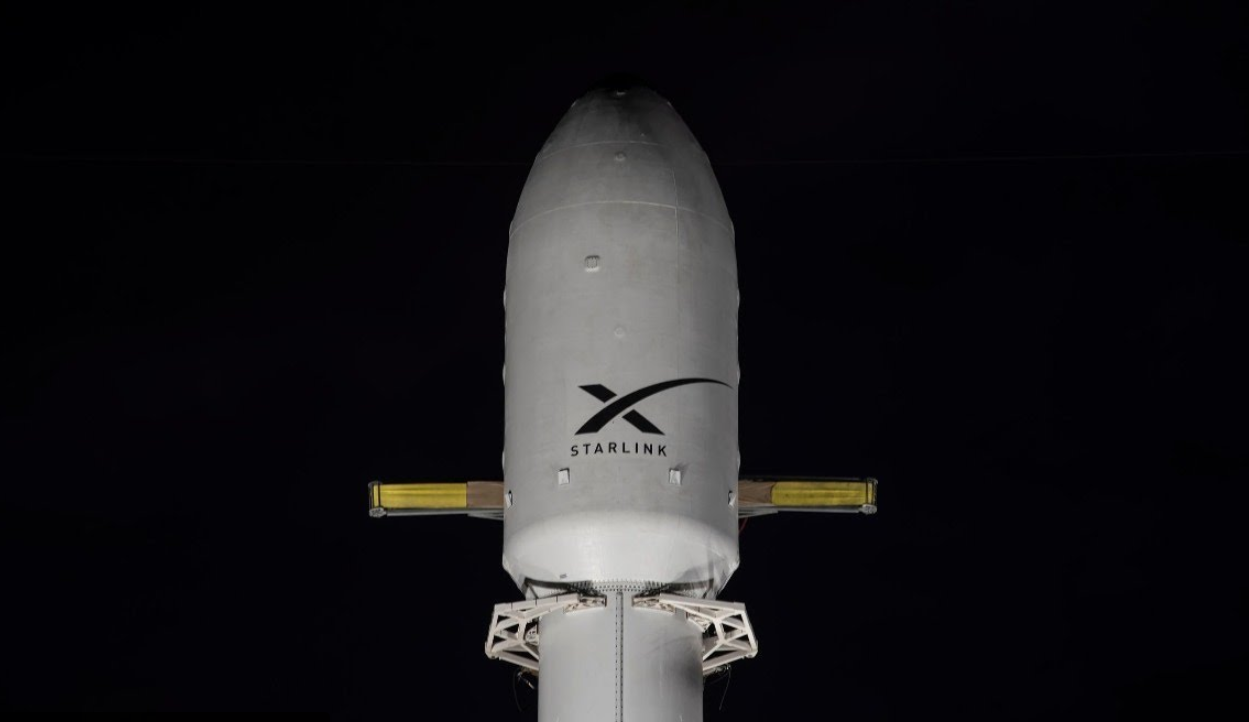
- Starlink Group 11-20 from Vandenberg SFB, CA, USA (23:32 UTC) A batch of 28 satellites for the Starlink mega-constellation - SpaceX’s project for space-based Internet communication system.
September 29
-
China Aerospace Science and Technology Corporation Long March 2D:
- Unknown Payload from Xichang Satellite Launch Center, People’s Republic of China (02:50 UTC)
-
Rocket Lab HASTE:
- JUSTIN from Wallops Flight Facility, Virginia, USA (23:45 UTC) Sub-orbital launch under Rocket Lab’s Hypersonic Accelerator Suborbital Test Electron (HASTE) program. Details TBD.
October 1
- SpaceX Falcon 9 Block 5:
- Starlink Group 10-59 from Cape Canaveral SFS, FL, USA (06:23 UTC) A batch of 28 satellites for the Starlink mega-constellation - SpaceX’s project for space-based Internet communication system.
October 3
- SpaceX Falcon 9 Block 5:
- Starlink Group 11-39 from Vandenberg SFB, CA, USA (13:00 UTC) A batch of 28 satellites for the Starlink mega-constellation - SpaceX’s project for space-based Internet communication system.
October 4
- SpaceX Falcon 9 Block 5:
- Project Kuiper (KF-03) from Cape Canaveral SFS, FL, USA (03:43 UTC) Third of a three launches contract for Amazon’s Kuiper low Earth orbit satellite internet constellation.
October 8
- Blue Origin New Shepard:
- NS-36 from Corn Ranch, Van Horn, TX, USA (12:30 UTC) NS-36 is the 15th crewed flight for the New Shepard program and the 36th in the New Shepard program’s history.
October 13
- SpaceX Starship:
- Flight 11 from SpaceX Starbase, TX, USA (23:15 UTC) 11th test flight of the two-stage Starship launch vehicle.
Note: Launch dates and times are subject to change due to technical or weather considerations.

Maurice Stellarski