· space brief · 5 min read
Space Brief 31 Oct 2025
Today we explore defense-driven shifts in satellite operations amid geopolitical tensions and innovative projects pushing the boundaries of space technology.

📰Top Stories
Pentagon Adopts GOCO Model for Satellites
In response to escalating global tensions, the Pentagon is embracing a “government-owned, commercially-operated” (GOCO) satellite model. This strategy has been influenced by the announcement that Western commercial satellites may be targeted during military conflicts, heightening the demand for secure, reliable satellite operations. This move allows the Pentagon to leverage commercial innovations while maintaining strategic control over its satellite resources.
Read the full story: SpaceNews
Industry Awaits Pentagon’s ‘Golden Dome’ Details
Amidst a prolonged government shutdown, defense contractors are eager for details on the Pentagon’s ‘Golden Dome’ initiative. This project promises revolutionary capabilities in space defense, yet specifics remain undisclosed, leaving companies to speculate and prepare for anticipated requirements. This uncertainty tests the industry’s agility as it gears up to meet future demand.
Read the full story: SpaceNews
Investors Shift Focus Toward Defense-Oriented Space Ventures
The space industry is witnessing a surge in investment focused on firms with potential defense applications. Driven by increasing Department of Defense interest in commercial space technology, companies are channeling resources into developing innovative solutions that align with military needs. This trend underscores the sector’s pivotal role in national security strategies.
Read the full story: SpaceNews
Skydweller Aero Receives Navy Contract for Beyond 5G Network
Skydweller Aero, in collaboration with Nokia Federal Solutions, has secured a contract with the U.S. Navy to build an airborne 5G communication hub. This project aims to create a robust and secure tactical network suitable for contested environments, utilizing Skydweller’s unique solar-powered, autonomous aircraft. Such innovations promise enhanced communication capabilities critical to military operations.
Read the full story: Space Daily
Wilsbach Confirmed as Air Force Chief
The Senate has confirmed Gen. Wilsbach as the Air Force’s new Chief, taking over after Gen. David Allvin’s sudden retirement. As the former head of Air Combat Command, Wilsbach’s leadership is expected to steer the Air Force through evolving aerospace challenges and military technological advancements.
Read the full story: Breaking Defense
Administration Redirects Military Development Funds
In a controversial move, the White House plans to redirect $2.8 billion from shipbuilding and weapons development funds to support troop pay and housing. This reallocation indicates a strategic pivot toward immediate personnel needs, reshaping budgetary priorities within the defense sector.
Read the full story: Breaking Defense
🛰️Satellite Spotlight
- Satellite Name: ALOS-2
- NORAD ID: 39766
- Launch Date: May 24, 2014
- Mission: ALOS-2, also known as Daichi-2, is designed for Earth observation using L-band synthetic aperture radar (SAR) to capture high-resolution imagery for various applications, including disaster monitoring and environmental assessment.
- Orbit: LEO (Low Earth Orbit)
- Operator: JAXA (Japan Aerospace Exploration Agency)
- Fun Fact: ALOS-2 boasts a unique radar sensitivity allowing it to monitor changes in the Earth’s surface, making it essential for responding to natural disasters like earthquakes and floods.
Track this satellite in real-time on our web app: Track ALOS-2
🌌Space Weather
Next 24 Hours
-
Radio Blackouts Probability
- Minor: 5
- Major: 1
- Risk: None
-
Solar Radiation
- Probability: 1
- Risk: None
-
Geomagnetic Storming
- Scale: 1
- Impact: minor
- Activity: Moderate
-
Impact Summary
- No risk of radio blackouts, ensuring uninterrupted satellite communications.
- No risk of solar radiation storms, providing stable conditions for satellite operations.
- Moderate geomagnetic activity could lead to minor disturbances, but overall impacts are expected to be minimal for ground-based operations and satellite tracking.
- Geomagnetic outlook indicates potential for G1-G2 (Minor) storms on 31 Oct due to continuous effects from coronal hole high-speed streams (CH HSS).
Long Term Forecast
- Impact Summary
- Forecast indicates moderate solar activity from 31 Oct to 15 Nov due to the return of Region 4246, which may increase the likelihood of radio disturbances.
- Low activity expected during periods when multiple solar regions depart the disk, minimizing risks to satellite operators and communication systems.
- No proton events anticipated at geosynchronous orbit, ensuring stable conditions for satellite safety.
- Increased electron flux is expected at geosynchronous orbit from 31 Oct to 15 Nov, which could affect satellite systems temporarily.
- Active geomagnetic conditions on several dates, particularly between 27 Oct and 15 Nov, may also lead to oscillations in satellite orbits, impacting low Earth orbit (LEO) satellites and ground-based systems.
🚀Upcoming Space Launches
October 31
- China Aerospace Science and Technology Corporation Long March 2F/G:
- Shenzhou 21 from Jiuquan Satellite Launch Center, People’s Republic of China (15:34 UTC) Tenth crewed flight to the Chinese space station.
- SpaceX Falcon 9 Block 5:
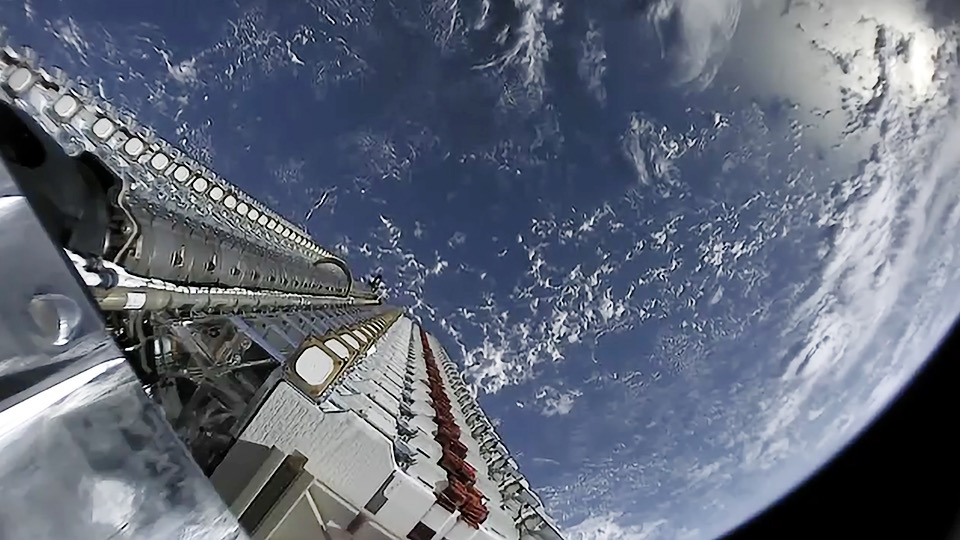
- Starlink Group 11-23 from Vandenberg SFB, CA, USA (19:44 UTC) A batch of 28 satellites for the Starlink mega-constellation - SpaceX’s project for space-based Internet communication system.
November 2
- SpaceX Falcon 9 Block 5:
- Bandwagon 4 (Dedicated Mid-Inclination Rideshare) from Cape Canaveral SFS, FL, USA (05:00 UTC) Dedicated rideshare flight to a mid-inclination orbit with dozens of small microsatellites and nanosatellites for commercial and government customers.
- Indian Space Research Organization LVM-3:
- CMS-03 (GSAT-7R) from Satish Dhawan Space Centre, India (11:56 UTC) Communications Satellite for the Indian Navy, replacing GSAT-7 for secure real-time communication links.
November 3
- China Aerospace Science and Technology Corporation Long March 7A:
- Unknown Payload from Wenchang Space Launch Site, People’s Republic of China (03:39 UTC) Details TBD.
November 4
- Arianespace Ariane 62:
- Sentinel-1D from Guiana Space Centre, French Guiana (21:03 UTC) Sentinel-1D carries an advanced radar technology to provide an all-weather, day-and-night supply of imagery of Earth’s surface as part of the Sentinel-1 constellation.
November 5
- Rocket Lab Electron:
- The Nation God Navigates (iQPS Launch 5) from Rocket Lab Launch Complex 1, Mahia Peninsula, New Zealand (19:45 UTC) Synthetic aperture radar Earth observation satellite for Japanese Earth imaging company iQPS.
- SpaceX Falcon 9 Block 5:
- Starlink Group 6-81 from Cape Canaveral SFS, FL, USA (23:08 UTC) A batch of 29 satellites for the Starlink mega-constellation - SpaceX’s project for space-based Internet communication system.
November 6
- United Launch Alliance Atlas V 551:
- ViaSat-3 F2 (ViaSat-3 EMEA) from Cape Canaveral SFS, FL, USA (03:24 UTC) The ViaSat-3 is a series of three Ka-band satellites expected to provide vastly superior capabilities in terms of service speed and flexibility for satellite platforms.
- SpaceX Falcon 9 Block 5:
- Starlink Group 11-14 from Vandenberg SFB, CA, USA (20:56 UTC) A batch of 28 satellites for the Starlink mega-constellation - SpaceX’s project for space-based Internet communication system.
Note: Launch dates and times are subject to change due to technical or weather considerations.

Maurice Stellarski