· space brief · 5 min read
Space Brief 7 Nov 2025
Today's brief highlights a landmark cooperation between NASA and China to prevent satellite collision, strategic steps in American space leadership through nuclear energy, a U.S. military missile test, and more.

📰Top Stories
Landmark NASA-China Satellite Cooperation
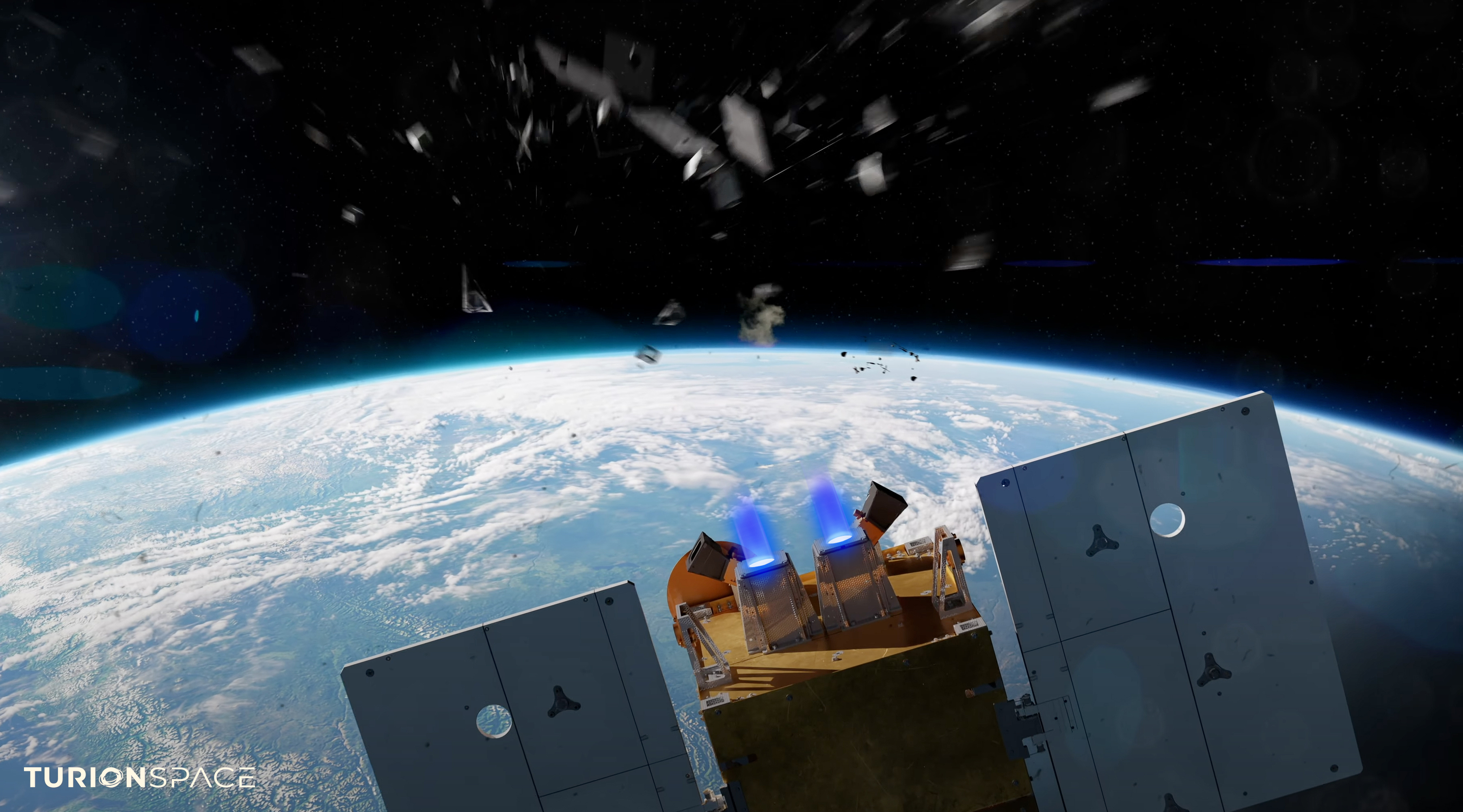
In a groundbreaking development in space diplomacy, China reached out to NASA to collaboratively avoid a potential satellite collision. This proactive engagement marks the first instance of direct communication between the Chinese and American space agencies for satellite maneuvering. Such international cooperation could set a precedent for future space traffic management and highlight the importance of collaboration in reducing risks in orbit.
Read the full story: Space.com
Nuclear Energy: A Pillar of American Space Leadership
Nuclear energy is poised to be a cornerstone of American space strategy, thanks to its ability to provide high-density power crucial for operations both in orbit and on celestial bodies. As the race for sustainable extraterrestrial energy sources intensifies, leveraging nuclear power could maintain and enhance U.S. leadership in space exploration and development.
Read the full story: SpaceNews
U.S. Military Missile Test Demonstrates Readiness
An unarmed intercontinental ballistic missile was successfully launched from Vandenberg Space Force Base by the U.S. military. This routine test ensures the operational readiness of the country’s nuclear arsenal, demonstrating ongoing commitment to national security and strategic preparedness.
Read the full story: Space.com
Enhanced Missile Tracking for Faster Response
With the ever-evolving threat of high-speed missiles, new enhanced warning and tracking payloads are being developed to counter these dangers. These capabilities aim to improve detection and response times, reflecting a continued emphasis on technological advancement in defense systems.
Read the full story: Breaking Defense
AI-Enhanced Target Recognition in Military Prototypes
The U.S. Army is advancing its Command and Control prototypes by integrating AI for better target recognition. This technology aims to improve precision and reaction efficacy on the battlefield, highlighting the increasing role of AI in modern military operations.
Read the full story: Breaking Defense
🛰️Satellite Spotlight
- Satellite Name: GORIZONT 7
- NORAD ID: 14160
- Launch Date: June 30, 1983
- Mission: Communication
- Orbit: LEO (Low Earth Orbit)
- Operator: MSVYAZ
- Fun Fact: GORIZONT 7, part of the Gorizont series, was equipped with multiple C-band transponders, providing crucial communication services during its operational lifetime.
Track this satellite in real-time on our web app: Track GORIZONT 7
🌌Space Weather
Next 24 Hours
-
Radio Blackouts Probability
- Minor: 80
- Major: 35
- Risk: None
-
Solar Radiation
- Probability: 20
- Risk: None
-
Geomagnetic Storming
- Scale: 3
- Impact: strong
- Activity: High
-
Impact Summary
- Next 24 hours: No risk of radio blackouts.
- No risk of solar radiation storms.
- High geomagnetic activity with strong geomagnetic storms expected.
- G1-G3 (Minor-Strong) geomagnetic storms likely on 07 Nov, and G1-G2 (Minor-Moderate) on 08 Nov, due to the effects of a coronal hole combined with multiple CMEs.
- A slight chance exists for S1 (Minor) or greater solar radiation storms over 07-09 Nov due primarily to the eruptive potential of Region 4274.
- R1-R2 (Minor-Moderate) radio blackouts expected, with a chance for R3 (Strong), due primarily to the flare potential of Region 4274.
Long Term Forecast
- Impact Summary
- Forecast of Solar and Geomagnetic Activity from 03 November to 29 November 2025.
- Solar activity expected to be at moderate levels on 03-17 Nov as Regions 4246 and 4248 rotate into the Earthside solar disk.
- At least two other regions expected to emerge until 10 Nov, potentially maintaining moderate activity levels through 29 Nov if they show significant magnetic complexity.
- No proton events anticipated at geosynchronous orbit; however, an isolated proton event is possible between 07-12 Nov if Regions 4246 and 4248 display enhanced magnetic complexity.
- Greater than 2 MeV electron flux at geosynchronous orbit expected to remain high until 13 Nov, with moderate levels from 14-26 Nov, and high levels returning on 27 Nov.
- Geomagnetic field activity expected to be mostly quiet to active, with minor storming (G1) likely on 07-08, 15, and 26-27 Nov due to recurring coronal hole high-speed stream influences.
Upcoming Space Launches
November 8
- SpaceX Falcon 9:
- Starlink Group 10-51 from Kennedy Space Center (08:30 UTC)
A batch of 29 satellites for the Starlink mega-constellation - SpaceX’s project for space-based Internet communication system.
- Starlink Group 10-51 from Kennedy Space Center (08:30 UTC)
- China Aerospace Science and Technology Corporation Long March 11:
- Unknown Payload from Sea Launch (20:51 UTC)
Details TBD.
- Unknown Payload from Sea Launch (20:51 UTC)
November 9
- CAS Space Kinetica 1:
- Unknown Payload from Jiuquan Satellite Launch Center, People’s Republic of China (03:23 UTC)
Details TBD.
- Unknown Payload from Jiuquan Satellite Launch Center, People’s Republic of China (03:23 UTC)
- Blue Origin New Glenn:
- EscaPADE from Cape Canaveral SFS, FL, USA (19:45 UTC)
Maiden flight of Blue Origin’s New Glenn launch vehicle carrying the Escape and Plasma Acceleration and Dynamics Explorers (EscaPADE), a dual-spacecraft mission to study ion and sputtered escape from Mars.
- EscaPADE from Cape Canaveral SFS, FL, USA (19:45 UTC)
November 10
- China Aerospace Science and Technology Corporation Long March 12:
- Unknown Payload from Wenchang Space Launch Site, People’s Republic of China (02:35 UTC)
Details TBD.
- Unknown Payload from Wenchang Space Launch Site, People’s Republic of China (02:35 UTC)
- Galactic Energy Ceres-1:
- Unknown Payload from Jiuquan Satellite Launch Center, People’s Republic of China (03:56 UTC)
Details TBD.
- Unknown Payload from Jiuquan Satellite Launch Center, People’s Republic of China (03:56 UTC)
- SpaceX Falcon 9:
- Transporter 15 (Dedicated SSO Rideshare) from Vandenberg SFB, CA, USA (18:18 UTC)
Dedicated rideshare flight to a sun-synchronous orbit with dozens of small microsatellites and nanosatellites for commercial and government customers.
- Transporter 15 (Dedicated SSO Rideshare) from Vandenberg SFB, CA, USA (18:18 UTC)
- SpaceX Falcon 9:
- Starlink Group 6-87 from Cape Canaveral SFS, FL, USA (22:12 UTC)
A batch of 29 satellites for the Starlink mega-constellation - SpaceX’s project for space-based Internet communication system.
- Starlink Group 6-87 from Cape Canaveral SFS, FL, USA (22:12 UTC)
November 13
- SpaceX Falcon 9:
- Starlink Group 6-89 from Kennedy Space Center (22:35 UTC)
A batch of 29 satellites for the Starlink mega-constellation - SpaceX’s project for space-based Internet communication system.
- Starlink Group 6-89 from Kennedy Space Center (22:35 UTC)
Note: Launch dates and times are subject to change due to technical or weather considerations.

Maurice Stellarski