· space brief · 5 min read
Space Brief 14 Nov 2025
Today's brief covers Firefly's acquisition, military tracking from the moon, France's boost in military space funding, and more.

📰Top Stories
Firefly Broadens Defense Reach with SciTec Acquisition
Firefly is expanding its footprint in the defense sector following its acquisition of SciTec. During their recent earnings call, Firefly executives outlined the company’s strategic alignment with the Pentagon’s “Golden Dome” initiative—an ambitious missile defense strategy. This acquisition is set to bolster Firefly’s capabilities in serving complex defense objectives, underscoring its commitment to national security.
Read the full story: SpaceNews
US Eyes Lunar Tracking for Emerging Threats
As lunar exploration intensifies, the United States military is turning its attention to tracking potential threats originating from the Moon—key in the newest phase of the space race. This initiative is aimed at monitoring spacecraft and other objects transitioning between lunar and Earth orbits, highlighting the growing strategic importance of lunar space in national defense.
Read the full story: Space.com
France Invests Nearly $5B in Military Space
France has announced a substantial increase in its military space funding, pledging almost $5 billion as a part of its new national space strategy. This funding boost aligns with President Emmanuel Macron’s focus on enhancing national defense capabilities, amid shifting global space dynamics.
Read the full story: Breaking Defense
Congress Reopens Government with Defense Allocations
Congress has voted to reopen the government, including additional allocations for defense initiatives such as the Wedgetail and Navy shipbuilding. This decision comes after a period of governmental shutdown that began on October 1, as Congress works to finalize the FY26 budget.
Read the full story: Breaking Defense
Anduril and Hyundai Target US Navy’s Autonomous Vessel Program
In an innovative collaboration, Anduril Industries and Hyundai Heavy Industries are jointly focusing on the US Navy’s unmanned surface vessel program. With the first prototype being built in South Korea, future production is planned for the US, signaling an advancement in maritime defense technologies.
Read the full story: Breaking Defense
US Government Reopens — Implications for Defense Sector
The recent reopening of the US government provides a crucial window for defense sector budgeting and planning, with 11 weeks allocated for Congressional activities before the next fiscal year decision. This period is critical for finalizing defense-related initiatives and projects impacted by the budget impasse.
Read the full story: Breaking Defense
🛰️Satellite Spotlight
- Satellite Name: COSMOS 2352
- NORAD ID: 25363
- Launch Date: June 15, 1998
- Mission: Military communication
- Orbit: Low Earth Orbit (LEO)
- Operator: VKSR
- Fun Fact: COSMOS 2352, part of the Strela-3 series, is designed for secure military communication. Its unique cylindrical shape and supporting antennas make it an important asset for military operations.
Track this satellite in real-time on our web app: Track COSMOS 2352
🌌Space Weather
Next 24 Hours
-
Radio Blackouts Probability
- Minor: 70
- Major: 30
- Risk: None
-
Solar Radiation
- Probability: 40
- Risk: None
-
Geomagnetic Storming
- Scale: 1
- Impact: minor
- Activity: Moderate
-
Impact Summary
- No risk of radio blackouts expected.
- No risk of solar radiation storms.
- Moderate geomagnetic activity with minor geomagnetic storms anticipated.
- G1-2 (Minor-Moderate) geomagnetic storming expected as CME effects continue, particularly early on 14 Nov.
- Further G1 (Minor) geomagnetic storming likely by late on 16 Nov due to recurring negative polarity CH HSS influences.
- Moderate chance for an S1 or greater radiation storm persists through 16 Nov due to AR 4274 nearing the western limb of the solar disk.
- R1-2 (Minor-Moderate) radio blackouts expected, with a low likelihood of an isolated R3 (Strong) event, owing to AR 4274’s flare history.
Long Term Forecast
- Impact Summary
- Solar activity expected to remain moderate (R1-Minor) with the potential for higher levels (R2-R3/Moderate-Strong) from 10-18 Nov, primarily due to flare activity in Regions 4274 and 4276.
- Following this period, activity likely returns to low levels, with some chance of moderate activity.
- No proton events anticipated at geosynchronous orbit.
- Greater than 2 MeV electron flux expected to be high from 10-13 Nov due to CME and coronal hole influences, returning to high levels between 27 Nov and 02 Dec.
- Geomagnetic activity expected to fluctuate from quiet to G2 (Moderate) levels.
- G1 (Minor) conditions predicted on 11 Nov following impacts from a negative polarity coronal hole and a CME.
- G2 conditions likely on 11-12 Nov due to CMEs emitted on 09 Nov.
- Unsettled geomagnetic conditions on 13 Nov as CME influence decreases.
- Recurring coronal hole influences forecasted to cause G1 conditions from 25-27 Nov and 02-04 Dec, with active conditions expected on select dates throughout the month.
🚀Upcoming Space Launches
November 14
- United Launch Alliance Atlas V 551:
- ViaSat-3 F2 (ViaSat-3 EMEA) from Cape Canaveral SFS, FL, USA (03:04 UTC) The ViaSat-3 is a series of Ka-band satellites designed to provide advanced capabilities in terms of service speed and flexibility for satellite platforms.
November 15
- SpaceX Falcon 9 Block 5:
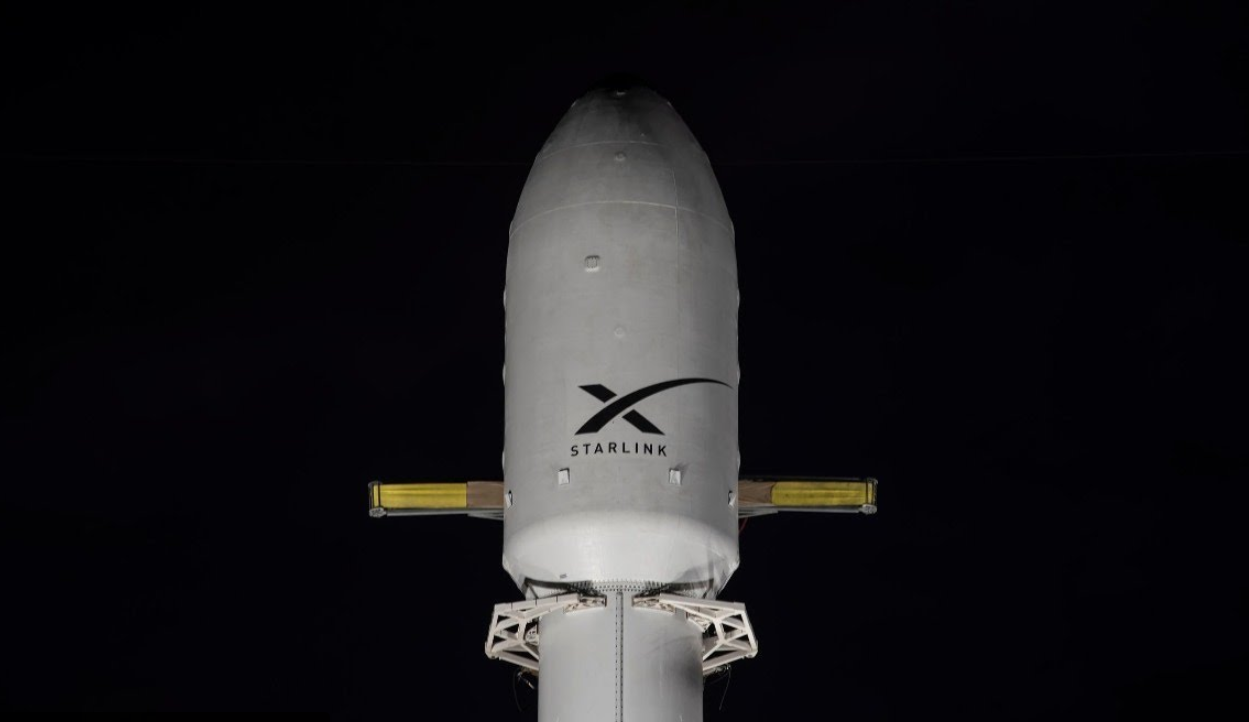
- Starlink Group 6-85 from Cape Canaveral SFS, FL, USA (03:01 UTC) A batch of 29 satellites for the Starlink mega-constellation, part of SpaceX’s project for space-based Internet communication.
- SpaceX Falcon 9 Block 5:
- Starlink Group 6-89 from Kennedy Space Center, FL, USA (03:01 UTC) Another batch of 29 satellites for the Starlink mega-constellation.
November 16
- Rocket Lab HASTE:
- VAN from Wallops Flight Facility, Virginia, USA (12:45 UTC) Sub-orbital launch under Rocket Lab’s Hypersonic Accelerator Suborbital Test Electron (HASTE) program, details TBD.
November 17
- SpaceX Falcon 9 Block 5:
- Sentinel-6B from Vandenberg SFB, CA, USA (05:12 UTC) Continues the long-term global sea surface height data record, a collaboration between NASA, NOAA, ESA, and EUMETSAT.
November 18
- SpaceX Falcon 9 Block 5:
- Starlink Group 6-94 from Cape Canaveral SFS, FL, USA (23:29 UTC) A batch of 29 satellites for the Starlink mega-constellation.
November 19
- China Aerospace Science and Technology Corporation Long March 8A:
- Unknown Payload from Wenchang Space Launch Site, People’s Republic of China (12:51 UTC)
- SpaceX Falcon 9 Block 5:
- Transporter 15 (Dedicated SSO Rideshare) from Vandenberg SFB, CA, USA (18:18 UTC) A dedicated rideshare flight to a sun-synchronous orbit with dozens of small microsatellites and nanosatellites for commercial and government customers.
- SpaceX Falcon 9 Block 5:
- Starlink Group 11-30 from Vandenberg SFB, CA, USA (22:00 UTC) A batch of 28 satellites for the Starlink mega-constellation.
Note: Launch dates and times are subject to change due to technical or weather considerations.

Maurice Stellarski