· space brief · 5 min read
Space Brief 16 Nov 2025
Today's highlights include SpaceX's record-breaking Falcon 9 launches, Dream Chaser's testing success, and Blue Origin's latest New Glenn achievements.

📰Top Stories
SpaceX Achieves Record Doubleheader Falcon 9 Launch
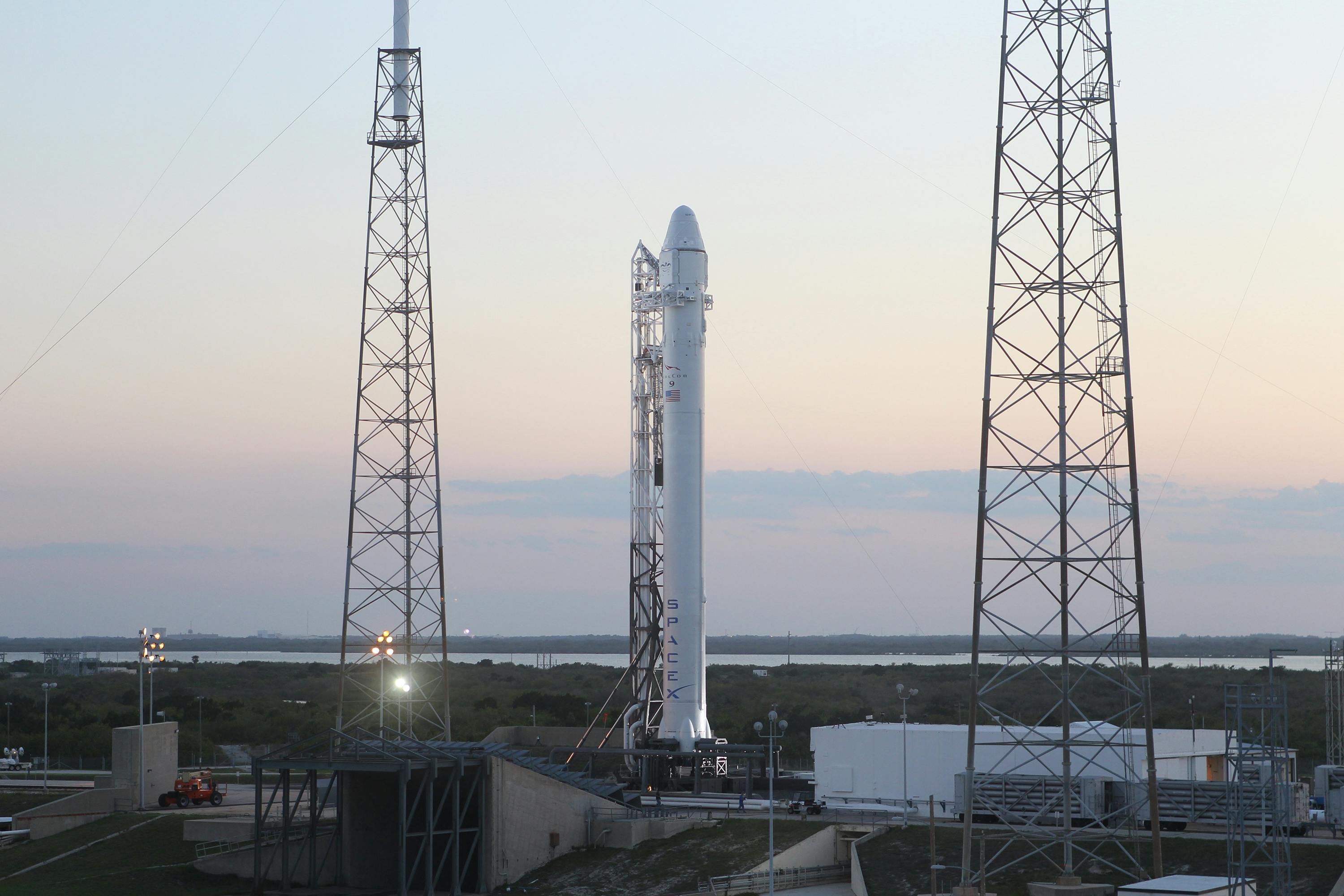
SpaceX has set a new record with the back-to-back launch of two Falcon 9 rockets from Florida’s Space Coast, deploying a total of 58 Starlink satellites. This impressive feat marks the fastest turnaround between two launches, underscoring SpaceX’s operational efficiency. These launches push the total to a groundbreaking 98 missions from Cape Canaveral this year, surpassing last year’s record of 94.
Read the full story: SpaceDaily
Dream Chaser Prepares for First Flight with Successful Tests
Sierra Space’s Dream Chaser has successfully completed key testing milestones, propelling the spaceplane closer to its inaugural flight. The Dream Chaser is designed for diverse missions, including civil and national security tasks, marking a significant advancement in reusable spaceplane technology.
Read the full story: SpaceNews
Blue Origin’s New Glenn Joins an Elite Club
Blue Origin’s New Glenn rocket, following its second successful mission from LC-36 in Florida, has achieved significant recognition within the aerospace industry. The successful recovery of its reusable booster enhances Blue Origin’s reputation as a key player in space launch services, positioning the company for future endeavors.
Read the full story: Space Explored
Private Space Station Race Intensifies
With NASA’s International Space Station slated for retirement in 2030, aerospace firms are vying to establish the first private space station. Vast, an American company, has announced plans for Haven-1, a mini-station designed for comfort and operational longevity, set to launch in May 2026.
Read the full story: SpaceDaily
Blue Origin Eyes Early Next Year for New Glenn Flight
After a successful launch and landing of the New Glenn booster, Blue Origin is gearing up for its next flight scheduled for early next year. This planned mission is part of Blue Origin’s strategy to continuously utilize and rotate their fleet of reusable rockets.
Read the full story: SpaceNews
🛰️Satellite Spotlight
- Satellite Name: HETE-2
- NORAD ID: 26561
- Launch Date: October 9, 2000
- Mission: HETE-2 is dedicated to gamma ray astronomy, studying celestial events like gamma-ray bursts.
- Orbit: Low Earth Orbit (LEO)
- Operator: NASA’s Goddard Space Flight Center (GSFC)
- Fun Fact: Originally planned for a 1.5-year mission, HETE-2 exceeded expectations by operating for 7.5 years, contributing significantly to our understanding of gamma-ray phenomena.
Track this satellite in real-time on our web app: Track HETE-2
🌌Space Weather
Next 24 Hours
-
Radio Blackouts Probability
- Minor: 60
- Major: 20
- Risk: None
-
Solar Radiation
- Probability: 15
- Risk: None
-
Geomagnetic Storming
- Scale: 1
- Impact: minor
- Activity: Moderate
-
Impact Summary
- Next 24 hours show no risk of radio blackouts.
- No risk of solar radiation storms reported.
- Minor geomagnetic storms (G1) are expected, affecting satellite operations and GPS signals slightly, with moderate geomagnetic activity overall.
- Issues with communication systems could be minimal; however, users should remain informed about potential for increased activity on 16-17 Nov due to coronal hole influence and Region 4274’s flare potential.
Long Term Forecast
- Forecast of Solar and Geomagnetic Activity
- From 10 November to 06 December, moderate solar activity (R1-Minor) levels are likely, with chances for high levels (R2-R3/Moderate-Strong) mainly between 10-18 Nov due to Regions 4274 and 4276.
- High levels of electron flux at geosynchronous orbit are expected from 10-13 Nov and again from 27 Nov to 02 Dec, which may impact satellite drag and operations.
- Geomagnetic field activity could vary from quiet to G2 (Moderate) storm levels, with G1 levels likely on 11 Nov and several dates thereafter.
- Users should prepare for possible unsettled conditions and periodic active levels impacting satellite operations between 20 Nov and 06 Dec, while expecting quiet conditions during the remainder of the period.
Upcoming Space Launches
November 17
- SpaceX Falcon 9 Block 5:
- Sentinel-6B from Vandenberg Space Force Base, CA, USA (05:12 UTC) The Sentinel-6 mission continues the long-term global sea surface height data record, a collaboration between NASA, NOAA, ESA, and EUMETSAT.
- Rocket Lab HASTE:
- VAN from Wallops Flight Facility, Virginia, USA (12:45 UTC) Sub-orbital launch under Rocket Lab’s Hypersonic Accelerator Suborbital Test Electron (HASTE) program.
November 18
- SpaceX Falcon 9 Block 5:
- Starlink Group 6-94 from Cape Canaveral Space Force Station, FL, USA (23:29 UTC) A batch of 29 satellites for the Starlink mega-constellation for space-based Internet communication.
November 19
- China Aerospace Science and Technology Corporation Long March 8A:
- Unknown Payload from Wenchang Space Launch Site, People’s Republic of China (12:51 UTC)
- SpaceX Falcon 9 Block 5:
- Transporter 15 (Dedicated SSO Rideshare) from Vandenberg Space Force Base, CA, USA (18:18 UTC) Dedicated rideshare flight with multiple small microsatellites and nanosatellites for commercial and government customers.
November 20
- SpaceX Falcon 9 Block 5:
- Starlink Group 6-78 from Kennedy Space Center, FL, USA (To Be Confirmed) A batch of satellites for the Starlink mega-constellation for space-based Internet communication.
November 22
- Innospace HANBIT-Nano:
- Spaceward from Alcântara Space Center, Federative Republic of Brazil (18:00 UTC) Maiden orbital launch attempt for South Korean startup Innospace with multiple international payloads.
- SpaceX Falcon 9 Block 5:
- Starlink Group 6-79 from Cape Canaveral Space Force Station, FL, USA (To Be Confirmed) A batch of satellites for the Starlink mega-constellation for space-based Internet communication.
November 23
- SpaceX Falcon 9 Block 5:
- Starlink Group 11-30 from Vandenberg Space Force Base, CA, USA (08:00 UTC) A batch of 28 satellites for the Starlink mega-constellation for space-based Internet communication.
November 25
- Khrunichev State Research and Production Space Center Angara 1.2:
- Kosmos (Unknown Payload) from Plesetsk Cosmodrome, Russian Federation (13:00 UTC) Unknown Payload(s) for the Russian military.
Note: Launch dates and times are subject to change due to technical or weather considerations.

Maurice Stellarski