· space brief · 5 min read
Space Brief 18 Nov 2025
Key updates on strategic military shifts, technological advancements, and a critical replacement mission for Chinese astronauts highlight today's space news.

📰Top Stories
Chinese Astronauts to Receive New Spacecraft Following Debris Strike
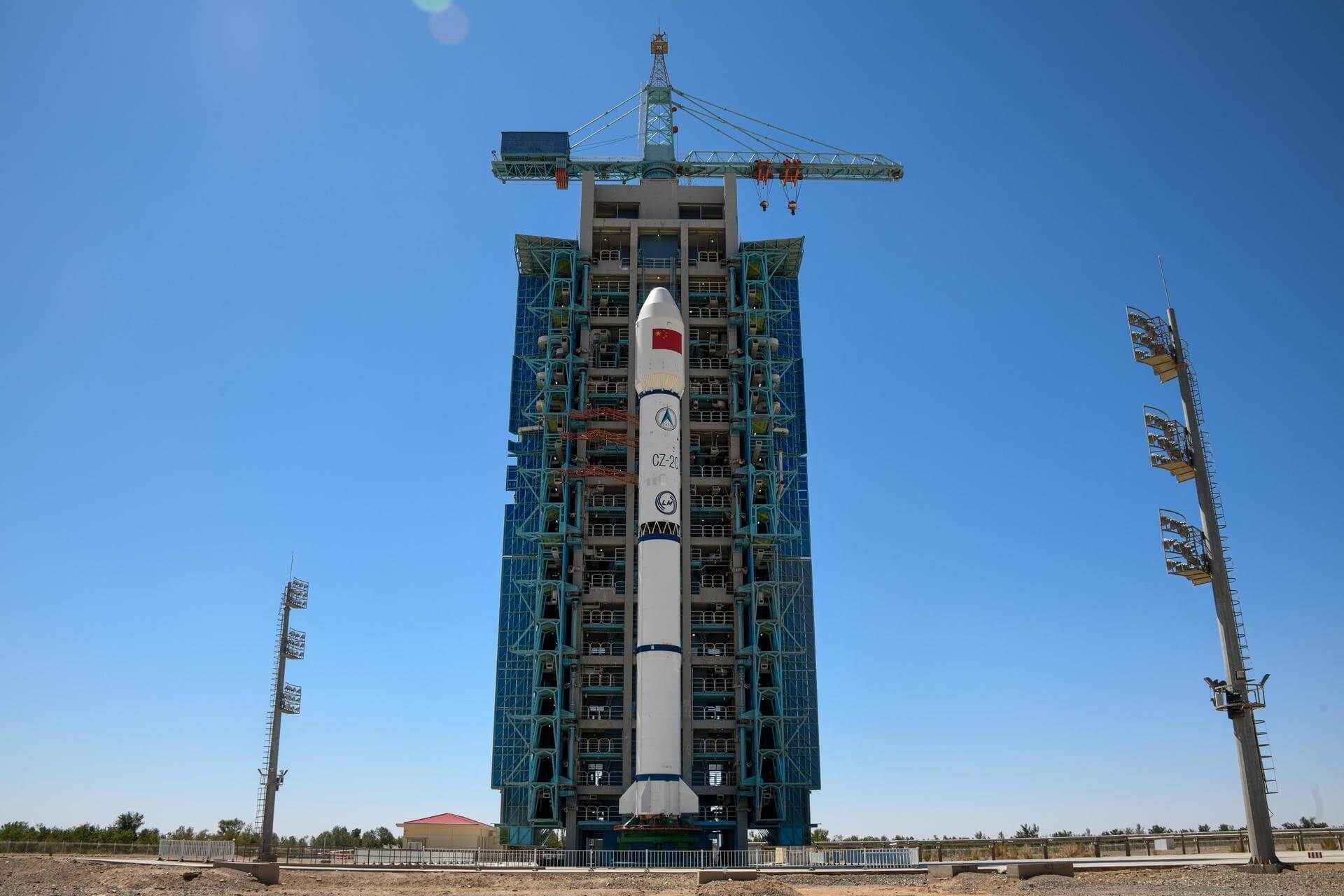
A significant event underscores the perils of space debris as China plans to launch an uncrewed spacecraft to replace one damaged while docked at the Tiangong Space Station. The existing craft was rendered unusable due to a collision with orbital debris, highlighting ongoing challenges in satellite safety and maintenance. This incident serves as a stark reminder of the growing need for robust tracking technologies and debris mitigation strategies.
Read the full story: Space.com
NATO Allies Shift from Boeing for New Surveillance Plans
In a strategic pivot, NATO allies have opted to replace their aging surveillance fleet with non-U.S. alternatives after the U.S. withdrew from the joint Boeing Wedgetail aircraft program. This decision marks a significant shift in military procurement strategy and reflects broader geopolitical dynamics.
Read the full story: Space Daily
Pentagon CTO’s Tech Priorities Include Lasers and Hypersonics
The Pentagon’s Chief Technology Officer has streamlined priorities to six key areas: AI, quantum technologies, biomanufacturing, contested logistics, directed energy, and hypersonics. These focus areas aim to deliver advanced defense capabilities within a three-year timeline, underscoring the accelerating pace of technological innovation in defense.
Read the full story: Breaking Defense
Army Expands Balloons for SWARMS Demo with NORAD Collaboration
The U.S. Army has announced the expansion of its upcoming SWARMS demonstration by doubling the number of balloons and collaborating with NORAD. This initiative aims to explore the phased usage of these systems in various operational contexts, demonstrating their potential in modern military strategies.
Read the full story: Breaking Defense
New Army-Led Task Force Develops Digital Marketplace for Counter-Drone Tech
The Joint Interagency Task Force 401 has plans to create a digital marketplace to support counter-UAS technologies. With a wide array of tools catering to different regional threats, this marketplace aims to streamline and facilitate the deployment of counter-drone capabilities across military operations.
Read the full story: Breaking Defense
Golden Dome: A New Strategic Defense Framework
The Golden Dome concept could radically alter global military dynamics by providing a defense system capable of intercepting and neutralizing threats posed by nuclear weapons, potentially making the doctrine of mutually assured destruction obsolete. This strategic framework could redefine future military engagements and defense postures.
Read the full story: Space News
🛰️Satellite Spotlight
- Satellite Name: STELLA
- NORAD ID: 22824
- Launch Date: September 26, 1993
- Mission: STELLA is primarily focused on geodesy, which involves measuring and understanding Earth’s geometric shape, orientation in space, and gravitational field.
- Orbit: Low Earth Orbit (LEO)
- Operator: French National Centre for Space Studies (CNES)
- Fun Fact: STELLA features 60 retroreflectors, which are used for laser ranging experiments to help with precise measurements of the Earth.
Track this satellite in real-time on our web app: Track STELLA
🌌Space Weather
Next 24 Hours
-
Radio Blackouts Probability
- Minor: 15
- Major: 1
- Risk: None
-
Solar Radiation
- Probability: 1
- Risk: None
-
Geomagnetic Storming
- Scale: 0
- Impact: none
- Activity: Low
-
Impact Summary
- Next 24 hours: No risk of radio blackouts.
- No risk of solar radiation storms.
- Geomagnetic outlook: No G1 (Minor) or greater geomagnetic storms expected; no significant transient or recurrent solar wind features are forecast.
- Radiation outlook: No S1 (Minor) or greater solar radiation storms anticipated; no significant active region activity for radiation storm production is predicted.
- Slight chance for R1-2 (Minor-Moderate) radio blackouts due to isolated M-class flare activity from AR 4284 until November 20.
Long Term Forecast
- Impact Summary
- Solar activity expected to reach R1 (Minor) levels from November 12-27 and December 13, with increases to R1-R3 (Minor-Strong) projections between November 28-30 and December 1-12, mainly due to flare potential from old Region 4274.
- No proton events are expected at geosynchronous orbit.
- Greater than 2 MeV electron flux at geosynchronous orbit anticipated to be high on November 18-19, 22-23, 27-30 and December 1-2, 7-12 due to coronal hole influence.
- Geomagnetic activity forecasted to range from quiet to G2 (Moderate), with G1 (Minor) conditions likely on November 17 and G2 (Moderate) levels anticipated on November 26, December 3, and December 13 due to CH HSS influence.
- Unsettled to active conditions expected on several dates in late November and early December due to CH HSS influence, with mostly quiet levels on specific dates.
🚀Upcoming Space Launches
November 18
- Rocket Lab Electron:
- HASTE | VAN from Wallops Flight Facility, Virginia, USA (12:45 UTC) Sub-orbital launch under Rocket Lab’s Hypersonic Accelerator Suborbital Test Electron (HASTE) program, details TBD.
- SpaceX Falcon 9:
- Starlink Group 6-94 from Cape Canaveral SFS, FL, USA (23:29 UTC) A batch of 29 satellites for the Starlink mega-constellation - SpaceX’s project for space-based Internet communication system.
November 19
- China Aerospace Science and Technology Corporation Long March 2C/YZ-1S:
- Unknown Payload from Jiuquan Satellite Launch Center, People’s Republic of China (03:52 UTC)
- SpaceX Falcon 9:
- Transporter 15 (Dedicated SSO Rideshare) from Vandenberg SFB, CA, USA (18:18 UTC) Dedicated rideshare flight to a sun-synchronous orbit with dozens of small microsatellites and nanosatellites for commercial and government customers.
November 21
- SpaceX Falcon 9:
- Starlink Group 6-78 from Kennedy Space Center, FL, USA (03:01 UTC) A batch of 29 satellites for the Starlink mega-constellation - SpaceX’s project for space-based Internet communication system.
- China Aerospace Science and Technology Corporation Long March 3B/E:
- Unknown Payload from Xichang Satellite Launch Center, People’s Republic of China (10:47 UTC)
November 22
- SpaceX Falcon 9:
- Starlink Group 6-79 from Cape Canaveral SFS, FL, USA (06:59 UTC) A batch of 29 satellites for the Starlink mega-constellation - SpaceX’s project for space-based Internet communication system.
- Innospace HANBIT-Nano:
- Spaceward from Alcântara Space Center, Federative Republic of Brazil (18:00 UTC) Maiden orbital launch attempt for the South Korean startup Innospace and its HANBIT-Nano small launch vehicle. Onboard this flight are five small satellites from the Brazilian space agency AEB, Brazilian university Universidade Federal do Maranhão, and Indian startup Grahaa Space, as well as three payloads from AEB and Brazilian company Castro Leite Consultoria that will remain attached to the rocket, and an empty aluminium can from the South Korean beverage company Brewguru.
- SpaceX Falcon 9:
- Starlink Group 11-15 from Vandenberg SFB, CA, USA (21:44 UTC) A batch of satellites for the Starlink mega-constellation - SpaceX’s project for space-based Internet communication system.
November 23
- SpaceX Falcon 9:
- Starlink Group 11-30 from Vandenberg SFB, CA, USA (08:00 UTC) A batch of 28 satellites for the Starlink mega-constellation - SpaceX’s project for space-based Internet communication system.
Note: Launch dates and times are subject to change due to technical or weather considerations.

Maurice Stellarski