· space brief · 5 min read
China Caps Record Year With 92 Orbital Launches, New Reusable Rocket Planned | KeepTrack Space Brief
China hits record 92 orbital launches in 2025. Vandenberg opens new launch site for providers. Former ULA CEO Tory Bruno joins Blue Origin for national security projects.

📰Top Stories
China Caps Record Year for Orbital Launches
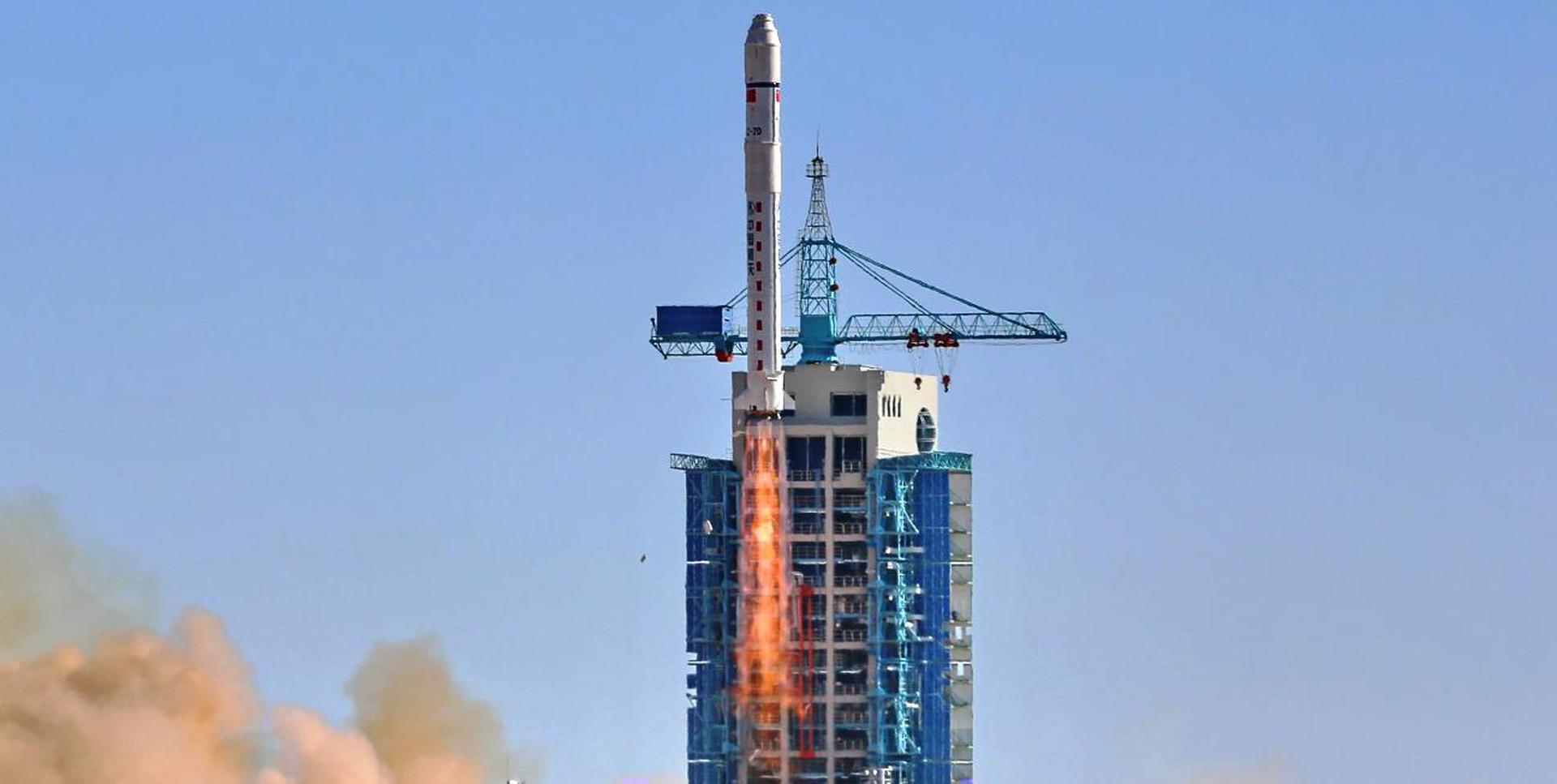
China wrapped up 2025 on a high note with 92 orbital launches, including the Tianhui-7 and Shijian-29 technology test missions. These back-to-back triumphs solidified China’s leading role in the global space sector and emphasized its commitment to advancing space-based technology and surveillance capabilities. The launches included a notable achievement for the Long March-7A rocket, emphasizing China’s growing influence in space exploration and utilization.
Read the full story: SpaceNews
China Launches Twin Shijian-29 Satellites
China has successfully launched two Shijian-29 satellites aboard a Long March 7A rocket, enhancing its space-target detection technology. The mission, originating from Hainan Island’s Wenchang Space Launch Site, represents the 623rd flight for the Long March family, demonstrating China’s significant strides in space surveillance and tracking.
Read the full story: SpaceDaily
Space Force Offers New Vandenberg Launch Site
Vandenberg Space Force Base has opened a new launch site, presenting opportunities for launch providers such as SpaceX, potentially facilitating flights of the Starship. This development may prompt increased launch activities and further innovations in the space transport sector, supporting a broader range of launch operations.
Read the full story: SpaceNews
Former ULA CEO Joins Blue Origin for National Security Projects
Tory Bruno, former CEO of United Launch Alliance, has transitioned to Blue Origin to work on national security projects. This move highlights the competitive landscape of the space industry and reflects a trend where experienced leaders bring their expertise to emerging players, enhancing strategic capabilities and technological advancement.
Read the full story: Space.com
What’s Next for Army’s Ambitious Next Gen C2 Effort
The U.S. Army is looking forward to 2026 with plans to test a prototype of its Next Generation Command and Control (NGC2) system. This project aims to evaluate capabilities against adversary sensor technologies, underscoring the importance of advanced satellite communications and real-time data processing in military operations.
Read the full story: Breaking Defense
China to Debut Reusable Long March 10-Derived Rocket
In the first half of 2026, China plans the inaugural flight of a reusable variant of its Long March 10-dedicated rocket. This development represents a shift towards more sustainable and cost-effective launch solutions, aligning with global trends in reusable launch systems and bolstering China’s place in the competitive space launch market.
Read the full story: SpaceNews
🛰️Satellite Spotlight
- Satellite Name: COSMOS 539
- NORAD ID: 06319
- Launch Date: December 21, 1972
- Mission: Geodesy
- Orbit: Low Earth Orbit (LEO)
- Operator: OKB10
- Fun Fact: COSMOS 539 is part of the Soviet Union’s early efforts in satellite geodesy, aimed at precise measurements of the Earth’s shape and gravitational field.
Track this satellite in real-time on our web app: Track COSMOS 539
🌌Space Weather
Next 24 Hours
-
Radio Blackouts Probability
- Minor: 55
- Major: 20
- Risk: None
-
Solar Radiation
- Probability: 40
- Risk: None
-
Geomagnetic Storming
- Scale: 1
- Impact: minor
- Activity: Moderate
-
Impact Summary
- No risk of radio blackouts expected, ensuring uninterrupted communication for satellite operators.
- No anticipated solar radiation storms, benefiting astronauts and high-altitude pilots.
- Moderate geomagnetic activity with potential minor geomagnetic storms; this could affect navigation systems and satellite operations especially in polar regions.
Long Term Forecast
- Impact Summary
- Solar activity is expected to remain low, primarily involving C-class flares, which pose minimal risk to satellites and astronauts.
- M-class flares could occur, with a possibility of radio blackouts increasing from minor to moderate at times.
- Geomagnetic conditions will likely fluctuate, with active levels expected to occur on several dates, which may impact satellite communication and tracking systems.
- Periods of increased electron flux may pose operational challenges for satellite operators, especially during the high flux durations.
- Overall, careful monitoring will be essential for those relying on satellite data and navigation systems during this forecast period.
🚀Upcoming Space Launches
January 3
- SpaceX Falcon 9:
- CSG-3 from Vandenberg Space Force Base, CA, USA (02:09 UTC) CSG-3 is an Earth observation satellite for the Italian Space Agency, part of a reconnaissance constellation using synthetic aperture radars operating in the X-band.
January 4
- SpaceX Falcon 9:
- Starlink Group 6-88 from Cape Canaveral SFS, FL, USA (05:00 UTC) A batch of 29 satellites for the Starlink mega-constellation - SpaceX’s project for a space-based Internet communication system.
January 7
- SpaceX Falcon 9:
- Starlink Group 6-96 from Cape Canaveral SFS, FL, USA (18:55 UTC) A batch of 29 satellites for the Starlink mega-constellation - SpaceX’s project for a space-based Internet communication system.
January 10
-
Indian Space Research Organization PSLV-DL:
- EOS-N1 and others from Satish Dhawan Space Centre, India (04:15 UTC) Small Earth observation satellite from NewSpace India Limited (NSIL) for an “Indian strategic user”. This launch will also carry 18 other ride-share payloads.
-
SpaceX Falcon 9:
- Starlink Group 6-97 from Cape Canaveral SFS, FL, USA (18:34 UTC) A batch of 29 satellites for the Starlink mega-constellation - SpaceX’s project for a space-based Internet communication system.
January 17
- Isar Aerospace Spectrum:
- Flight Two from Andøya Spaceport (00:00 UTC) Second test flight of the Isar Spectrum launch vehicle, carrying several cubesats as part of the European Space Agency’s “Boost!” program.
January 31
-
Galactic Energy Ceres-2:
- Demo Flight from Jiuquan Satellite Launch Center, People’s Republic of China (00:00 UTC) First test launch of Galactic Energy’s Ceres-2 rocket.
-
Rocket Lab Electron:
- Bridging The Swarm (NeonSat-1A) from Rocket Lab Launch Complex 1, Mahia Peninsula, New Zealand (00:00 UTC) The NeonSat-1A, carrying a high-resolution optical camera, is designed to test the constellation capabilities of the South Korean government’s Earth observation micro-satellite constellation.
-
SpaceX Falcon 9:
- BlueBird Block 2 #2 from Cape Canaveral SFS, FL, USA (00:00 UTC) AST SpaceMobile’s Block 2 BlueBird satellites designed to deliver up to 10 times the bandwidth capacity of previous satellites for continuous cellular broadband service.
-
SpaceX Falcon 9:
- Pandora / Twilight rideshare mission from Vandenberg Space Force Base, CA, USA (00:00 UTC) The Pandora small satellite is part of NASA’s Astrophysics Pioneers Program to study exoplanet atmospheres. Includes ride-share payloads under the “Falcon 9 Twilight mission”.
Note: Launch dates and times are subject to change due to technical or weather considerations.

Maurice Stellarski