· space brief · 5 min read
Space Brief 27 Nov 2025
Today's highlights include new space-based interceptor developments, a UK space tracking partnership, a strategic satellite imagery alliance, and more.
📰Top Stories
Space Force Initiates New Space-Based Interceptor Projects
The U.S. Space Force has launched a significant initiative under the ‘Golden Dome’ program, awarding the first prototype deals for space-based interceptors. These agreements mark an essential step towards developing advanced defensive capabilities in space, which are being executed through innovative Other Transaction Agreements (OTAs). The program aims to enhance national security by leveraging cutting-edge technologies in space defense.
Read the full story: SpaceNews
UK Civil/Defense Space Tracking Effort Gains a New Ally
Startup Spaceflux is taking on a pivotal role in the UK’s efforts to track space activity. Working closely with the National Space Operations Centre, Spaceflux will provide crucial data for the UK Defence Ministry and the UK Space Agency, enhancing both civil and defense applications. This move underscores the growing importance of robust space tracking capabilities for national and global security.
Read the full story: Breaking Defense
Strategic Partnership Set to Boost Canadian Satellite Capabilities
Pacific Geomatics and SI Analytics have announced a strategic partnership to introduce super-resolution capabilities across Canada. This collaboration will see advanced satellite imagery technologies adapted for various applications, from governmental to commercial sectors, providing enhanced resolution and data quality crucial for detailed geographic analysis.
Read the full story: SpaceNews
Innovative Technologies Reshaping Indo-Pacific Military Strategies
The Indo-Pacific is witnessing a technological revolution in military operations, driven by advancements such as networked warfare, artificial intelligence, and 3D-printed drones. These innovations are reshaping U.S. strategic approaches, highlighting the impact of cutting-edge technology on modern military tactics and national defense strategy in a critical global region.
Read the full story: Breaking Defense
ESCAPADE Mission: First Images En Route to Mars
NASA’s twin ESCAPADE spacecraft have sent back their first images just a week after launch, showcasing the edge of a solar panel captured by advanced observation systems. This mission aims to provide a deeper understanding of the Martian magnetic field by gathering critical data during their journey towards Mars, marking an exciting advancement in Martian exploration.
Read the full story: Mars Daily
Gamma-Ray Observations Hint at Dark Matter’s Presence
Researchers in Japan have obtained gamma-ray data that may signal the first direct evidence of dark matter. By observing regions packed with potential dark matter, scientists are closing in on understanding these elusive particles, offering potential shifts in our knowledge of the universe’s fundamental components.
Read the full story: Space Daily
🛰️Satellite Spotlight
- Satellite Name: QIANFAN-8
- NORAD ID: 60386
- Launch Date: August 6, 2024
- Mission: This satellite is designed for communications, enhancing data transmission capabilities in its operational region.
- Orbit: Low Earth Orbit (LEO)
- Operator: YUANX
- Fun Fact: QIANFAN-8, also known as Qianfan Jigui 01-08, is part of a series of satellites developed to advance China’s communication infrastructure.
Track this satellite in real-time on our web app: Track QIANFAN-8
🌌Space Weather
Next 24 Hours
-
Radio Blackouts Probability
- Minor: 15
- Major: 1
- Risk: None
-
Solar Radiation
- Probability: 1
- Risk: None
-
Geomagnetic Storming
- Scale: 1
- Impact: minor
- Activity: Moderate
-
Impact Summary
- No risk of radio blackouts for satellite communication users.
- No solar radiation storms expected, ensuring safe operational conditions for satellite owners.
- Moderate geomagnetic activity may lead to minor geomagnetic storms (G1) affecting high-frequency radio communications and navigation systems in polar regions.
Long Term Forecast
- Impact Summary
- Solar activity expected to be at R1-R2 (Minor-Moderate) levels from November 28 to December 11, with potential impacts on satellite operations and communication systems.
- Increased chances of radio blackouts and elevated electron flux levels may affect satellite drag and operational capacity on specified dates.
- Geomagnetic activity will fluctuate between quiet and G1-G2 (Minor-Moderate), impacting navigation and communication systems, particularly during disturbed conditions due to coronal hole high-speed streams (CH HSS).
🚀Upcoming Space Launches
November 28
- SpaceX Falcon 9 Block 5:
- Transporter 15 (Dedicated SSO Rideshare) from Vandenberg Space Force Base, CA, USA (18:18 UTC) Dedicated rideshare flight to a sun-synchronous orbit with dozens of small microsatellites and nanosatellites for commercial and government customers.
November 30
- Arianespace Vega-C:
- KOMPSAT-7 from Guiana Space Centre, French Guiana (17:21 UTC) KOMPSAT-7 is the follow-up model of KOMPSAT-3A, aimed at providing high-resolution satellite images to satisfy South Korea’s governmental and institutional needs.
December 1
- SpaceX Falcon 9 Block 5:
- Starlink Group 6-86 from Kennedy Space Center, FL, USA (05:00 UTC) A batch of 29 satellites for the Starlink mega-constellation - SpaceX’s project for space-based Internet communication system.
December 2
-
SpaceX Falcon 9 Block 5:
- Starlink Group 15-10 from Vandenberg Space Force Base, CA, USA (02:10 UTC) A batch of 27 satellites for the Starlink mega-constellation - SpaceX’s project for space-based Internet communication system.
-
SpaceX Falcon 9 Block 5:
- Starlink Group 6-95 from Cape Canaveral Space Force Station, FL, USA (20:16 UTC) A batch of 29 satellites for the Starlink mega-constellation - SpaceX’s project for space-based Internet communication system.
December 4
- SpaceX Falcon 9 Block 5:
- Starlink Group 11-25 from Vandenberg Space Force Base, CA, USA (18:12 UTC) A batch of 28 satellites for the Starlink mega-constellation - SpaceX’s project for space-based Internet communication system.
December 5
- Rocket Lab Electron:
- Raise and Shine (RAISE-4) from Rocket Lab Launch Complex 1, Mahia Peninsula, New Zealand (03:00 UTC) A Japan Aerospace Exploration Agency (JAXA) satellite for on-orbit demonstrations of innovative payloads.
December 7
- Mitsubishi Heavy Industries H3-22:
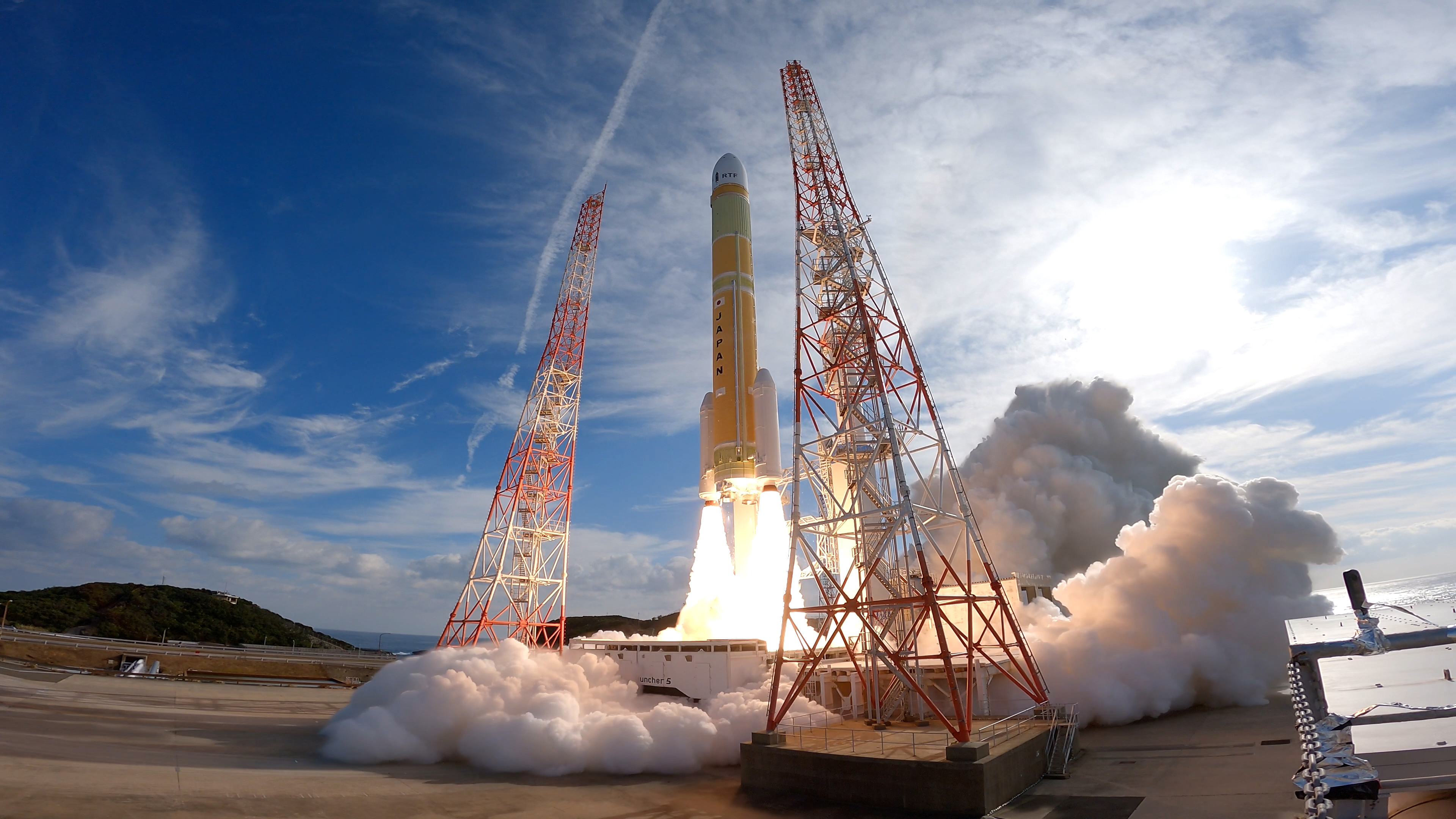
- Michibiki 5 (QZS-5) from Tanegashima Space Center, Japan (02:30 UTC) QZSS is a Japanese satellite navigation system designed for optimal high-elevation visibility and will broadcast GPS-interoperable and original Japanese signals.
Note: Launch dates and times are subject to change due to technical or weather considerations.

Maurice Stellarski