· x report · 6 min read
Starlink Tops 9,986 Active Sats in Orbit | KeepTrack X Report
SpaceX's Starlink constellation holds 9,986 working satellites from 11,504 launched, as the network eyes new milestones in 2026.
Latest Developments
SpaceX’s Starlink megaconstellation continues to set records in low Earth orbit, with 9,986 satellites currently operational out of 9,996 confirmed in orbit — representing a remarkably lean attrition rate across the 11,504 total spacecraft launched to date. The gap between launched and operational satellites reflects ongoing deorbit operations, commissioning queues, and routine end-of-life disposals that KeepTrack monitors in real time. No major anomalies or launch failures have been confirmed in the current reporting window, leaving constellation growth and regulatory developments as the dominant storylines. Analysts continue to watch the network’s approach toward FCC-authorized shell-fill thresholds as commercial and government demand accelerates.
Space Safety
Current conjunction analysis reveals a MODERATE risk event involving STARLINK-6273 and COSMOS 375 DEB on Mar 20, 2026 at 00:31 UTC, with a maximum collision probability of 34.54% and minimum range of only 14 meters—the closest approach in the current catalogue. The remaining nine tracked conjunctions present LOW risk profiles with collision probabilities below 8%, though operators should monitor STARLINK-35570’s encounter with YAM-7 (7.75% probability) and STARLINK-5401’s passage near PELICAN-2 (6.71% probability). Six Starlink satellites are currently predicted for reentry within a ±24 hour decay window between Mar 16–18, 2026, representing moderate disposal activity across the constellation.
| Risk | Starlink Sat | Other Object | Status | Min Range (km) | Rel Speed (km/s) | Max Prob | Time of Closest Approach |
|---|---|---|---|---|---|---|---|
| MODERATE | STARLINK-6273 | COSMOS 375 DEB | Non-operational | 0.014 | 2.626 | 34.54% | Mar 20, 00:31 UTC |
| LOW | STARLINK-35570 | YAM-7 | Operational | 0.032 | 12.49 | 7.75% | Mar 21, 00:09 UTC |
| LOW | STARLINK-5401 | PELICAN-2 | Operational | 0.034 | 13.00 | 6.71% | Mar 22, 04:04 UTC |
| LOW | STARLINK-31668 | OBJECT F | Operational | 0.040 | 9.00 | 6.31% | Mar 17, 01:43 UTC |
| LOW | STARLINK-36633 | ELECTRON KICK STAGE R/B | Non-operational | 0.044 | 4.39 | 5.98% | Mar 16, 12:25 UTC |
| LOW | STARLINK-4497 | JILIN-01 KUANFU 02B 2 | Operational | 0.039 | 12.53 | 5.28% | Mar 21, 17:22 UTC |
| LOW | STARLINK-31792 | EOSSAT-1 | Operational | 0.038 | 14.28 | 4.20% | Mar 17, 08:24 UTC |
| LOW | STARLINK-4126 | FENGYUN 1C DEB | Non-operational | 0.046 | 12.34 | 3.97% | Mar 15, 18:11 UTC |
| LOW | STARLINK-3057 | SHIYAN-24C 01 | Operational | 0.041 | 14.97 | 2.95% | Mar 15, 09:06 UTC |
| LOW | STARLINK-31802 | FALCONSAT-6 | Operational | 0.061 | 9.26 | 2.79% | Mar 17, 14:37 UTC |
| Satellite | NORAD ID | Predicted Decay | Window (min) | Inclination | Lat | Lon |
|---|---|---|---|---|---|---|
| STARLINK-30995 | 58474 | Mar 16, 06:06 UTC | 1440 | 43.0° | 2.5° | 276.7° |
| STARLINK-1712 | 46581 | Mar 16, 20:42 UTC | 1440 | 53.0° | 47.9° | 334.6° |
| STARLINK-3767 | 52376 | Mar 17, 02:49 UTC | 1440 | 53.2° | -46.6° | 224.6° |
| STARLINK-1587 | 46157 | Mar 17, 03:18 UTC | 1440 | 53.0° | -48.6° | 193.8° |
| STARLINK-36858 | 68021 | Mar 17, 23:15 UTC | 1440 | 97.3° | -25.6° | 40.3° |
| STARLINK-3050 | 49180 | Mar 18, 11:10 UTC | 1440 | 70.0° | -26.3° | 244.4° |
Detailed Coverage
Starlink’s 9,986-Satellite Operational Fleet Sets New High-Water Mark
SpaceX’s active Starlink fleet has reached 9,986 working satellites, consolidating the network’s position as by far the largest operational constellation in human spaceflight history. Of the 11,504 spacecraft launched since the program began, 9,996 are currently tracked in orbit by independent observers and corroborated by KeepTrack telemetry feeds, yielding an in-orbit retention rate exceeding 86 percent even as early-generation V1.0 hardware continues its managed deorbit cadence.
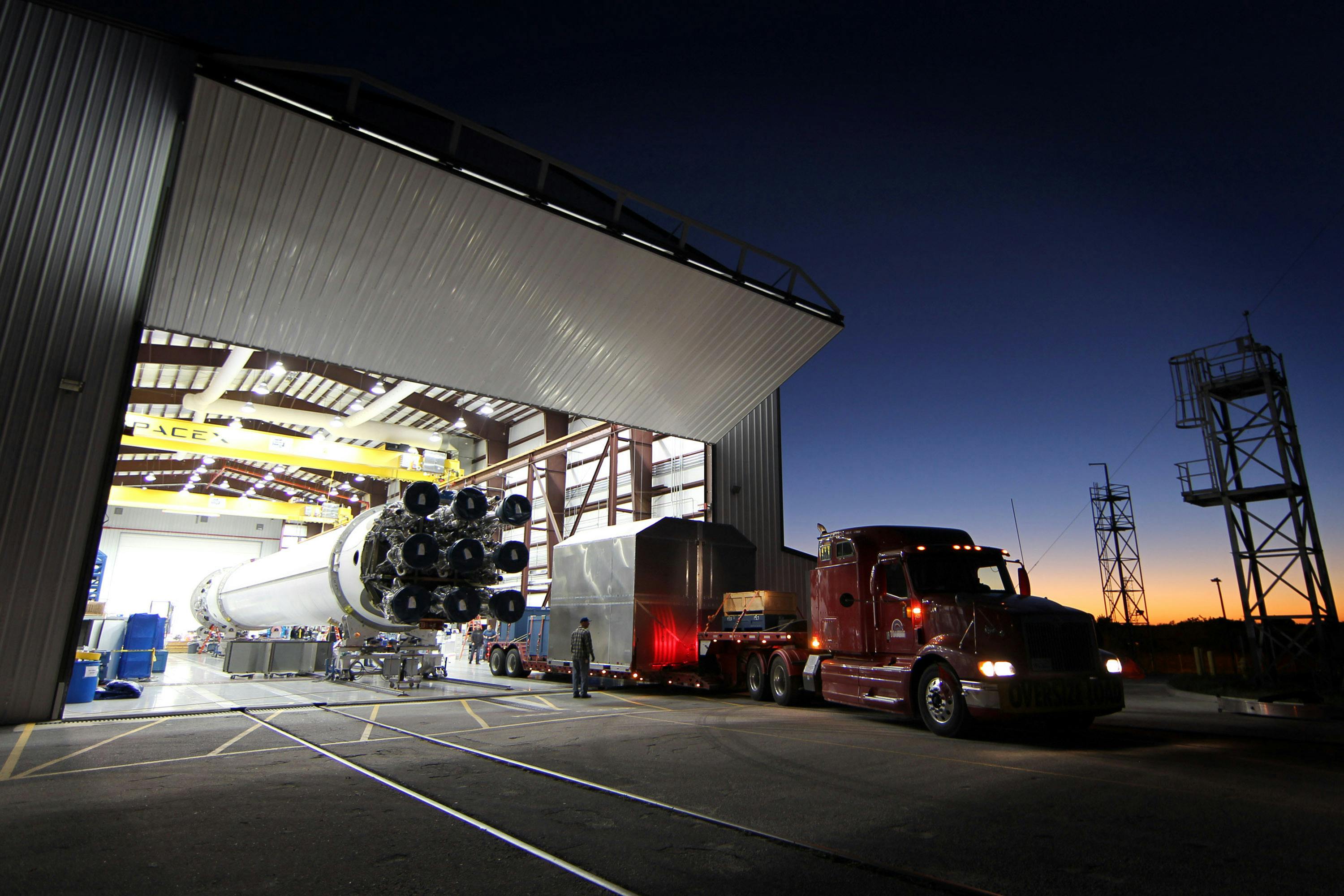
The figures underscore the industrial scale of SpaceX’s Starlink manufacturing operation in Redmond, Washington, which produces satellites at a rate few national space agencies could match annually. Tracking the delta between launched, in-orbit, and working counts provides a useful signal for network health; the current 10-satellite gap between in-orbit and working totals suggests a small cohort in commissioning or anomaly review rather than any systemic failure mode.
Read the full story: KeepTrack Constellation Dashboard
No Active Anomalies Detected Across the Constellation This Cycle
The current reporting period closes without a confirmed Starlink satellite anomaly, an increasingly notable achievement as the constellation’s sheer size raises the statistical probability of individual unit failures. Historical data suggests SpaceX experiences occasional unplanned deorbits or prolonged safe-mode events, but none have been flagged by ground-based radar networks or operator disclosures in this window.
For satellite trackers, a clean anomaly slate shifts analytical attention to object catalog hygiene — ensuring that deorbiting V1.0 shells are correctly distinguished from healthy operational nodes in tools like KeepTrack, where misclassified objects can produce false conjunction alerts for operators in neighboring orbital shells.
Read the full story: Space-Track.org
SpaceX Continues Managed Deorbit of Legacy V1.0 Starlink Hardware
With the V2 Mini and full V2 Starlink generations now driving constellation capability, SpaceX is systematically retiring first-generation V1.0 satellites, a process visible in the widening spread between the 11,504 total launched and the 9,996 currently orbiting. Each deorbit lowers the average age of the active fleet and frees capacity in congested orbital slots for higher-throughput successors.
Independent trackers using publicly available Two-Line Element sets have documented the characteristic decay signatures of V1.0 units lowering perigee ahead of atmospheric reentry, typically completing disposal within weeks of the maneuver sequence beginning. The disciplined retirement cadence has been cited by regulators as a positive model for responsible megaconstellation management.
Read the full story: Celestrak TLE Archive
Falcon 9 Launch Cadence Sustains Constellation Replenishment and Growth
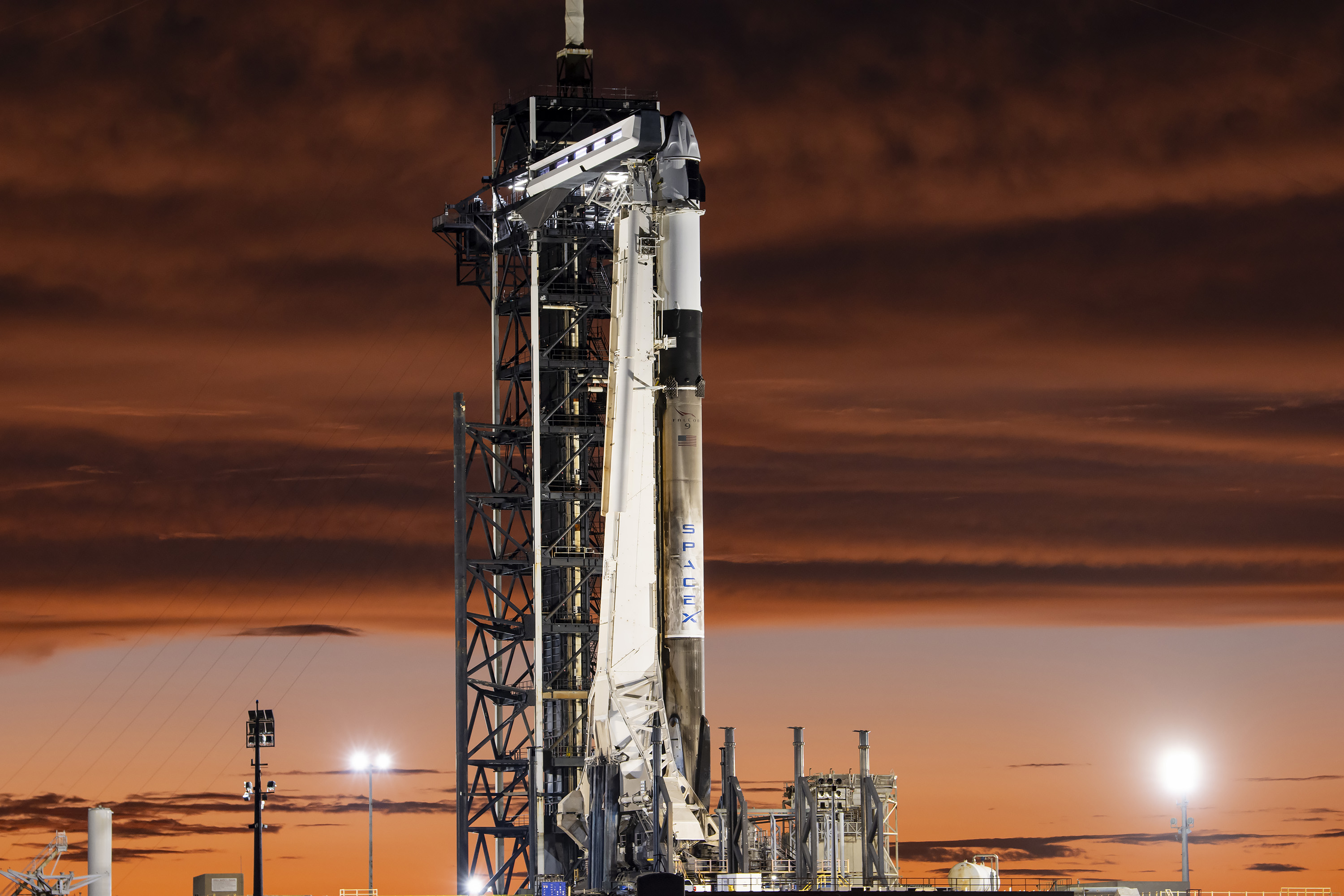
SpaceX’s Falcon 9 booster fleet continues to underpin the relentless pace of Starlink replenishment missions, with individual cores now routinely completing double-digit flights before retirement or refurbishment. Each dedicated Starlink mission typically delivers 20 to 23 V2 Mini satellites to a target shell, incrementally thickening coverage capacity in high-demand latitude bands.
The operational rhythm means SpaceX can simultaneously replace attriting hardware, fill authorized but incomplete shells, and begin seeding next-generation orbital planes — all without gaps in end-user service. For KeepTrack users monitoring launch injection events, new batches typically appear in the catalog within 24 to 48 hours of deployment as ground stations acquire the freshly separated objects.
Read the full story: NASASpaceFlight.com
Starlink for Military and Government Users Expands Globally
Demand for Starlink’s government and defense tier — marketed under the Starshield brand for sensitive applications — continues to grow across NATO allies and partner nations seeking resilient battlefield communications independent of vulnerable geostationary infrastructure. Contracts spanning Ukraine support operations, U.S. Department of Defense connectivity programs, and allied nation procurements have materially expanded the revenue base supporting constellation investment.
The dual-use nature of the Starlink infrastructure raises ongoing policy questions about the appropriate boundary between commercial and military satellite services, with some regulators pushing for clearer spectrum and liability delineation. SpaceX has maintained that Starshield nodes operate on physically and cryptographically separated infrastructure from the consumer fleet, though the underlying orbital geometry and launch logistics are shared.
Read the full story: Defense One
FCC and ITU Spectrum Coordination Remains a Watchpoint for Expansion
As Starlink’s authorized shell counts approach fill thresholds in several ITU filings, SpaceX faces an increasingly complex international coordination environment for its next generation of orbital planes. Competing megaconstellation operators — including Amazon’s Project Kuiper, Eutelsat OneWeb, and China’s Guowang — have filed overlapping frequency and orbital slot claims that require negotiated coordination agreements or risk harmful interference findings.
Regulators in multiple jurisdictions have signaled heightened scrutiny of large constellation operators’ compliance with milestone deployment requirements, which are intended to prevent spectrum warehousing. SpaceX’s demonstrated deployment pace has largely insulated it from milestone-failure proceedings, but the regulatory calendar through 2026 includes several significant filing deadlines that analysts are tracking closely.
Read the full story: Via Satellite
Ground Segment Expansion Supports Starlink Latency and Capacity Goals
SpaceX continues to invest heavily in its Starlink ground station network, adding gateway nodes in underserved regions to reduce latency and increase per-user throughput as the space segment grows. Inter-satellite laser links — now standard on V2 Mini hardware — reduce dependence on ground station proximity for long-haul data routing, but terrestrial gateway density still governs peak capacity in high-demand markets.
The expansion is particularly significant for maritime and aviation verticals, where Starlink has aggressively displaced legacy VSAT providers by offering substantially higher throughput at competitive price points. KeepTrack’s coverage map overlays correlate satellite groundtrack density with gateway locations, giving operators a ground-truth view of where the network has the deepest capacity margins at any given moment.
Read the full story: Wired
Constellation Status
The Starlink constellation remained stable since the last check, with no new launches or orbital changes recorded. As of March 15, 2026, SpaceX maintains 9,996 satellites in orbit, of which 9,986 are operational, while 1,508 have decayed from their orbits out of 11,504 total launched to date.
- Total Launched: 11504
- Total On Orbit: 9996
- Total Working: 9986
Track Starlink satellites in real-time: Track Starlink

B1049