· space brief · 5 min read
Space Brief 8 Dec 2025
Today's edition covers SpaceX scrubbing and successfully launching Starlink satellites, AI innovations in spacecraft propulsion, and the impact of SPHERE's debris disk survey in discovering hidden asteroid belts.
📰Top Stories
SpaceX’s Countdown Derailed by Weather, Rescheduled for a Milestone Launch
Poor weather conditions have delayed SpaceX’s planned launch of the 3,000th Starlink satellite, originally scheduled for SpaceX’s record-setting 32nd Falcon 9 flight from Florida. The scrubbed mission is rescheduled, marking a significant milestone with the 575th Falcon 9 launch. Tracking this colossal Starlink constellation is easier than ever with our satellite tracking feature.
Read the full story: Spaceflight Now
SpaceX Falcon 9 Successfully Launches 29 Starlink Satellites
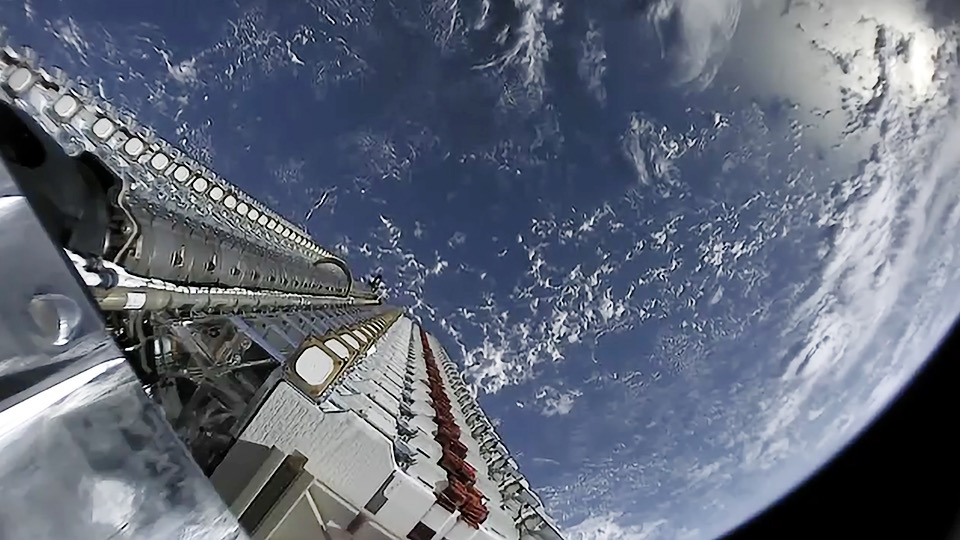
A SpaceX Falcon 9 rocket successfully launched from Vandenberg Space Force Base in California, deploying 29 Starlink satellites. This event underlines SpaceX’s continuous evolution and expansion of the global Starlink constellation, crucial for global internet coverage. Explore the detailed launch schedule using our launch tracker.
Read the full story: Space.com
AI-Powered Propulsion Could Transform Spacecraft Efficiency
Artificial intelligence is revolutionizing spacecraft propulsion, introducing enhanced efficiencies and opening avenues for nuclear-powered rockets. This technological leap, akin to learning advancements across various fields, promises profound impacts on future space exploration missions. Our glossary explains AI in space tech.
Read the full story: Space.com
SPHERE Survey Unveils the Secrets of Asteroid Belts
The SPHERE debris disk survey, carried out using ESO’s Very Large Telescope, has produced a comprehensive gallery of debris disks. These observations have uncovered hidden asteroid and comet belts surrounding young stars, contributing valuable insights into the dynamics of planetary system formation and evolution.
Read the full story: SpaceDaily
National Security Strategy Endorsed with Emphasis on Western Focus
Defense Secretary Pete Hegseth has endorsed a new National Security Strategy emphasizing Western allies’ defense and deterrent capabilities. This strategic orientation aims to advance U.S. interests and peace through a pragmatic defense posture.
Read the full story: Breaking Defense
Defense Budget Discussions Ongoing Amid Reconciliation Uncertainties
The Office of Management and Budget director has indicated ongoing deliberations regarding a second round of reconciliation for the defense budget. While concerns about budget shortfalls persist, assurances have been made to address fiscal challenges.
Read the full story: Breaking Defense
🛰️Satellite Spotlight
- Satellite Name: COSMOS 2381 [GLONASS]
- NORAD ID: 26988
- Launch Date: December 1, 2001
- Mission: This satellite is part of the GLONASS system, providing critical navigation data to users globally, akin to the U.S. GPS system.
- Orbit: Medium Earth Orbit (MEO)
- Operator: KVR/IACG
- Fun Fact: COSMOS 2381 is designed to operate with a lifetime of 3 years and features a unique cylindrical shape accentuated by deployable solar arrays.
Track this satellite in real-time on our web app: Track COSMOS 2381 [GLONASS]
🌌Space Weather
Next 24 Hours
-
Radio Blackouts Probability
- Minor: 65
- Major: 15
- Risk: None
-
Solar Radiation
- Probability: 15
- Risk: None
-
Geomagnetic Storming
- Scale: 1
- Impact: minor
- Activity: Moderate
-
Impact Summary
- No risk of radio blackouts: Communication systems remain stable.
- No risk of solar radiation storms: Satellite operators can continue normal operations without concern for radiation effects.
- Moderate geomagnetic activity: Minor geomagnetic storms are expected, which could lead to fluctuations in high-frequency radio communication and GPS accuracy.
- Future geomagnetic outlook: Periods of G1 (Minor) geomagnetic storms are anticipated on 08-10 Dec, with stronger G2-G3 (Moderate-Strong) storms likely on 09 Dec due to a coronal mass ejection (CME) passage.
- Radiation outlook: Slight chance of S1 (Minor) or greater solar radiation storms on 08-10 Dec, potentially affecting satellite operations.
- Radio blackout outlook: R1-R2 (Minor-Moderate) radio blackouts are likely from 08-10 Dec, with a marginal risk for R3 (Strong) events.
Long Term Forecast
- Forecast of Solar and Geomagnetic Activity (08 December - 03 January 2026):
- M-class flares (R1-R2/Minor-Moderate) likely, with a small chance for X-class flares (R3/Strong) throughout the outlook period.
- Slight chance for greater than 10 MeV proton flux to reach 10 pfu (S1-Minor).
- Greater than 2 MeV electron flux expected to peak on 08-09, 12-13, 16-17, 25-29 Dec, and 01-03 Jan, with normal to moderate levels generally prevailing.
- Geomagnetic storm activity likely to reach G1 (Minor) levels on 08 and 10 Dec with anticipated G2-G3 (Moderate-Strong) storming on 09 Dec related to a CME from 06 Dec.
- Additional G1 storms probable on 21-23 Dec and again on 24-26 Dec due to coronal hole high-speed streams (CH HSS).
- G2 (Moderate) storms likely on 30 Dec with G1 storms on 31 Dec, influenced by negative polarity CH HSS.
Upcoming Space Launches
December 8
- SpaceX Falcon 9:
- Starlink Group 6-92 from Kennedy Space Center, FL, USA (21:14 UTC) A batch of 29 satellites for the Starlink mega-constellation - SpaceX’s project for space-based Internet communication system.
- China Aerospace Science and Technology Corporation Long March 6A:
- Unknown Payload from Taiyuan Satellite Launch Center, People’s Republic of China (22:03 UTC)
December 9
- China Aerospace Science and Technology Corporation Long March 2D:
- Unknown Payload from Jiuquan Satellite Launch Center, People’s Republic of China (03:33 UTC)
- China Aerospace Science and Technology Corporation Long March 3B/E:
- Unknown Payload from Xichang Satellite Launch Center, People’s Republic of China (15:00 UTC)
- SpaceX Falcon 9:
- NROL-77 from Cape Canaveral SFS, FL, USA (19:16 UTC) Classified payload for the US National Reconnaissance Office.
December 10
- CAS Space Kinetica 1:
- Unknown Payload from Jiuquan Satellite Launch Center, People’s Republic of China (03:54 UTC)
- SpaceX Falcon 9:
- Starlink Group 15-11 from Vandenberg SFB, CA, USA (08:54 UTC) A batch of 27 satellites for the Starlink mega-constellation - SpaceX’s project for space-based Internet communication system.
December 11
- Russian Federal Space Agency (ROSCOSMOS) Soyuz 2.1a:
- Obzor-R No.1 from Plesetsk Cosmodrome, Russian Federation (14:00 UTC) The Russian Obzor-R satellite is a planned X-band radar earth observation satellite designed by TsSKB-Progress.
- SpaceX Falcon 9:
- Starlink Group 6-90 from Cape Canaveral SFS, FL, USA (18:59 UTC) A batch of 29 satellites for the Starlink mega-constellation - SpaceX’s project for space-based Internet communication system.
Note: Launch dates and times are subject to change due to technical or weather considerations.

Maurice Stellarski