· space brief · 5 min read
Space Force Opens Cape Canaveral and Vandenberg Pads to New Launch Providers | KeepTrack Space Brief
Space Force issues call for launch providers at Cape Canaveral and Vandenberg. Vandenberg opens Space Launch Complex 14 bidding with Feb 12 deadline. Electra pitches hybrid aircraft to Pentagon.

📰Top Stories
Space Force Seeks Launch Providers for Key Sites
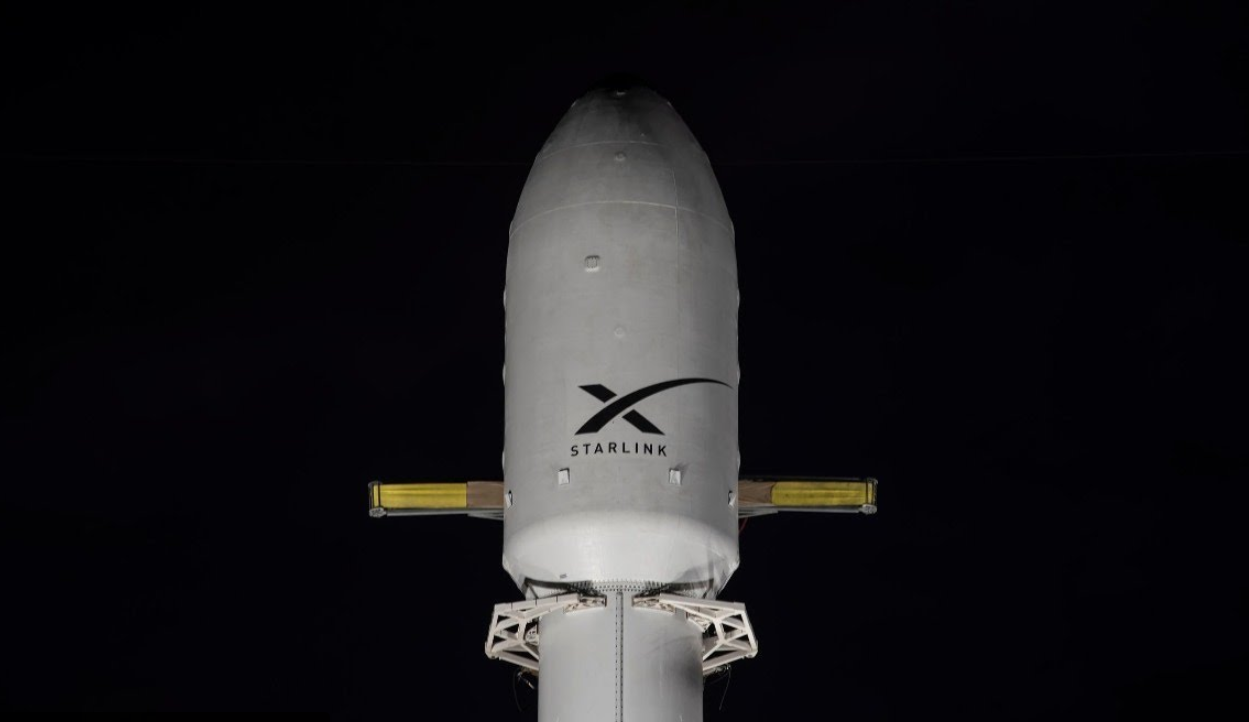
The U.S. Space Force has issued a call for interest from launch providers to utilize its Cape Canaveral and Vandenberg Space Force Base pads. This initiative supports the increasing demands from both military and commercial sectors, aiming to expand the capacity and capabilities of these critical launch sites. Interested parties are expected to enhance space access and optimize these facilities for future missions.
Read the full story: NASASpaceFlight.com
Vandenberg SFB Opens Bidding for Space Launch Complex 14
In a move to strengthen the United States’ space launch infrastructure, the Department of the Air Force has announced an open bid for Space Launch Complex 14 at Vandenberg Space Force Base. This decision aims to foster new launch capabilities and boost domestic access to space, with proposals required by February 12, 2026.
Read the full story: Spaceflight Now
Electra’s EL9: The Pentagon’s Potential New Cargo Solution
With expanding defense needs, Electra introduces its EL9 plane concept to the Pentagon—designed to function like a “Sprinter van” for military logistics. This hybrid-electric, fixed-wing aircraft is pitched for moving smaller quantities of cargo and personnel more efficiently, aligning with the Department of Defense’s evolving transport strategies.
Read the full story: Breaking Defense
Key Insights from Defense Sector: Grok System and Strategic Submarines
A review of recent defense activities reveals significant developments, including the deployment of the Grok AI system for the Department of Defense and heightened submarine activities concerning North Korea. These updates continue to shape the geopolitical and technological landscape critical to national security.
Read the full story: Breaking Defense
Pentagon’s New Approach to Defense Procurement
In a strategic message to their ranks, four senior Pentagon acquisition leaders unveil their reformative vision for the military procurement processes. By embracing transparency and accountability, they aim to drive innovation and efficiency within the defense acquisition landscape, setting new benchmarks for operational effectiveness.
Read the full story: Breaking Defense
🛰️Satellite Spotlight
- Satellite Name: FLOCK 1C-8
- NORAD ID: 40040
- Launch Date: June 19, 2014
- Mission: Primarily focused on technology development, this CubeSat is part of the Planet Labs fleet and is designed for Earth imaging.
- Orbit: Low Earth Orbit (LEO)
- Operator: Planet Labs
- Fun Fact: FLOCK 1C-8 is part of a larger constellation aimed at providing frequent imagery of the Earth, which can be utilized for various applications including environmental monitoring and urban planning.
Track this satellite in real-time on our web app: Track FLOCK 1C-8
🌌Space Weather
Next 24 Hours
-
Radio Blackouts Probability
- Minor: 40
- Major: 10
- Risk: None
-
Solar Radiation
- Probability: 10
- Risk: None
-
Geomagnetic Storming
- Scale: 0
- Impact: none
- Activity: Low
-
Impact Summary
- Next 24 hours: No risk of radio blackouts.
- No risk of solar radiation storms.
- Geomagnetic outlook: No G1 (Minor) or greater geomagnetic storms are expected.
- No significant transient or recurrent solar wind features are forecast.
- Radiation outlook: No S1 (Minor) or greater solar radiation storms are expected.
- No significant active region activity favorable for radiation storm production is forecast.
- Radio blackout outlook: There is a chance for R1-R2 (Minor-Moderate) radio blackout events, with a slight chance for R3 (Strong) on 06-08 Jan.
Long Term Forecast
- Impact Summary
- Forecast for Solar and Geomagnetic Activity (05 January - 31 January 2026):
- Solar activity is likely to remain at low levels, with a chance for R1 (Minor) conditions and a slight chance for R2/R3 (Moderate-Strong) conditions due to multiple visible disk regions and expected returning regions from the Sun’s farside.
- No proton events are expected at geosynchronous orbit.
- Greater than 2 MeV electron flux is expected to reach high levels on 05 Jan and 15 Jan - 13 Jan due to anticipated influences from multiple, recurrent coronal holes.
- Geomagnetic field activity is likely to reach G1 (Minor) storm levels on 13-14 Jan, 17-20 Jan, and 29 Jan, with active levels on 05 Jan and 28 Jan.
- Unsettled levels are expected on 09-10 Jan, 12 Jan, 21-22 Jan, 27 Jan, and 30-31 Jan.
- All enhancements in geomagnetic activity are due to the anticipated influence of multiple, recurrent coronal holes.
- The remainder of the outlook period is expected to be mostly quiet.
🚀 Upcoming Space Launches
January 8
- SpaceX Falcon 9 Block 5:
- Mission: Starlink Group 6-96
- Launch Site: Cape Canaveral Space Force Station, FL, USA
- Launch Time: 18:29 UTC
- Description: A batch of 29 satellites for the Starlink mega-constellation - SpaceX’s project for space-based Internet communication system.
January 10
- SpaceX Falcon 9 Block 5:
- Mission: Starlink Group 6-97
- Launch Site: Cape Canaveral Space Force Station, FL, USA
- Launch Time: 18:34 UTC
- Description: A batch of 29 satellites for the Starlink mega-constellation - SpaceX’s project for space-based Internet communication system.
January 11
- SpaceX Falcon 9 Block 5:
- Mission: Pandora / Twilight rideshare mission
- Launch Site: Vandenberg Space Force Base, CA, USA
- Launch Time: 13:09 UTC
- Description: The Pandora small satellite is part of NASA’s Astrophysics Pioneers Program to study exoplanet atmospheres. Ride-share payloads include satellites from Spire Global and Kepler Communications.
January 12
- ISRO PSLV-DL:
- Mission: EOS-N1 and others
- Launch Site: Satish Dhawan Space Centre, India
- Launch Time: 04:15 UTC
- Description: Small Earth observation satellite for an “Indian strategic user” and 18 other ride-share payloads.
January 13
- SpaceX Falcon 9 Block 5:
- Mission: Starlink Group 6-98
- Launch Site: Cape Canaveral Space Force Station, FL, USA
- Launch Time: 18:28 UTC
- Description: A batch of 29 satellites for the Starlink mega-constellation - SpaceX’s project for space-based Internet communication system.
January 17
- Isar Aerospace Spectrum:
- Mission: Flight Two
- Launch Site: Andøya Spaceport, Norway
- Launch Time: 00:00 UTC
- Description: Second test flight of the Isar Spectrum launch vehicle, carrying several cubesats as part of the European Space Agency’s “Boost!” program.
January 31
-
Galactic Energy Ceres-2:
- Mission: Demo Flight
- Launch Site: Jiuquan Satellite Launch Center, People’s Republic of China
- Launch Time: 00:00 UTC
- Description: First test launch of Galactic Energy’s Ceres-2 rocket.
-
Rocket Lab Electron:
- Mission: Bridging The Swarm (NeonSat-1A)
- Launch Site: Rocket Lab Launch Complex 1, Mahia Peninsula, New Zealand
- Launch Time: 00:00 UTC
- Description: The NeonSat-1A tests South Korea’s Earth observation micro-satellite constellation capabilities.
-
SpaceX Falcon 9 Block 5:
- Mission: BlueBird Block 2 #2
- Launch Site: Cape Canaveral Space Force Station, FL, USA
- Launch Time: 00:00 UTC
- Description: Launch of AST SpaceMobile’s BlueBird Block 2 satellites to expand broadband service coverage in the US.
-
SpaceX Falcon 9 Block 5:
- Mission: Starlink Group 10-36
- Launch Site: Cape Canaveral Space Force Station, FL, USA
- Launch Time: 00:00 UTC
- Description: A batch of Starlink satellites for SpaceX’s Internet communication system. First operational booster landing within The Bahamas waters.
Note: Launch dates and times are subject to change due to technical or weather considerations.

Maurice Stellarski