


· space brief · 5 min read
SpaceX Wins $739M for Nine National Security Launches, FCC Adds 7,500 Starlink Sats | KeepTrack Space Brief
SpaceX awarded $739M for nine national security missions. FCC approves 7,500 additional Starlink satellites. NASA announces early Crew-11 return from ISS due to medical issue.
📰Top Stories
SpaceX Secures $739 Million in Space Force Launch Contracts
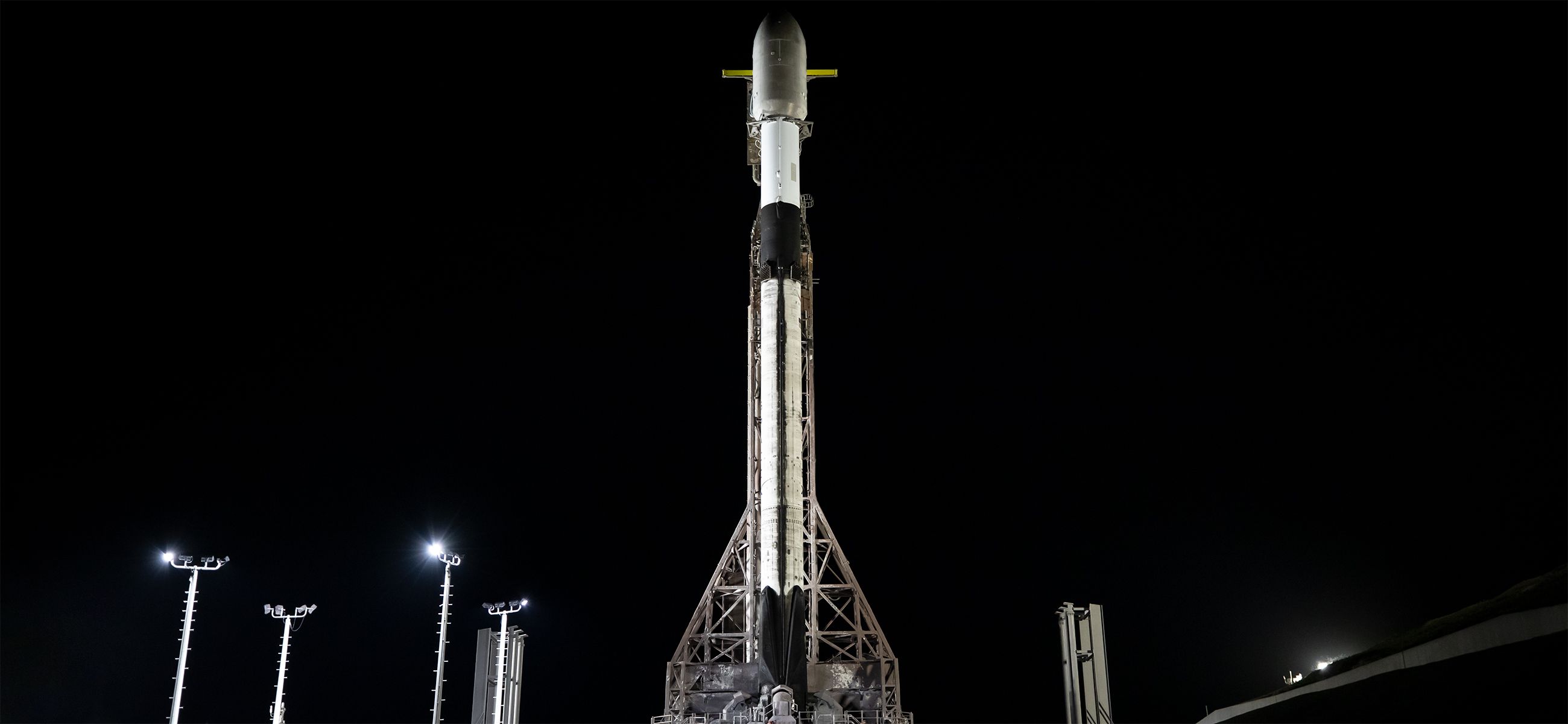
SpaceX has been awarded $739 million for nine national security missions by the U.S. Space Force. This deal, covering missions for the Space Development Agency (SDA) and the National Reconnaissance Office (NRO), emphasizes SpaceX’s pivotal role in military launch operations under the National Security Space Launch (NSSL) Phase 3 Lane 1.
Read the full story: SpaceNews
FCC Approves Expansion of Starlink Satellite Network
In a major boost for SpaceX’s satellite internet service, the Federal Communications Commission (FCC) has given the go-ahead for an additional 7,500 Starlink satellites. This expansion allows SpaceX to enhance their next-generation constellation, furthering global connectivity ambitions.
Read the full story: SpaceNews
SpaceX Marks Third Starlink Launch of 2026
Continuing its ambitious launch schedule, SpaceX deployed 29 Starlink satellites from Florida’s Space Coast. This launch marks the third successful Falcon 9 mission of the year, highlighting SpaceX’s rapid deployment capabilities to grow their broadband network.
Read more about the mission: Space.com
Pentagon Chief Highlights Rocket Lab in ‘Arsenal of Freedom’ Tour
U.S. Defense leadership underscores the importance of commercial satellite capabilities and rapid launch technologies with a tour of Rocket Lab. This visit is part of an ongoing effort to emphasize U.S.-made satellites and advanced aerospace technologies as major defense assets.
Read the full story: SpaceNews
Early Return for NASA’s Crew-11 from the ISS
NASA has announced an accelerated return for the Crew-11 mission from the International Space Station. The four astronauts are scheduled to return on January 15, prompted by a medical issue that arose during the mission.
Read the full story: SpaceNews
NASA Gears Up for Artemis II Milestones
NASA has laid out key milestones for the Artemis II mission, the program’s first crewed lunar flight. This mission aims to pave the way for humanity’s return to the Moon, reinforcing NASA’s commitment to deep-space exploration.
Read the full story: NASASpaceFlight.com
🛰️Satellite Spotlight
- Satellite Name: ONEWEB-0696
- NORAD ID: 56723
- Launch Date: May 20, 2023
- Mission: This satellite is part of the OneWeb constellation, aimed at providing global broadband communication services.
- Orbit: Low Earth Orbit (LEO)
- Operator: OneWeb
- Fun Fact: ONEWEB-0696 is equipped with a Ku-Band payload, enabling high-speed internet connectivity, crucial for bridging the digital divide in remote areas.
Track this satellite in real-time on our web app: Track ONEWEB-0696
🌌Space Weather
Next 24 Hours
-
Radio Blackouts Probability
- Minor: 15
- Major: 1
- Risk: None
-
Solar Radiation
- Probability: 1
- Risk: None
-
Geomagnetic Storming
- Scale: 1
- Impact: minor
- Activity: Moderate
-
Impact Summary
- No risk of radio blackouts.
- No risk of solar radiation storms.
- Moderate geomagnetic activity with minor geomagnetic storms anticipated.
- Geomagnetic outlook indicates G1 (Minor) and G2 (Moderate) geomagnetic storms likely on 11 January due to the influence of coronal mass ejections (CMEs) that departed the Sun on 08 January, combined with an anticipated coronal hole high-speed stream (CH HSS).
- Slight chance of R1-R2 (Minor-Moderate) radio blackouts from 11-13 January due to the flare potential of Region 4336.
Long Term Forecast
- Impact Summary
- Solar activity is expected to remain low, with potential for moderate (R1-Minor) and slight chances for high (R2/R3-Moderate-Strong) conditions in the upcoming solar rotation due to multiple visible regions and those returning from the Sun’s farside.
- No proton events predicted at geosynchronous orbit.
- Expect high levels of greater than 2 MeV electron flux at geosynchronous orbit on 05 January and from 15-13 January due to the influence of recurrent coronal holes, with normal to moderate levels likely afterward.
- Geomagnetic activity to reach G1 (Minor) storm levels on several dates (13-14 January, 17-20 January, and 29 January), with active levels on 05 January and 28 January, and unsettled levels at various times throughout the month.
- Overall, the second half of the outlook period is expected to be mostly quiet, with geomagnetic activity primarily driven by recurrent coronal holes.
🚀 Upcoming Space Launches
January 11
- SpaceX Falcon 9 Block 5:
- Pandora / Twilight rideshare mission from Vandenberg Space Force Base, CA, USA (13:19 UTC) The Pandora satellite will explore exoplanet atmospheres, part of NASA’s Astrophysics Pioneers Program. The mission also includes 39 rideshare payloads.
January 12
-
Indian Space Research Organization PSLV-DL:
- EOS-N1 and others from Satish Dhawan Space Centre, India (04:15 UTC) The mission carries a small Earth observation satellite for an “Indian strategic user” and 18 additional rideshare payloads.
-
SpaceX Falcon 9 Block 5:
- Starlink Group 6-97 from Cape Canaveral Space Force Station, FL, USA (17:42 UTC) A batch of 29 satellites for SpaceX’s Starlink internet mega-constellation.
January 13
- China Aerospace Science and Technology Corporation Long March 8A:
- Unknown Payload from Wenchang Space Launch Site, People’s Republic of China (15:38 UTC)
January 14
- SpaceX Falcon 9 Block 5:
- Starlink Group 6-98 from Cape Canaveral Space Force Station, FL, USA (18:01 UTC) A batch of 29 satellites for SpaceX’s Starlink internet mega-constellation.
January 15
-
China Aerospace Science and Technology Corporation Long March 3B/E:
- Unknown Payload from Xichang Satellite Launch Center, People’s Republic of China (16:00 UTC)
-
Galactic Energy Ceres-1S:
- Unknown Payload from Haiyang Oriental Spaceport (19:30 UTC)
January 17
-
Isar Aerospace Spectrum:
- Flight Two from Andøya Spaceport (00:00 UTC) Second test flight of the Isar Spectrum vehicle, carrying cubesats for the ESA’s “Boost!” program.
-
Galactic Energy Ceres-2:
- Demo Flight from Jiuquan Satellite Launch Center, People’s Republic of China (03:00 UTC) First test launch of Galactic Energy’s Ceres-2 rocket.
-
SpaceX Falcon 9 Block 5:
- NROL-105 from Vandenberg Space Force Base, CA, USA (04:18 UTC) Twelfth batch of reconnaissance satellites for the National Reconnaissance Office by SpaceX and Northrop Grumman.
Note: Launch dates and times are subject to change due to technical or weather considerations.

Maurice Stellarski


