· space brief · 5 min read
Earthquake Sensors Repurposed to Track Space Debris Reentry | KeepTrack Space Brief
Scientists use earthquake sensors to track space debris reentry via sonic boom detection. SpaceX launches 25 Starlink satellites in seventh mission of 2026. NASA and DOE partner for lunar nuclear power.
📰Top Stories
Earthquake Sensors: The New Space Junk Tracker
In a fascinating new application of technology, earthquake sensors are now being used to track space debris as it reenters Earth’s atmosphere. These sensors can detect the sonic booms produced by reentering debris, aiding in the tracking of these potentially dangerous objects in near real-time. This innovation promises to enhance our ability to monitor and manage orbital debris, protecting both satellites and ground infrastructure.
Read the full story: Space.com
Live Updates: SpaceX’s Starlink Expansion Continues
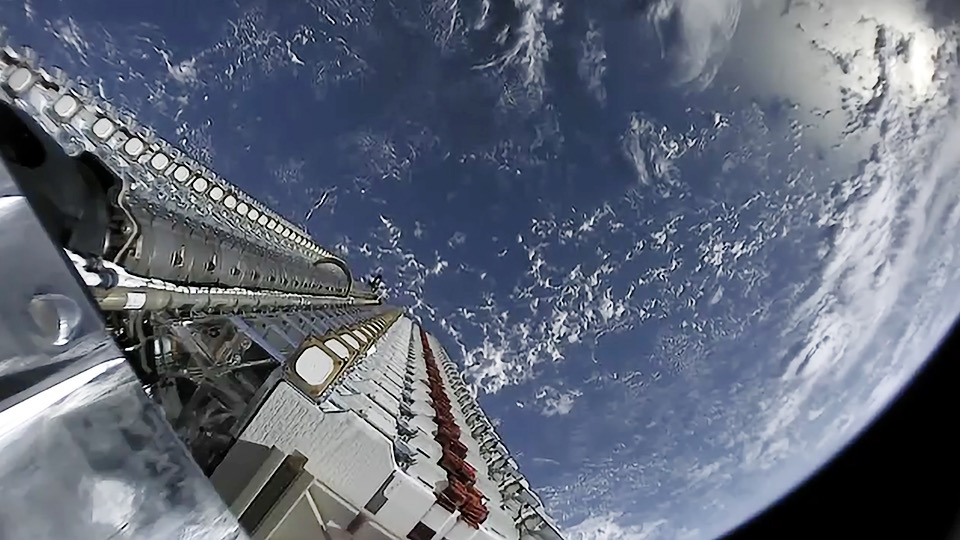
SpaceX is set to launch another batch of 25 Starlink satellites, adding to its ever-expanding satellite constellation aimed at providing global internet coverage. The launch is scheduled from pad 4E, cementing this mission as the seventh Starlink endeavor this year. The satellites will be deployed into polar, low Earth orbit, continuing SpaceX’s trend of rapid deployment and service expansion.
Read the full story: Spaceflight Now
NASA and DOE Partner for Lunar Nuclear Power Development
NASA is teaming up with the Department of Energy to develop nuclear reactors capable of operating on the moon. This initiative is critical as industry stakeholders await the release of a final call for proposals. These reactors are essential for sustaining lunar activities, offering a reliable power source for various missions on the moon’s surface.
Read the full story: SpaceNews
Pentagon’s New National Defense Strategy Released
The Pentagon has unveiled its latest National Defense Strategy, with a primary focus on homeland defense. Released at an unconventional time during a major snowstorm, the strategy outlines the Department of Defense’s current priorities and strategic goals, reflecting an increased emphasis on defense initiatives within the Western Hemisphere.
Read the full story: Breaking Defense
Rocket Lab’s ‘Hungry Hippos’: A Leap towards Neutron Rocket Launch
Rocket Lab is making strides towards the development of its Neutron rocket with the unveiling of its innovative ‘Hungry Hippo’ fairings. These components, fresh off their arrival at Wallops Island, reflect Rocket Lab’s commitment to innovation and marks an exciting step forward in their Neutron rocket program.
Read the full story: NASASpaceFlight.com
🛰️Satellite Spotlight
- Satellite Name: QUAKESAT
- NORAD ID: 27845
- Launch Date: June 30, 2003
- Mission: QUAKESAT is dedicated to Earth sciences, specifically designed to monitor seismic activity and provide valuable data about earthquakes.
- Orbit: Low Earth Orbit (LEO)
- Operator: QUAFI
- Fun Fact: QUAKESAT was one of the first CubeSats to be launched, showcasing the potential of small satellites in the realm of scientific research.
Track this satellite in real-time on our web app: Track QUAKESAT
🌌Space Weather
Next 24 Hours
-
Radio Blackouts Probability
- Minor: 55
- Major: 10
- Risk: None
-
Solar Radiation
- Probability: 5
- Risk: None
-
Geomagnetic Storming
- Scale: 0
- Impact: none
- Activity: Low
-
Impact Summary
- Next 24 hours: No risk of radio blackouts.
- No risk of solar radiation storms.
- Geomagnetic outlook: No G1 (Minor) or greater geomagnetic storms are expected.
- No significant transient or recurrent solar wind features are forecast.
- Radiation outlook: No S1 (Minor) or greater solar radiation storms are expected.
- No significant active region activity favorable for radiation storm production is forecast.
Long Term Forecast
- Forecast of Solar and Geomagnetic Activity 19 January - 14 February 2026:
- Solar activity is likely to remain at low levels, with a chance for R1-R2 (Minor-Moderate) and a slight chance for R3 (Strong) levels over the next forecast period, all due to multiple regions on the visible disk as well as regions expected to return.
- 10 Mev at 10 pfu proton events (S1-Minor) are expected at geosynchronous orbit on 19-20 Jan.
- The greater than 2 MeV electron flux at geosynchronous orbit is expected to reach high levels on 19-27 Jan and 12-14 Feb, all due to the anticipated influence of multiple, recurrent coronal holes.
- The remainder of the outlook period is likely to be at normal to moderate levels.
- Geomagnetic field activity is likely to reach (G1-Minor) geomagnetic storm levels on 29 Jan and unsettled to active levels on 19-23, 27-28, 30-31 Jan, 04-11 and 13-14 Feb.
- All enhancements in activity are due to the anticipated influence of multiple, recurrent CH HSSs.
- The remainder of the outlook period is expected to be mostly quiet.
🚀Upcoming Space Launches
January 25
- SpaceX Falcon 9:
- Starlink Group 17-20 from Vandenberg Space Force Base, CA, USA (15:17 UTC) A batch of 25 satellites for the Starlink mega-constellation - SpaceX’s project for space-based Internet communication system.
January 27
- SpaceX Falcon 9:
- GPS III SV09 from Cape Canaveral Space Force Station, FL, USA (04:42 UTC) Ninth of ten GPS III missions.
- Rocket Lab Electron:
- Bridging The Swarm (NeonSat-1A) from Rocket Lab Launch Complex 1, Mahia Peninsula, New Zealand (22:45 UTC) The NeonSat-1A will test constellation capabilities for the South Korean government’s Earth observation program.
January 29
- SpaceX Falcon 9:
- Starlink Group 17-19 from Vandenberg Space Force Base, CA, USA (15:17 UTC) A batch of 25 satellites for the Starlink mega-constellation - SpaceX’s project for space-based Internet communication system.
January 30
- SpaceX Falcon 9:
- Starlink Group 6-101 from Cape Canaveral Space Force Station, FL, USA (04:00 UTC) A batch of 29 satellites for the Starlink mega-constellation - SpaceX’s project for space-based Internet communication system.
January 31
- China Aerospace Science and Technology Corporation Long March 7A:
- Unknown Payload from Wenchang Space Launch Site, People’s Republic of China (00:00 UTC)
- China Rocket Co. Ltd. Smart Dragon 3:
- Unknown Payload from Haiyang Oriental Spaceport, South China Sea (00:00 UTC)
February 1
- SpaceX Falcon 9:
- Starlink Group 6-103 from Cape Canaveral Space Force Station, FL, USA (23:04 UTC) A batch of 29 satellites for the Starlink mega-constellation - SpaceX’s project for space-based Internet communication system.
February 2
- United Launch Alliance Vulcan VC4S:
- USSF-87 from Cape Canaveral Space Force Station, FL, USA (00:00 UTC) Launch of two Geosynchronous Space Situational Awareness Program satellites for space flight safety enhancement.
- SpaceX Falcon 9:
- Starlink Group 17-32 from Vandenberg Space Force Base, CA, USA (15:17 UTC) A batch of 24 satellites for the Starlink mega-constellation - SpaceX’s project for space-based Internet communication system.
Note: Launch dates and times are subject to change due to technical or weather considerations.

Maurice Stellarski