· space brief · 5 min read
SpaceX Hits 600th Falcon 9 Launch, NASA SLS Leak Tests Struggle | KeepTrack Space Brief
SpaceX reaches 600th Falcon 9 launch with Starlink 17-13 from Vandenberg. NASA SLS hydrogen leak repairs only partially successful. New book explores forces shaping space.
📰Top Stories
SpaceX’s 600th Falcon 9 Launch: A Milestone in Rocket History
SpaceX successfully launched its 600th Falcon 9 rocket, marking a significant milestone in the company’s history of spaceflight. The Starlink 17-13 mission took off from Vandenberg Space Force Base, becoming the 180th Falcon 9 launch at the site. This achievement underscores SpaceX’s dominant role in orbital launches and its growing constellation of Starlink satellites, contributing to global internet coverage.
Read the full story: Spaceflight Now
NASA’s SLS Hydrogen Leak Tests Face Setbacks
NASA’s attempts to verify repairs on the Space Launch System’s (SLS) liquid hydrogen fueling system were only partially successful, hampered by issues with ground support equipment. This series of tests aims to resolve persistent leaks that have challenged previous Artemis missions, highlighting the complexities of preparing for sustained human presence on the Moon and beyond.
Read the full story: SpaceNews
Forces Shaping Space: A New Perspective
A new book by David Ariosto, discussed in a recent interview, explores the dynamic forces shaping space exploration today. It covers critical themes such as China’s ambitions, lunar colonization, and the burgeoning space industry. This conversation provides insights into the geopolitical and industrial trends influencing space policy and exploration strategies.
Read the full story: SpaceNews
🛰️Satellite Spotlight
- Satellite Name: GGSE 5
- NORAD ID: 02834
- Launch Date: May 31, 1967
- Mission: The GGSE 5 satellite is designed for ELINT (Electronic Intelligence) and ocean surveillance, contributing valuable data to military and research operations.
- Orbit: Low Earth Orbit (LEO)
- Operator: NRO/NRL (National Reconnaissance Office/Naval Research Laboratory)
- Fun Fact: GGSE 5 was part of the POPPY system and utilized ammonia cold gas microthrusters for maneuvering, showcasing innovative technology for its time.
Track this satellite in real-time on our web app: Track GGSE 5
🌌Space Weather
Next 24 Hours
-
Radio Blackouts Probability
- Minor: 10
- Major: 1
- Risk: None
-
Solar Radiation
- Probability: 1
- Risk: None
-
Geomagnetic Storming
- Scale: 2
- Impact: moderate
- Activity: Moderate
-
Impact Summary
- Next 24 hours: No risk of radio blackouts.
- No risk of solar radiation storms.
- Moderate geomagnetic activity and moderate geomagnetic storms expected.
- Periods of G1 (Minor) storming likely on 15-16 Feb, with a chance for isolated G2 (Moderate) storming on 15 Feb due to positive polarity CH HSS influences.
- Weak CME enhancements are possible on 15 Feb as a CME from 11 Feb passes nearby.
- No significant active region activity forecasted for radiation storm production.
- Slight chance for R1-R2 (Minor-Moderate) radio blackouts through 17 Feb.
Long Term Forecast
- Impact Summary
- Solar activity is expected at moderate levels with further M-class (R1-R2, Minor-Moderate) flares anticipated and a chance for X-class (R3-Strong or greater) on 09-10 Feb as Region 4366 moves across the western limb.
- Low activity levels, with chances for M-class flares, expected from 11-22 Feb.
- An increase to moderate to high solar activity likely from 23-28 Feb as Region 4366 returns to the visible disk.
- Conditions will return to low to moderate levels from 01-07 Mar as Region 4366 rotates out of view.
- The 10 MeV proton flux may reach S1-S2 (Minor-Moderate) storm levels through 12 Feb.
- Following 12-22 Feb, levels are likely to be below S1 (Minor) levels with another potential increase on 23-28 Feb.
- High levels of the greater than 2 MeV electron flux at geosynchronous orbit are expected on key dates due to CH HSS influence.
- Geomagnetic field activity anticipated to fluctuate between unsettled and active levels throughout the forecast period, influenced by CH HSS effects.
🚀Upcoming Space Launches
February 16
- SpaceX Falcon 9:
- Starlink Group 6-103 from Cape Canaveral Space Force Station (05:00 UTC) A batch of 29 satellites for the Starlink mega-constellation, SpaceX’s project for space-based Internet communication system.
February 18
-
SpaceX Falcon 9:
- Starlink Group 17-25 from Vandenberg Space Force Base (08:00 UTC) A batch of 25 satellites for the Starlink mega-constellation, SpaceX’s project for space-based Internet communication system.
-
SpaceX Falcon 9:
- Starlink Group 10-36 from Cape Canaveral Space Force Station (22:00 UTC) A batch of 29 satellites for the Starlink mega-constellation. This is the first Starlink launch to feature a Falcon 9 booster landing within The Bahamas waters operationally.
February 21
-
Firefly Aerospace Alpha:
- Stairway to Seven from Vandenberg Space Force Base (00:20 UTC) Firefly Alpha’s Flight 7 will be a test flight and return-to-flight for the launch vehicle after its April 2025 launch failure.
-
SpaceX Falcon 9:
- Starlink Group 17-26 from Vandenberg Space Force Base (20:00 UTC) A batch of 25 satellites for the Starlink mega-constellation, SpaceX’s project for space-based Internet communication system.
February 22
- SpaceX Falcon 9:
- Starlink Group 6-104 from Cape Canaveral Space Force Station (02:04 UTC) A batch of 28 satellites for the Starlink mega-constellation, SpaceX’s project for space-based Internet communication system.
February 23
- Rocket Lab HASTE:
- That’s Not A Knife (DART AE) from Wallops Flight Facility (20:00 UTC) Payload is a scramjet-powered hypersonic vehicle developed by the Australian company Hypersonix.
February 24
- SpaceX Falcon 9:
- Starlink Group 6-110 from Cape Canaveral Space Force Station (20:56 UTC) A batch of 29 satellites for the Starlink mega-constellation, SpaceX’s project for space-based Internet communication system.
February 25
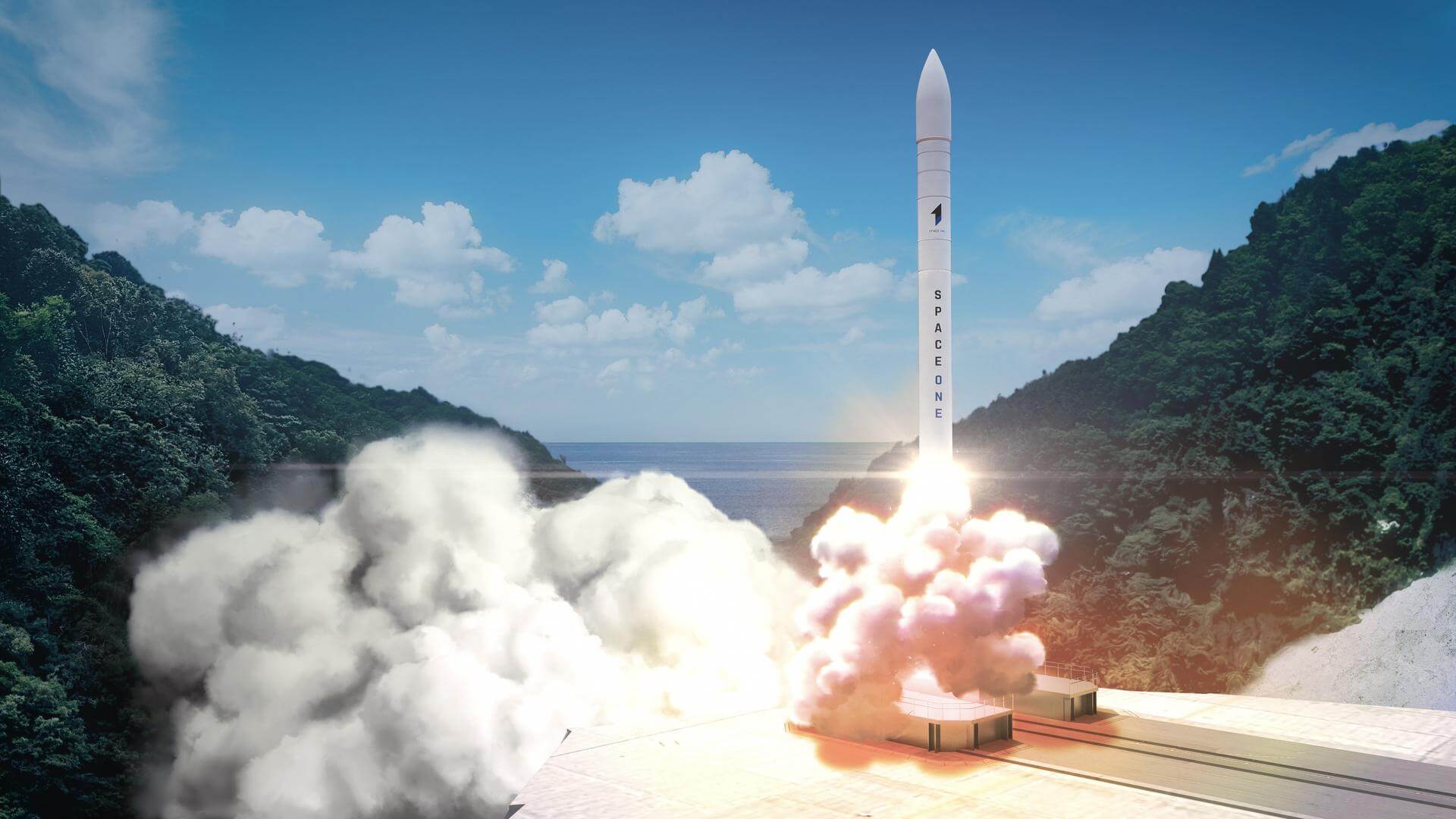
- Space One KAIROS:
- Flight 3 from Spaceport Kii, Japan (02:00 UTC) Third flight of the KAIROS launch vehicle. Four satellites will be on board: TATARA-1R, SC-Sat1a, HErO, and AETS-1.
Note: Launch dates and times are subject to change due to technical or weather considerations.

Maurice Stellarski