· today in space history · 6 min read
The Day Two Astronauts Proved We Could Reach the Moon
Sixty years ago, Frank Borman and James Lovell launched aboard Gemini 7 for a grueling 14-day mission that would prove humans could endure the journey to the moon and achieve the first true rendezvous in space
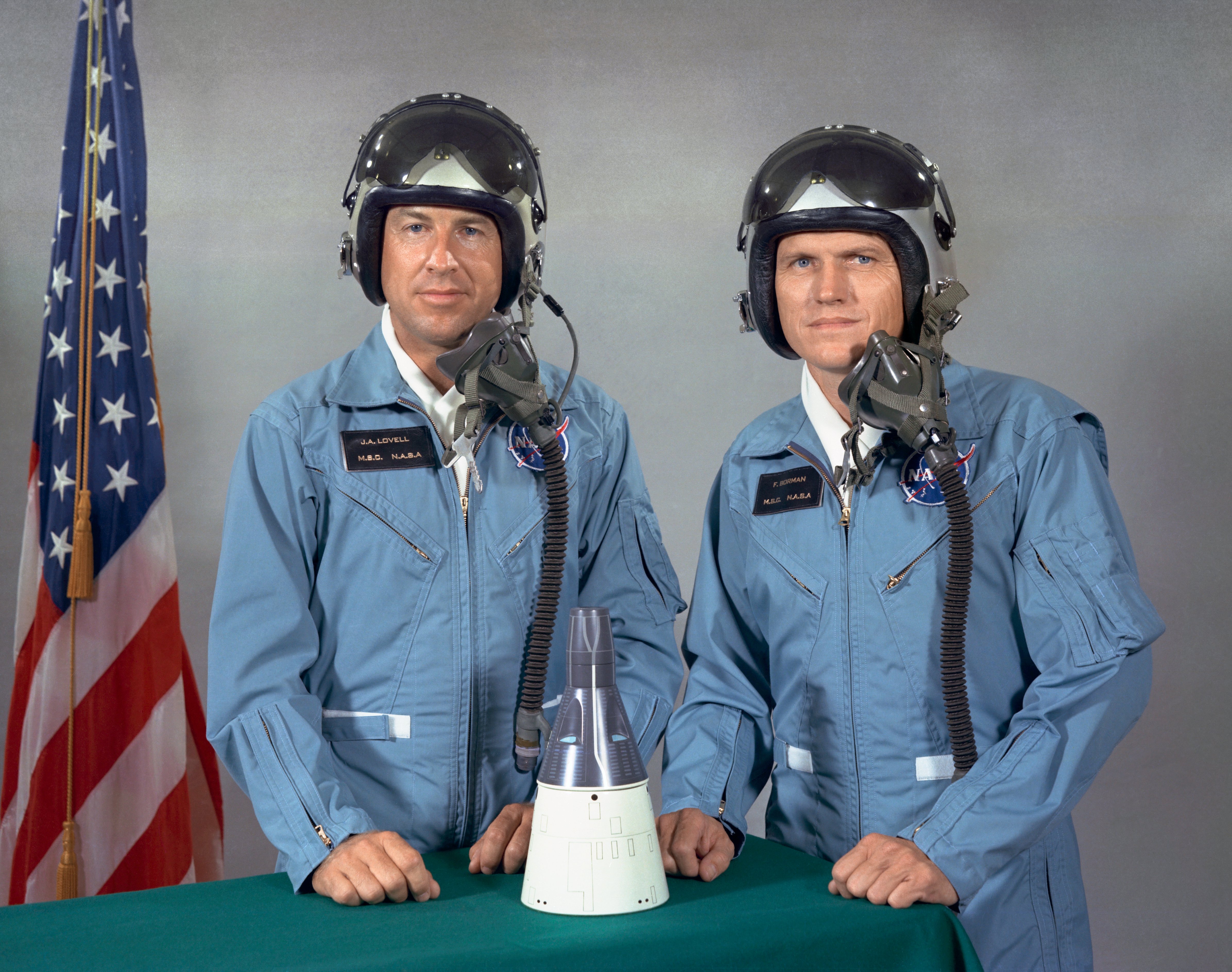
Exactly 60 years ago today, on a quiet afternoon at Cape Canaveral, the clear sky was split open by a Titan II rocket as it propelled itself through the atmosphere. The 8,000-pound spacecraft separated to reveal Gemini 7, a capsule crewed by Frank Borman and James A. Lovell. The launch was perfect - the two astronauts only slightly jostled in their seats - and NASA’s hopes for the mission soared. The pair had just embarked on a cramped yet critical journey through Earth’s orbit, where for two weeks they would push the limits of what had ever been done in space.
Project Gemini
Gemini 7 was the sixth crewed launch of Project Gemini, America’s second human spaceflight program. After the success of Project Mercury, Gemini served as the bridge between putting a man in space and landing him on the moon. The program launched 12 two-man spacecraft between 1964 and 1966, with the goal of mastering the manual maneuvering and orbital techniques that would be essential for lunar missions.
By the time Gemini 7 rolled around, American spaceflight history was already dotted with the program’s successes: the first American spacewalk with Gemini 4, and a new endurance record of 8 days in orbit with Gemini 5. But NASA wanted to push further. Gemini 7 would be their most ambitious mission yet.
The primary objectives were straightforward but daunting: study the effects of prolonged spaceflight on the human body, conduct 20 medical and technical experiments, and successfully achieve a rendezvous with another spacecraft - all over the course of 14 days. That time frame wasn’t random. Fourteen days was roughly the duration of a round-trip journey to the moon, which remained the ultimate goal of the entire American space program. Gemini 7 would prove whether astronauts could handle that kind of time in space together.
A Packed Two Weeks
The space shared by the two men was uncomfortably tight. Lovell and Borman spent their mission in what was essentially the front seat of a MINI Cooper - except they couldn’t get out and stretch their legs. Unless the hatch above them was open, they couldn’t stand up or move around; instead, they were confined to a sitting position with two tiny windows by their side.
Every part of their schedule played out in each other’s presence, from life-sustaining activities to medical experiments. Even their sleep was synced so they could conduct work at the same time. The distance between them was barely 6 feet, and they made do by stuffing trash behind their seats to conserve space. They used sanitary wipes to keep clean without showers, shared a toothbrush on at least one occasion, and gritted their teeth through the occasional leakage of their urine collection bags. As they raced through their experiments, stretches of empty time crept in, and boredom set in hard. They passed the hours with books by Mark Twain and Walter D. Edmonds.
One key objective of Gemini 7 was testing whether astronauts could operate in “shirt sleeve environments” - working without their bulky spacesuits. When they launched, they were already wearing a “grasshopper” suit, a lightweight pressure suit with a soft hood and a zippered entry system that made peeling it off much easier in such cramped conditions. It weighed just a third of the standard Gemini spacesuit, allowing for better storage and mobility. The astronauts took turns spending time unsuited, eventually finding it more comfortable to spend most of the voyage without them.
Among the other experiments they ran, they studied calcium balance in their bodies and how spaceflight affected bodily fluids. They also ran technical experiments, though two had to be cancelled when equipment problems cropped up. In fact, problems with the spacecraft began to pile up toward the end of the flight. By day 13, two thrusters had failed, and Lovell and Borman slept under the glow of warning lights signaling malfunctioning fuel cells - the power sources that generated electricity for the spacecraft. Worrisome as it was, tests conducted on Earth concluded that the vessel would hold until landing.
The Rendezvous Born from Failure
Arguably the most important objective of Gemini 7 wasn’t even part of the original mission plan.
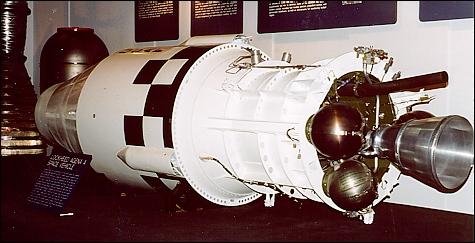
To understand what happened, you need to know that NASA had been planning a different rendezvous mission. The original Gemini 6 was supposed to launch and meet up with an unmanned Agena Target Vehicle - a small spacecraft that would serve as a docking target. But on October 25, 1965, disaster struck. The Agena’s engine experienced a “hard start” (essentially a violent ignition failure), its fuel tanks ruptured, and the vehicle exploded shortly after launch. With no target to rendezvous with, Gemini 6 was grounded.
But NASA wasn’t about to let the setback derail the program. Engineers quickly pivoted to a creative solution: what if Gemini 7, already scheduled for its long-duration mission, could serve as the rendezvous target instead? They rebuilt and redesignated the spacecraft as Gemini 6A, planning to launch it while Gemini 7 was still in orbit.
The plan worked. Eleven days after Gemini 7 launched, Gemini 6A lifted off and successfully rendezvoused with its sister spacecraft. The two capsules flew in formation, maneuvering to within just one foot of each other at their closest approach - close enough that the crews could see each other through their windows. They maintained station-keeping (flying in coordinated positions relative to each other) at distances ranging from 1 to 300 feet before Gemini 6A withdrew to a distance of about 30 miles.
It was the first true rendezvous in space history, and it proved that two spacecraft could find each other in orbit and fly together - a capability absolutely essential for the lunar missions to come.
Both spacecraft landed safely on Earth without major complications.
Roaring Success
The 14-day voyage set a new record for human spaceflight endurance, providing NASA with invaluable data on how the human body holds up over extended periods in microgravity. It offered the first real taste of what it would be like to work in space on long-term missions - the journey to the moon chief among them. Waste management, working in impossibly cramped quarters, coordinating sleep and work schedules, maintaining sanitation - all of it served as hard-won lessons for future missions.
Despite Gemini 7 being the first spaceflight for both Lovell and Borman, the two performed spectacularly. Borman would go on to command Apollo 8, becoming one of the first humans to orbit the moon. Lovell participated in several Apollo missions and became famous as the commander of the ill-fated Apollo 13, where his calm leadership helped bring his crew home safely after an in-flight emergency.
From the improvised rendezvous that almost didn’t happen to the grueling experiments conducted in what amounted to a flying closet, Gemini 7 remains a crucial and inspiring chapter in space history. It proved that humans could endure the journey to the moon - and that NASA could adapt on the fly when things didn’t go according to plan.

Mariana Mokhova