· space brief · 6 min read
Space Brief 9 Jun 2025
Key space events for today include potential changes in US space policy involving SpaceX, uncertainties regarding NASA's Starliner, and China's new steps in asteroid exploration.

📄Top Stories
Today’s space highlights include a looming US policy shift that could affect SpaceX operations, ongoing uncertainty about NASA’s future missions with the Starliner spacecraft, and new milestones achieved by China’s Tianwen 2 mission en route to its asteroid target.
📰Detailed Coverage
Trump-Musk Showdown Threatens US Space Plans
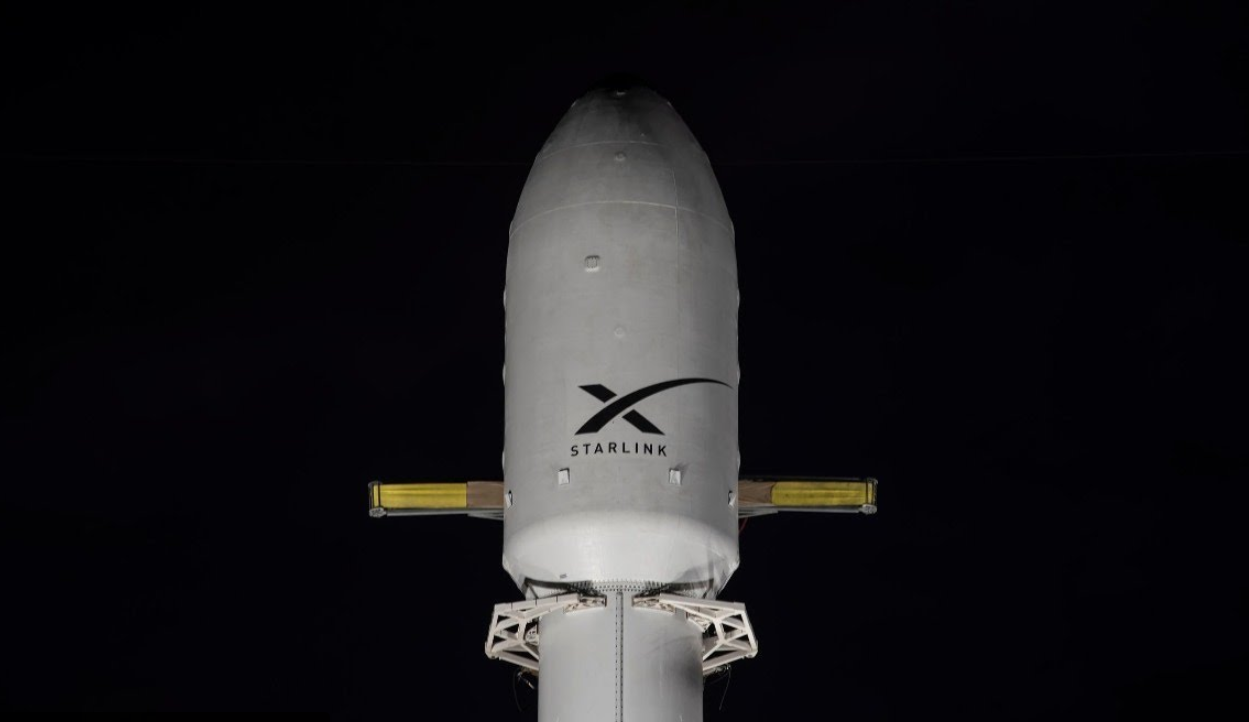
The current discord between President Donald Trump and Elon Musk is stirring uncertainty in US space operations. With SpaceX playing a critical role in national projects, Trump’s recent threats to terminate Musk’s federal contracts could disrupt numerous programs such as the Starlink satellite constellation and hypersonic missile tracking.
This development is not only pivotal for US military and NASA collaboration with commercial partners but also underscores the government’s significant reliance on private space enterprises. Keeping abreast with changes in these contracts is essential for anticipating shifts in satellite tracking and space-based communications.
Read the full story: SpaceDaily
Starliner Future Plans Still in Limbo
NASA remains in a state of indecision regarding its Starliner spacecraft, nearly a year post its last flawed crewed test flight. The uncertainty around Starliner’s next mission highlights ongoing challenges in NASA’s efforts to maintain a robust operational roster of spacecraft.
The delay in decision-making might affect the broader timeline of NASA’s crewed missions and raise questions about the sustainability of its collaboration with Boeing. As developments unfold, it will be important to utilize satellite tracking resources to monitor any subsequent launch announcements related to Starliner.
Read the full story: SpaceNews
China’s Tianwen 2 Spacecraft Sends Home 1st Photo
China’s Tianwen 2 mission has transmitted its first photo, showcasing its journey toward a ‘quasi-moon’ asteroid located over 3 million kilometers from Earth. This marks a significant step in what promises to be an ambitious asteroid sample return mission.
The early success sets the stage for further exploration of this mysterious space rock and underlines China’s expanding footprint in deeper space exploration. Such missions offer insightful data crucial for enhancing our satellite tracking technologies and understanding of near-Earth objects.
Read the full story: Space.com
Astronauts Track Huge Dust Clouds Over Canada and US
The International Space Station’s Expedition 73 crew has been monitoring enormous dust clouds swept across North America. Utilizing the station’s advanced observational tools, astronauts are providing real-time data crucial for understanding climate dynamics.
The gathered information is not only beneficial for atmospheric studies but also enhances prediction models that can be integrated into satellite tracking systems to improve earth observation capabilities.
Read the full story: Space.com
See the Moon Shine with Antares in the Southern Sky
Tonight, sky gazers can witness the moon’s conjunction with Antares, a prominent red supergiant in the southern sky. The celestial event offers a unique stargazing opportunity, allowing observers to appreciate the vibrant colors and dynamics of stellar evolution.
Although not directly tied to satellite tracking, such celestial arrangements can influence satellite operations by providing data on celestial navigation used in precise satellite positioning.
Read the full story: Space.com
🛰️Satellite Spotlight
- Satellite Name: MEV-1
- NORAD ID: 44625
- Launch Date: October 9, 2019
- Mission: MEV-1 (Mission Extension Vehicle) is designed for satellite servicing, specifically to extend the life of existing satellites through docking and refueling.
- Orbit: GEO (Geostationary Orbit)
- Operator: Space Logistics LLC (SPLOG)
- Fun Fact: MEV-1 is the first spacecraft capable of extending the life of satellites in orbit, marking a significant advancement in satellite servicing technology.
Track this satellite in real-time on our web app: Track MEV-1
🌌Space Weather
Space weather conditions are currently quiet.
R0 - S0 - G0
Next 24 Hours: In the coming day, satellite operators can be reassured as there is no risk of radio blackouts or solar radiation storms. However, be aware of moderate geomagnetic activity and minor geomagnetic storms which are likely due to coronal mass ejections (CME) and coronal hole influence. Specifically, G1 (Minor) geomagnetic storms are expected on June 9. While radiation storm activity is low, there exists a chance for R1-R2 (Minor-Moderate) radio blackouts between June 9-11, which could lead to minor disruptions in satellite communication.
Beyond: Looking ahead from June 9 to July 5, 2025, solar activity indicates a chance for R1-R2 (Minor-Moderate) radio blackouts throughout due to multiple regions on the Sun’s visible disk, including regions returning from the far side. Operators should remain mindful that no proton events are expected at geosynchronous orbit. The higher-than-2 MeV electron flux at geosynchronous orbit is projected to reach high levels during specific dates: June 15-22, June 26-29, and July 2-4, all following recurrent coronal hole influence. Geomagnetic activity is anticipated to be elevated due to the influence of recurrent coronal holes and CMEs. Expect G1 (Minor) geomagnetic storms on June 9 and 13, with G2 (Moderate) conditions likely on June 14-15. Another round of G1 (Minor) to G2 (Moderate) storms is anticipated on June 25-26, with overall quiet to unsettled levels expected for the rest of the period.
🚀 Upcoming Space Launches
June 10
- SpaceX Falcon 9:
- Axiom Space Mission 4 from Kennedy Space Center (12:22 UTC) This is a Crew Dragon flight for Axiom Space, carrying a professionally trained commander and three private astronauts to the ISS for at least eight days.
- SpaceX Falcon 9:
- Starlink Group 12-24 from Cape Canaveral SFS (13:03 UTC) A batch of satellites for the Starlink mega-constellation project for space-based Internet communication.
June 11
- Rocket Lab Electron:
- The Mountain God Guards (iQPS Launch 3) from Rocket Lab Launch Complex 1, Mahia Peninsula (15:15 UTC) Synthetic aperture radar Earth observation satellite for Japanese company iQPS.
June 13
- SpaceX Falcon 9:
- Starlink Group 15-6 from Vandenberg SFB (01:46 UTC) A batch of satellites for the Starlink mega-constellation project for space-based Internet communication.
- China Aerospace Science and Technology Corporation Long March 2D:
- Unknown Payload from Jiuquan Satellite Launch Center (07:48 UTC) Details TBD.
- SpaceX Falcon 9:
- Starlink Group 12-26 from Cape Canaveral SFS (11:45 UTC) A batch of satellites for the Starlink mega-constellation project for space-based Internet communication.
- United Launch Alliance Atlas V 551:
- Project Kuiper (KA-02) from Cape Canaveral SFS (18:29 UTC) Project Kuiper is a mega constellation of satellites in Low Earth Orbit offering broadband internet access, managed by Kuiper Systems LLC, a subsidiary of Amazon.
June 17
- SpaceX Falcon 9:
- Starlink Group 15-9 from Vandenberg SFB (00:51 UTC) A batch of satellites for the Starlink mega-constellation project for space-based Internet communication.
June 21
- SpaceX Falcon 9:
- Transporter 14 (Dedicated SSO Rideshare) from Vandenberg SFB (00:00 UTC) Dedicated rideshare flight to a sun-synchronous orbit with dozens of small microsatellites and nanosatellites for commercial and government customers.
Note: Launch dates and times are subject to change due to technical or weather considerations.

Maurice Stellarski