· space brief · 8 min read
Starship Flight 12 Debuts Ship V3 as SDA Reorganizes York Space | KeepTrack Space Brief
SpaceX's Starship Flight 12 debuts Ship 39 and Booster 19 on May 19, while York Space faces investor confusion as Space Force reorganizes the Space Development Agency.
Top Stories
York Space Acknowledges ‘Investor Confusion’ as SDA Undergoes Space Force Reorganization
York Space executives are publicly defending their growth strategy after the Space Development Agency — their primary customer — was reorganized under Space Force. Company leadership admitted to investor confusion, which signals real uncertainty about contract continuity and future program structure.
York has been a major SDA transport layer contractor. Any restructuring of the SDA directly affects how Tranche 2 and future satellite orders are managed, funded, and overseen. Analysts tracking SDA-linked constellations should watch for changes in launch cadence and procurement timelines.
Read the full story: SpaceNews
NASA Issues Final RFP for Mars Telecommunications Orbiter
NASA has released its final request for proposals for a dedicated Mars communications orbiter. The RFP confirms requirements that narrow the eligible bidder pool, which effectively pre-screens out some potential competitors.
A purpose-built Mars relay orbiter would supplement or eventually replace aging assets like MRO and MAVEN that currently handle surface-to-Earth relay duties. The contract award will determine who builds the backbone of Mars communications infrastructure for the coming decade.
Read the full story: SpaceNews
AT&T, T-Mobile, and Verizon Back Telco-Led D2D Joint Venture Against Starlink Mobile
AT&T, T-Mobile, and Verizon are backing a proposed direct-to-device joint venture that would compete with Starlink Mobile. The plan has split operators from the satellite providers they’d need to make the service work.
The D2D market is shaping up as a two-camp fight: SpaceX’s vertically integrated Starlink Mobile versus a telco-controlled consortium using third-party satellite networks. Regulatory decisions at the FCC will determine how spectrum is allocated between them. Users tracking glossary terms like LEO and D2D should note this directly affects which satellite constellations see the most rapid expansion.
Read the full story: SpaceNews
Musk Moves to Structurally Lock In SpaceX Leadership Role
Elon Musk confirmed on X that he is taking steps to make himself unfireable at SpaceX. The arrangement ties a potential trillion-dollar compensation package to the company’s Mars colonization goal.
This has direct implications for long-term SpaceX strategy. If leadership is locked in by corporate structure rather than board discretion, program priorities — Starship, Starlink expansion, lunar contracts — will remain tied to Musk’s timelines regardless of investor or government pressure. For defense customers dependent on SpaceX launch capacity, that’s a single point of leadership risk worth tracking.
Read the full story: Teslarati
Mars ESCAPADE Mission Explained: Dual SmallSat Science at the Red Planet
NASA’s ESCAPADE mission is sending two small satellites to Mars to study its magnetosphere and how the solar wind strips away the Martian atmosphere. Episode 210 of the This Week In Space podcast features Dr. Robert Lillis of the ESCAPADE team walking through the mission design and science objectives.
ESCAPADE is one of the first SmallSat missions sent to another planet. Its dual-spacecraft approach allows simultaneous multi-point measurements of the Martian magnetic environment — something single orbiters can’t do.
Read the full story: Space.com
Satellite of the Day
FLOCK 1C-1
FLOCK 1C-1 is a 3U CubeSat developed by Planet Labs (PLABS) as part of the ambitious Flock constellation program, designed to demonstrate advanced Earth imaging technology from space. Launched on June 19, 2014, aboard a Dnepr rocket from Dombarovskiy Launch Site, this tiny satellite—weighing just 4.25 kilograms—carried imaging payloads (PS0, PS1, or PS2) branded as “Dove 0903” to validate the concept of rapid, affordable satellite imagery collection. The near-polar, sun-synchronous orbit at 98.037° inclination made it ideal for consistent Earth observation passes.
FLOCK 1C-1 was part of an experimental wave that proved CubeSats could deliver practical Earth imaging at a fraction of traditional satellite costs, ultimately validating the business model that would make Planet Labs a leader in commercial remote sensing. The satellite has since decayed from orbit after completing its technology demonstration mission, but its legacy lives on in the hundreds of Dove satellites that followed, continuing to image Earth’s surface daily for applications ranging from agriculture to disaster response.
| Detail | Value |
|---|---|
| NORAD ID | 40027 |
| Operator | PLABS (US) |
| Launch Date | June 19, 2014 |
| Orbit | Sun-synchronous, 98.037° inclination |
| Purpose | Technology demonstration / Earth imaging |
| Status | Decayed |
Learn more about this satellite: View FLOCK 1C-1
Upcoming Space Launches
May 17
- China Aerospace Science and Technology Corporation Long March 8: SpaceSail Polar Group TBD from Wenchang Space Launch Site, People’s Republic of China (14:34 UTC) The Long March 8, capable of delivering up to 8,100 kg to low Earth orbit, will launch a batch of SpaceSail polar constellation satellites into a polar orbit. Launch Preview
May 19
-
Avio S.p.A Vega-C: Solar wind Magnetosphere Ionosphere Link Explorer (SMILE) from Guiana Space Centre, French Guiana (03:52 UTC) The Vega-C rocket will launch the SMILE mission, a joint European Space Agency and Chinese Academy of Sciences spacecraft. SMILE will study how Earth responds to the solar wind using four science instruments, helping improve understanding of solar storms, geomagnetic storms, and space weather. The satellite will deploy 57 minutes after liftoff into a highly elliptical Earth orbit for a planned three-year mission. Watch Live
-
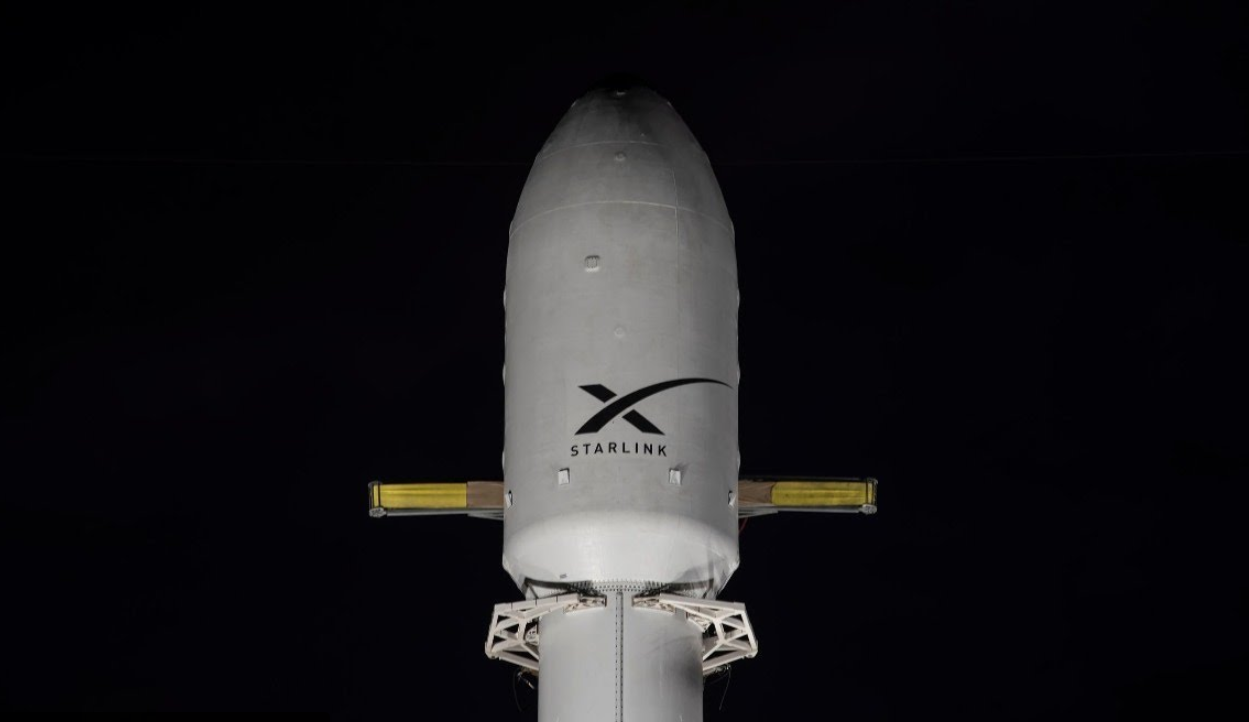
SpaceX Starship: Flight 12 from SpaceX Starbase, TX, USA (22:30 UTC) SpaceX will launch the 12th integrated Starship-Super Heavy flight test from Starbase, Texas. This marks the debut of the version 3 Starship, using Ship 39 and Booster 19. The fully reusable super heavy-lift vehicle — the most capable ever built, with a 100,000 kg payload capacity to low Earth orbit — will fly a suborbital trajectory. Watch Live Launch Preview
May 20
-
SpaceX Falcon 9 Block 5: Starlink Group 17-42 from Vandenberg Space Force Base, CA, USA (02:11 UTC) A batch of 24 Starlink V2 Mini Optimized satellites to low Earth orbit; first stage to land on drone ship Of Course I Still Love You in the Pacific Ocean. Watch Live
-
Agency for Defense Development South Korean ADD Solid-Fuel SLV: Demo Flight from Sea Launch (05:00 UTC) A demonstration test flight of South Korea’s Agency for Defense Development solid-fuel small launch vehicle, targeting low Earth orbit with a 500 kg capacity. Launch Preview
-
SpaceX Falcon 9 Block 5: Globalstar 2-R Mission 1 (x 9) from Cape Canaveral Space Force Station, FL, USA (12:04 UTC) A SpaceX Falcon 9 will launch nine Globalstar HIBLEO-4 replenishment satellites into low Earth orbit. This is the first of two missions to refresh the Globalstar HIBLEO-4 fleet. Booster B1090 will fly for its 12th time, targeting a landing on drone ship A Shortfall of Gravitas in the Atlantic Ocean. Watch Live Launch Preview
May 21
-
Indian Space Research Organization GSLV Mk II: GISAT-1A (EOS-05) from Satish Dhawan Space Centre, India (03:15 UTC) India’s Geosynchronous Satellite Launch Vehicle Mk II will launch GISAT-1A, a geostationary Earth observation satellite designed for continuous imaging of the Indian subcontinent and rapid monitoring of natural hazards and disasters.
-
SpaceX Falcon 9 Block 5: Starlink Group 10-31 from Cape Canaveral Space Force Station, FL, USA (09:26 UTC) A batch of 24 Starlink V2 Mini Optimized satellites to low Earth orbit; first stage to land on drone ship Of Course I Still Love You in the Pacific Ocean.
May 22
-
United Launch Alliance Atlas V 551: Amazon Leo (LA-07) from Cape Canaveral Space Force Station, FL, USA (00:00 UTC) A United Launch Alliance Atlas V 551 rocket will launch 29 Amazon Kuiper low Earth orbit broadband satellites. This is the penultimate Atlas V mission booked by Amazon for its Kuiper constellation, which aims to deliver high-speed, low-latency internet to underserved areas globally.
-
Rocket Lab Electron: Viva La StriX (StriX Launch 9) from Rocket Lab Launch Complex 1, Mahia Peninsula, New Zealand (09:30 UTC) Rocket Lab’s Electron rocket will launch a ninth StriX synthetic aperture radar Earth observation satellite for Japan-based Synspective. The spacecraft will be deployed into a 572 km circular orbit at 44.8° inclination.
May 23
- SpaceX Falcon 9 Block 5: Starlink Group 17-37 from Vandenberg Space Force Base, CA, USA (14:00 UTC) A batch of 24 Starlink V2 Mini Optimized satellites to low Earth orbit; first stage to land on drone ship Of Course I Still Love You in the Pacific Ocean. Watch Live Launch Preview
May 25
- SpaceX Falcon 9 Block 5: Starlink Group 10-47 from Cape Canaveral Space Force Station, FL, USA (11:41 UTC) A batch of 24 Starlink V2 Mini Optimized satellites to low Earth orbit; first stage to land on drone ship Of Course I Still Love You in the Pacific Ocean. Watch Live Launch Preview
May 26
- China Aerospace Science and Technology Corporation Long March 7A: Unknown Payload from Wenchang Space Launch Site, People’s Republic of China (16:00 UTC) Details for this mission are currently undisclosed.
May 31
- Rocket Lab Electron: The Grain Goddess Provides (iQPS Launch 7) from Rocket Lab Launch Complex 1, Mahia Peninsula, New Zealand (00:00 UTC) Rocket Lab’s Electron will launch a synthetic aperture radar Earth observation satellite for Japanese Earth imaging company iQPS.
Schedule Changes
- Long March 7A | Unknown Payload: Mission status has been updated from To Be Determined to To Be Confirmed, indicating the launch window at Wenchang Space Launch Site is becoming more solidified, though a precise schedule has yet to be announced.
Note: Launch dates and times are subject to change due to technical or weather considerations.

Maurice Stellarski