


· space brief · 5 min read
Hypersonica Missile Hits Mach 6 in Norway Flight Test | KeepTrack Space Brief
Hypersonica completes Mach 6+ hypersonic missile flight test in Norway covering 300+ km. Pentagon seeks commercial GEO spy satellites. Gilat wins $9M Israeli defense satcom deal.
📰Top Stories
Pentagon Eyes Commercially Built GEO Spy Satellites
The Pentagon is pursuing advanced GEO satellite capabilities by seeking commercially-built spy satellites. The effort, led by the Defense Innovation Unit, aims to select companies that can field and operate the necessary spacecraft before transferring them to government control within a three-year timeframe. This initiative highlights the growing role of commercial entities in defense operations and the strategic importance of geosynchronous orbit for military surveillance.
Read the full story: SpaceNews
Hypersonica’s Milestone Missile Test in Norway
In a notable leap for European defense capabilities, Hypersonica has successfully executed a hypersonic missile flight test at Andoya Space, Norway. The prototype reached speeds exceeding Mach 6 and covered over 300 kilometers, signaling a significant advance towards a sovereign hypersonic strike capability by 2029. This accomplishment underscores the ongoing developments in hypersonic technology and its implications for space-based defense systems.
Read the full story: SpaceDaily
BlackSky Expands Gen-3 Satellite Access for Defense Client
BlackSky Technology Inc. has secured a substantial contract to enhance satellite imagery access for an international defense customer. The agreement ensures priority access to both Gen 2 and Gen 3 satellite capabilities, delivering real-time imagery and AI-enhanced analytics crucial for monitoring key geographic areas of interest. This expansion highlights BlackSky’s strategic role in providing timely and reliable satellite intelligence.
Read the full story: SpaceWar
NRO Advances Multi-Phenomenology Surveillance
The National Reconnaissance Office (NRO) is enhancing its commercial surveillance capabilities by awarding contracts under its Strategic Commercial Enhancements program. This initiative incorporates multiple sensing modalities for improved intelligence missions, marking a shift towards integrated multi-phenomenology remote sensing. Such advancements are pivotal for expanding Earth observation capabilities with commercial partnerships.
Read the full story: SpaceWar
Gilat Secures Defense Satcom Deal with MOD
Gilat Satellite Networks has clinched a $9 million contract to deliver satellite communication systems to Israel’s Ministry of Defense. This contract involves next-generation defense modems and reflects Gilat’s ongoing efforts to enhance secure satellite communications for defense purposes. The integration of advanced satcom technologies plays a crucial role in supporting military operations with reliable and secure communication links.
Read the full story: SpaceWar
Pentagon Disputes Limits on AI Military Use
The Pentagon has voiced concerns over Anthropic’s restrictions on military use of their AI, Claude. Under Secretary Emil Michael emphasized the importance of adhering to existing legislative frameworks, criticizing moves to limit usage that exceeds Congressional mandates. This ongoing debate highlights the evolving challenges at the intersection of AI development and military application.
Read the full story: Breaking Defense
🛰️Satellite Spotlight
- Satellite Name: COSMOS 1305
- NORAD ID: 12818
- Launch Date: September 11, 1981
- Mission: Communication
- Orbit: Medium Earth Orbit (MEO)
- Operator: NPOPM/MSVYAZ
- Fun Fact: COSMOS 1305 was part of the Molniya series, known for its unique high elliptical orbits, which allow for extended coverage over northern latitudes.
Track this satellite in real-time on our web app: Track COSMOS 1305
🌌Space Weather
Next 24 Hours
-
Radio Blackouts Probability
- Minor: 10
- Major: 1
- Risk: None
-
Solar Radiation
- Probability: 1
- Risk: None
-
Geomagnetic Storming
- Scale: 0
- Impact: none
- Activity: Low
-
Impact Summary
- No risk of radio blackouts for satellite communication users, meaning signals will remain stable.
- No risk of solar radiation storms, providing a safe environment for astronauts and satellite operators.
- Geomagnetic outlook indicates no G1 (Minor) or greater geomagnetic storms expected, beneficial for ground-based radars and telescopes.
- Minimal impact expected on LEO satellites due to low activity levels.
Long Term Forecast
- Impact Summary
- Solar activity is expected to remain low, with a slight chance for minor M-class flares (R1-R2) from 16-21 Feb. This could cause brief degradation in satellite communications.
- Activity is anticipated to increase, with M-class flares expected and potential for X-class flares (R3-Strong or greater) from 22 Feb through 07 Mar as Region 4366 becomes visible; users should prepare for possible interruptions or disturbances.
- Following the peak, a return to low levels is forecasted from 08 Mar onwards, but with occasional risks of M-class flares, maintaining heightened alert for satellite operators.
- Geomagnetic activity is expected to fluctuate between unsettled and active conditions on several occasions, particularly around 16-21 Feb, presenting potential challenges for navigation and communication systems.
- Barring significant coronal mass ejections (CMEs), mostly quiet conditions are predicted between flaring events, allowing for routine operations.
🚀 Upcoming Space Launches
February 21
- SpaceX Falcon 9:
- Starlink Group 17-25 from Vandenberg Space Force Base, CA, USA (08:00 UTC) A batch of 25 satellites for the Starlink mega-constellation - SpaceX’s project for space-based Internet communication system.
February 22
- SpaceX Falcon 9:
- Starlink Group 6-104 from Cape Canaveral Space Force Station, FL, USA (02:04 UTC) A batch of 28 satellites for the Starlink mega-constellation - SpaceX’s project for space-based Internet communication system.
February 24
-
SpaceX Falcon 9:
- Starlink Group 17-26 from Vandenberg Space Force Base, CA, USA (14:00 UTC) A batch of 25 satellites for the Starlink mega-constellation - SpaceX’s project for space-based Internet communication system.
-
Rocket Lab Electron:
- That’s Not A Knife (DART AE) from Wallops Flight Facility, Virginia, USA (20:00 UTC) Payload is a scramjet-powered hypersonic vehicle developed by the Australian company Hypersonix.
-
SpaceX Falcon 9:
- Starlink Group 6-110 from Cape Canaveral Space Force Station, FL, USA (20:56 UTC) A batch of 29 satellites for the Starlink mega-constellation - SpaceX’s project for space-based Internet communication system.
February 25
- Space One KAIROS:
- Flight 3 from Spaceport Kii, Japan (02:00 UTC) Third flight of the KAIROS launch vehicle carrying four satellites: TATARA-1R, SC-Sat1a, HErO, and AETS-1.
February 27
- SpaceX Falcon 9:
- Starlink Group 6-108 from Cape Canaveral Space Force Station, FL, USA (09:52 UTC) A batch of 29 satellites for the Starlink mega-constellation - SpaceX’s project for space-based Internet communication system.
February 28
-
Long March 7A:
- Unknown Payload from Wenchang Space Launch Site, People’s Republic of China (00:00 UTC) Details TBD.
-
Skyroot Aerospace Vikram-I:
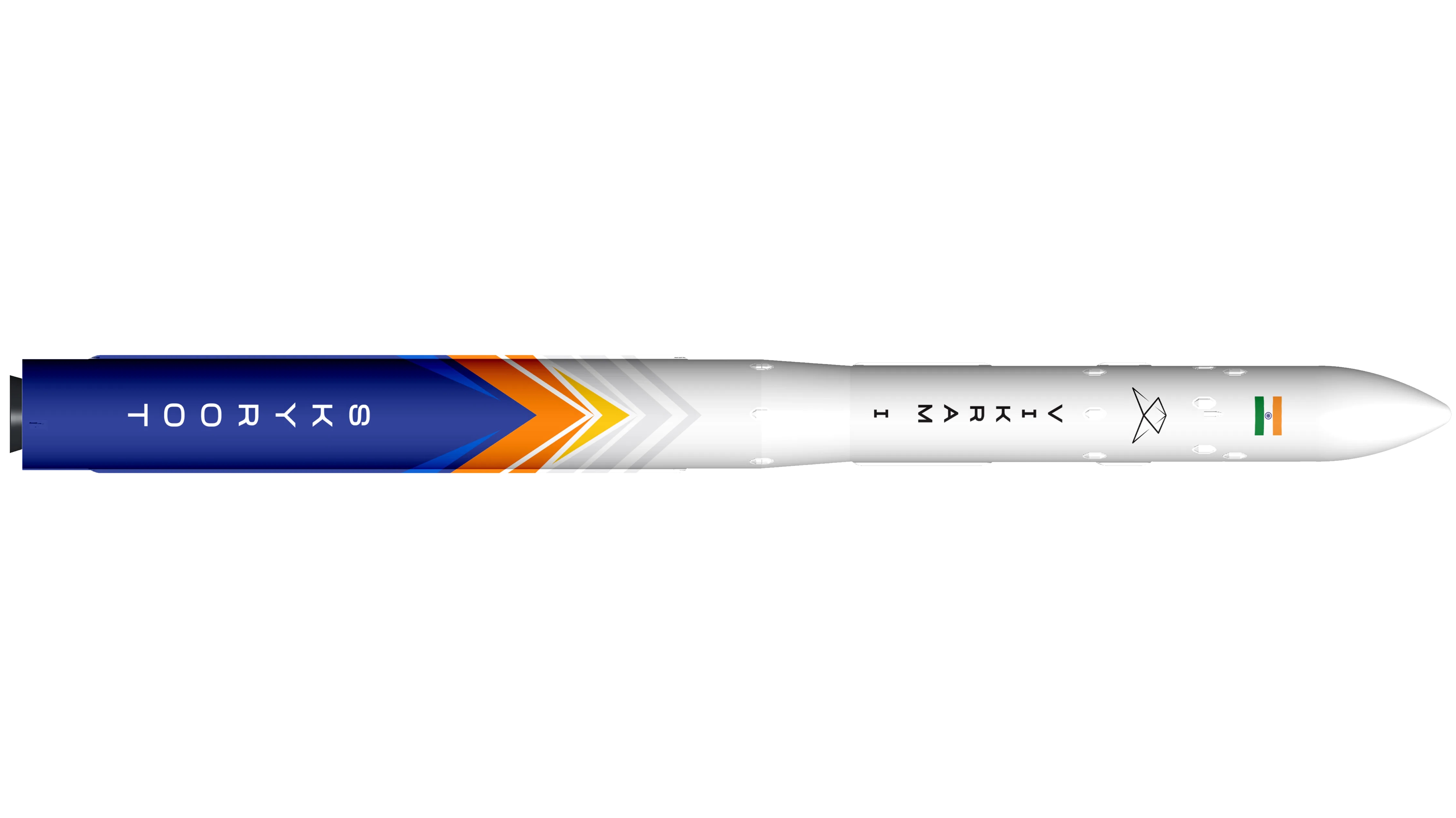
- Demo Flight from Satish Dhawan Space Centre, India (00:00 UTC) First launch of Skyroot Aerospace’s Vikram-I launch vehicle, with several cubesats on board. Payload identities TBD.
Note: Launch dates and times are subject to change due to technical or weather considerations.

Maurice Stellarski


