· space brief · 9 min read
Dragon Delivers 6,500 lbs to ISS; Zenk Space Eyes June Orbital Debut | KeepTrack Space Brief
SpaceX Dragon berthed ISS with 6,500 pounds of cargo May 17. China's Zenk Space raised $26M, targeting June for Zhihang-1 rocket's orbital debut.
Top Stories
York Space Acknowledges ‘Investor Confusion’ as SDA Is Restructured
York Space executives are publicly defending their growth strategy after the Space Force began reorganizing the Space Development Agency — York’s primary contract customer. Executives used the phrase “investor confusion” to describe market reaction, which signals real uncertainty about York’s near-term revenue pipeline.
For KeepTrack users tracking Tranche 1 and Tranche 2 Transport Layer satellites, SDA restructuring could affect the pace of new constellation nodes reaching orbit. Watch for changes to planned launch schedules as program authority shifts within Space Force.
Read the full story: SpaceNews
SpaceX Dragon Delivers 6,500 Pounds to ISS
A SpaceX Dragon cargo spacecraft berthed with the International Space Station on May 17, 2026, delivering 6,500 pounds of science payloads and supplies. The resupply mission adds to the ongoing CRS rotation that has kept ISS stocked since 2012.
You can track the ISS in real time on KeepTrack, including current Dragon docking configuration.
Read the full story: Space.com
China’s Zenk Space Raises $26M, Eyes June Orbital Launch
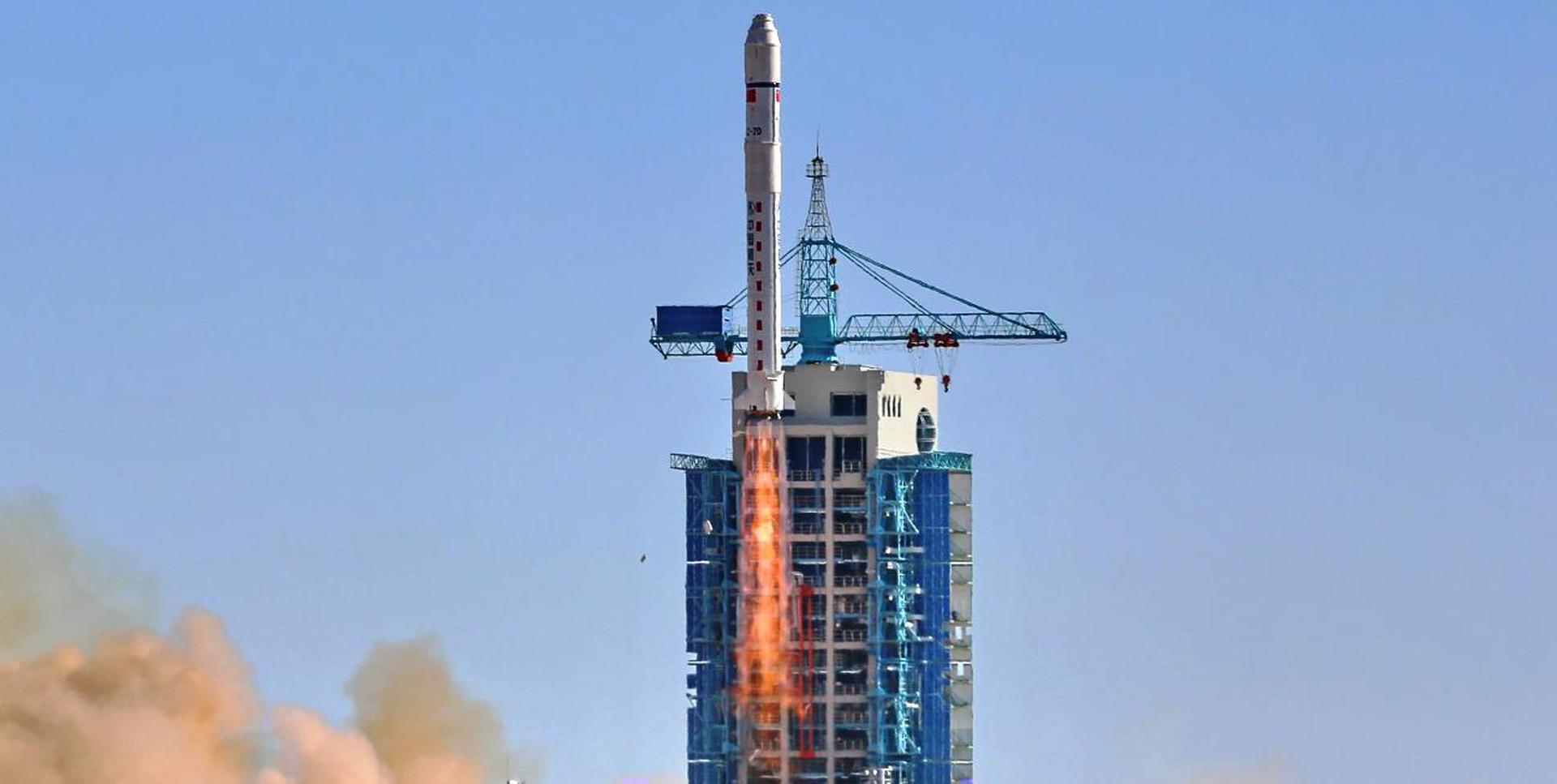
Zenk Space closed a 180 million yuan (~$26M) funding round and is targeting June for the first flight of its Zhihang-1 rocket, a kerolox vehicle making its debut orbital attempt. This would make Zenk one of the newer Chinese commercial launch providers to reach orbit, joining a crowded domestic market that already includes LandSpace and CAS Space.
If Zhihang-1 reaches orbit, any payloads deployed will appear in the catalog. KeepTrack will reflect new objects once USSPACECOM publishes tracking data post-launch.
Read the full story: SpaceNews
AT&T, Verizon, and T-Mobile Form Joint Lobbying Front Against Starlink D2D
The three largest U.S. mobile carriers are coordinating for the first time to push back against SpaceX’s direct-to-device Starlink service. The alliance is a regulatory and competitive response to Starlink gaining ground in the D2D market, where SpaceX has already partnered with T-Mobile — making that carrier’s participation here worth watching closely.
The D2D fight is primarily a spectrum and FCC licensing battle. Outcomes will affect how many Starlink satellites are authorized for direct handset connectivity, which has tracking implications for the already-dense Starlink shell.
Read the full story: Teslarati
Green Bank Telescope Tracked Artemis 2’s Orion for Five Days Around the Moon
The Green Bank Telescope in West Virginia tracked Orion’s trajectory during Artemis 2’s lunar flyby for five consecutive days, generating precision orbital data on the spacecraft’s movements. The observation was not just for optics — the data contributes to refining cislunar tracking models.
Cislunar tracking is an active gap in the public catalog. Missions like Artemis 2 provide rare opportunities to validate ground-based tracking at lunar distances, which is directly relevant to the KeepTrack glossary term for deep space tracking.
Read the full story: Space.com
Artemis III Hardware in Processing as HLS Test Planning Advances
NASA is advancing Artemis III ground processing while planning a key test of the Human Landing System. The mission will be the first crewed lunar surface landing attempt under Artemis, using SpaceX’s Starship HLS variant. No launch date has been confirmed, but hardware is physically in processing flow.
The HLS test referenced involves Starship systems that have no current NORAD catalog entry as a lunar lander — tracking coverage will depend on what USSPACECOM chooses to catalog once lunar transit begins.
Read the full story: NASASpaceFlight.com
NASA Tests Supersonic Rotor for Next-Generation Mars Helicopter
NASA engineers have pushed a rotor blade for a future Mars helicopter to supersonic tip speeds during ground testing, a threshold required to generate sufficient lift in Mars’s thin atmosphere. The test is part of development work on a successor to Ingenuity, which flew 72 times before ending operations in January 2024.
Mars aircraft don’t appear in Earth-orbit catalogs, but the rotor test data will feed into vehicle design for any future Mars sample return or science missions that include aerial assets.
Read the full story: Space.com
Satellite of the Day
Kosmos 112
Kosmos 112 represents one of the earliest Soviet navigation satellites, launched during the height of the Cold War space race. Built by OKB-10 and deployed via a Kosmos 11K65M rocket, this spacecraft was part of the Soviet Union’s pioneering efforts to develop a satellite-based navigation and communication system—a precursor to what would eventually evolve into their GLONASS constellation. At nearly 800 kg, it was a substantial spacecraft for its era, equipped with antennas for transmitting navigation signals and telemetry data across the USSR and allied nations.
Orbiting at a high inclination of 74°, Kosmos 112 operated in a regime that provided excellent coverage of northern latitudes, a strategic advantage for Soviet military and civilian applications. While the satellite itself has long since decayed from orbit, its legacy lives on in the continued development of Russian space-based navigation systems. For satellite tracking enthusiasts, Kosmos 112 serves as a historical marker—a tangible reminder of how space powers were laying the groundwork for modern GPS-like systems over five decades ago.
| Detail | Value |
|---|---|
| NORAD ID | 04138 |
| Operator | OKB10 (Soviet Union) |
| Launch Date | October 21, 1969 |
| Orbit | High inclination, 74.0384° |
| Purpose | Navigation / Communication |
| Launch Mass | 795 kg |
Track this satellite in real-time: Track Kosmos 112
Upcoming Space Launches
May 19
- Avio S.p.A Vega-C:
- Solar wind Magnetosphere Ionosphere Link Explorer (SMILE) from Ariane Launch Area 1 (ELV), Guiana Space Centre, French Guiana (03:52 UTC) A collaboration between the European Space Agency and the Chinese Academy of Sciences, SMILE will deploy into a highly elliptical Earth orbit to study how Earth responds to the solar wind using four science instruments, improving understanding of solar storms, geomagnetic storms, and space weather. The mission has a planned operational life of three years. Watch Live
May 20
-
SpaceX Falcon 9 Block 5:
- Starlink Group 17-42 from Space Launch Complex 4E, Vandenberg Space Force Base, CA, USA (02:11 UTC) Batch of 24 Starlink V2 Mini Optimized satellites to low Earth orbit. Watch Live
-
Agency for Defense Development South Korean ADD Solid-Fuel SLV:
- Demo Flight from ADD Offshore Launch Platform, Sea Launch (05:00 UTC) Demonstration test flight of South Korea’s solid-fuel small launch vehicle developed by the Agency for Defense Development, targeting low Earth orbit with a capacity of approximately 500 kg. Launch Preview
-
SpaceX Falcon 9 Block 5:
- Globalstar 2-R Mission 1 (x 9) from Space Launch Complex 40, Cape Canaveral Space Force Station, FL, USA (12:04 UTC) SpaceX will launch nine HIBLEO-4 satellites for Globalstar in the first of two replenishment missions for its HIBLEO-4 fleet. The Falcon 9 first stage booster (B1090, flying for the 12th time) will target a landing on the drone ship “A Shortfall of Gravitas” in the Atlantic Ocean. Watch Live Launch Preview
-
SpaceX Starship:
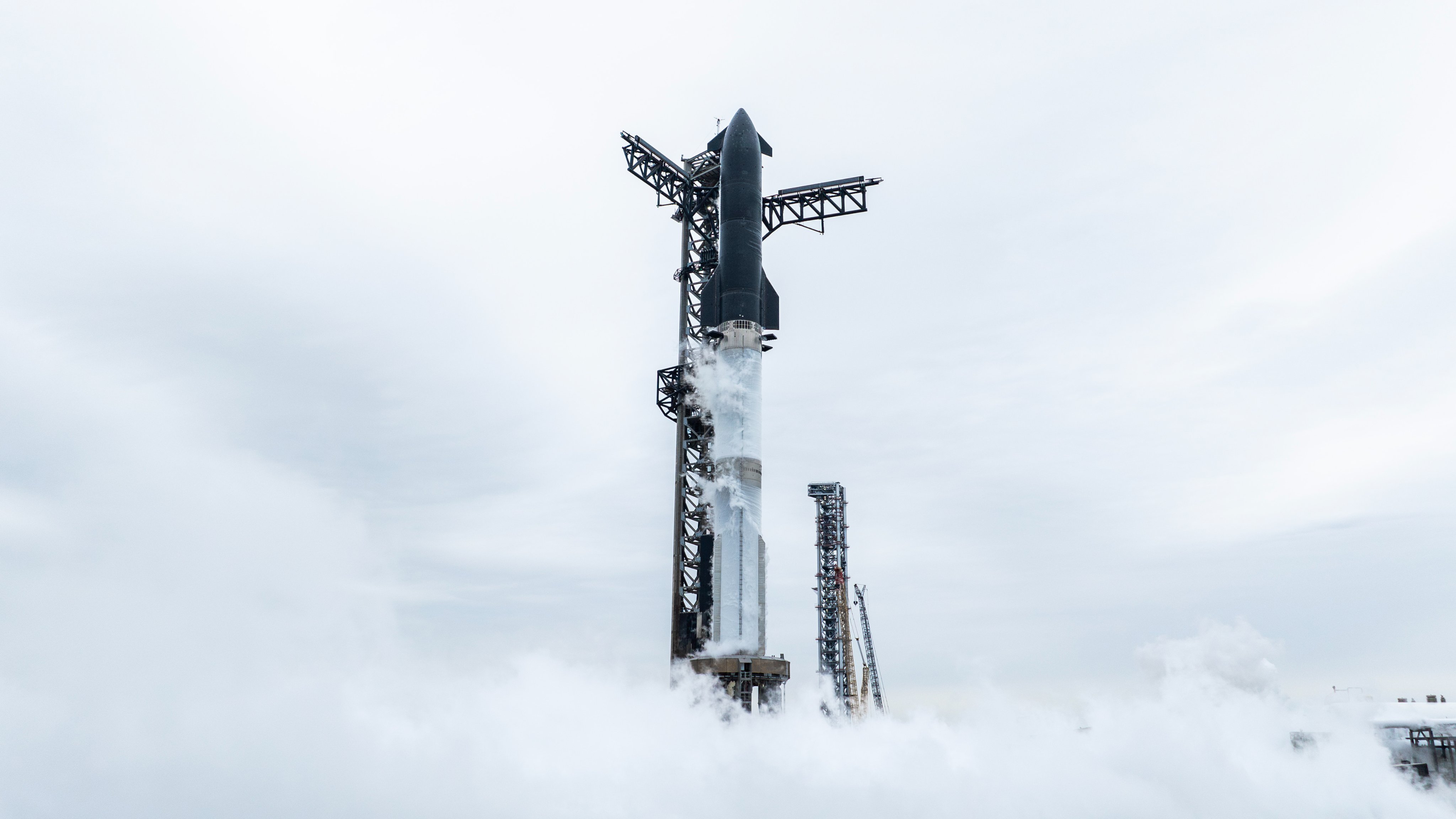
- Flight 12 from Orbital Launch Pad 2, SpaceX Starbase, TX, USA (22:30 UTC) The 12th integrated flight of the SpaceX Starship and Super Heavy system, and the first launch of a version 3 rocket. The mission will use Ship 39 as the upper stage and Booster 19 as the first stage on a suborbital trajectory. With a liftoff mass of approximately 5,250 tonnes and a fully reusable design, Starship represents SpaceX’s next-generation super heavy-lift launch system targeting eventual crewed deep space missions. Watch Live Launch Preview
May 21
-
Indian Space Research Organization GSLV Mk II:
- GISAT-1A (EOS-05) from Satish Dhawan Space Centre Second Launch Pad, Satish Dhawan Space Centre, India (03:15 UTC) GISAT-1A (GEO Imaging Satellite) is an Indian Earth observation satellite that will operate from geostationary orbit to facilitate continuous observation of the Indian subcontinent and enable rapid monitoring of natural hazards and disasters.
-
SpaceX Falcon 9 Block 5:
- Starlink Group 10-31 from Space Launch Complex 40, Cape Canaveral Space Force Station, FL, USA (09:26 UTC) Batch of 24 Starlink V2 Mini Optimized satellites to low Earth orbit. Watch Live
May 22
-
United Launch Alliance Atlas V 551:
- Amazon Leo (LA-07) from Space Launch Complex 41, Cape Canaveral Space Force Station, FL, USA A United Launch Alliance Atlas 5 rocket will launch a batch of 29 Amazon Leo broadband internet satellites to low Earth orbit as part of Amazon’s constellation aimed at providing high-speed, low-latency connectivity to underserved and remote areas globally. This is the penultimate Atlas 5 mission booked by Amazon.
-
Rocket Lab Electron:
- Viva La StriX (StriX Launch 9) from Rocket Lab Launch Complex 1, Mahia Peninsula, New Zealand (09:30 UTC) The ninth Electron mission for Japanese Earth observation company Synspective, carrying a StriX Synthetic Aperture Radar satellite to a circular 572 km orbit at 44.8 degrees inclination.
May 23
- SpaceX Falcon 9 Block 5:
- Starlink Group 17-37 from Space Launch Complex 4E, Vandenberg Space Force Base, CA, USA (14:00 UTC) Batch of 24 Starlink V2 Mini Optimized satellites to low Earth orbit. The first stage will land on the drone ship “Of Course I Still Love You” in the Pacific Ocean. Watch Live Launch Preview
May 24
- China Aerospace Science and Technology Corporation Long March 2F/G:
- Shenzhou 23 from Launch Area 91 (SLS-1 / 921), Jiuquan Satellite Launch Center, People’s Republic of China (14:58 UTC) Shenzhou 23 will be the 23rd crewed mission of China’s Shenzhou program, operated under the China National Space Administration. The Long March 2F/G is China’s human-rated launch vehicle specifically designed to carry the Shenzhou spacecraft, featuring extended boosters for enhanced lift capability.
May 25
- SpaceX Falcon 9 Block 5:
- Starlink Group 10-47 from Space Launch Complex 40, Cape Canaveral Space Force Station, FL, USA (11:41 UTC) Batch of 24 Starlink V2 Mini Optimized satellites to low Earth orbit. The first stage will land on the drone ship “Of Course I Still Love You.” Watch Live Launch Preview
May 26
- China Aerospace Science and Technology Corporation Long March 7A:
- Unknown Payload from Launch Pad 201, Wenchang Space Launch Site, People’s Republic of China (16:00 UTC) Payload and mission details are not yet available.
May 31
- Rocket Lab Electron:
- The Grain Goddess Provides (iQPS Launch 7) from Rocket Lab Launch Complex 1, Mahia Peninsula, New Zealand A Rocket Lab Electron rocket will carry a synthetic aperture radar Earth observation satellite for Japanese Earth imaging company iQPS to low Earth orbit.
Schedule Changes
- Long March 2F/G | Shenzhou 23 has been newly added to the launch manifest, scheduled for May 24, 2026 at 14:58 UTC from Jiuquan Satellite Launch Center. Status is Go for Launch.
- Long March 8 | SpaceSail Polar Group #9 has been removed from the upcoming launch calendar following a status change to Launch Successful.
Note: Launch dates and times are subject to change due to technical or weather considerations.

Maurice Stellarski