· space brief · 6 min read
DARPA Robotic GEO Servicer Targeting Summer 2026 Launch | KeepTrack Space Brief
DARPA's robotic satellite servicing mission targets GEO orbit by summer 2026. NASA adds six SpaceX crew missions as Boeing Starliner remains uncertified.

Top Stories
DARPA’s Robotic GEO Servicing Mission Targeting Summer 2026 Launch
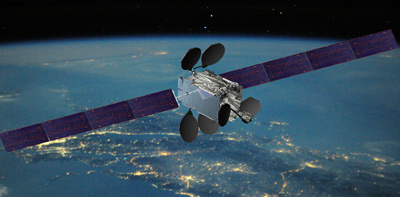
DARPA is preparing to launch a robotic satellite designed to service and extend the life of geosynchronous satellites. The mission could fly as early as this summer. The target environment is GEO — roughly 35,786 km altitude — where hundreds of high-value military and commercial assets operate, many past their design life.
On-orbit servicing at GEO has direct implications for tracking. Serviced satellites may maneuver unexpectedly or change orbital parameters as the servicer approaches, docks, and detaches. Analysts monitoring GEO belts should watch for proximity operations activity once this mission launches.
Read the full story: Space.com
NASA Adds 6 SpaceX Crew Missions as Boeing Certification Remains Stalled
NASA filed a procurement notice to add six post-certification missions to SpaceX’s existing Commercial Crew Transportation Capability contract. Three will be ordered immediately. The remaining three are available on-demand through the end of the ISS program. Boeing’s Starliner still lacks crew certification, leaving SpaceX as the sole US crew transport provider to ISS.
Read the full story: Teslarati
Shenzhou-23 Crew Docks at Tiangong, One Astronaut Targeting Full Year in Orbit
Three Chinese astronauts arrived at Tiangong on Sunday aboard Shenzhou-23. One crewmember is expected to spend a full year in orbit — a first for China’s program. The mission also advances China’s stated goal of a crewed lunar landing by 2030.
Tiangong operates in a roughly 340–450 km orbit. You can follow its position at Track Tiangong.
Read the full story: SpaceNews
Orbit Fab and Thales Alenia to Study Refueling for Electric-Propulsion Satellites
Orbit Fab and Thales Alenia Space have agreed to study integrating Orbit Fab’s Rapidly Attachable Fluid Transfer Interface with electric propulsion systems. Electric propulsion satellites — common in GEO — use xenon or krypton, not hydrazine, so existing refueling hardware isn’t a direct fit. This study is aimed at closing that gap.
Read the full story: SpaceNews
Exolaunch and SEOPS Each Buy Dedicated Falcon 9 Rideshare Launches
Exolaunch and SEOPS — both known primarily as rideshare brokers on SpaceX Transporter missions — have each purchased their own Falcon 9 launches to run dedicated rideshare missions. The move reflects demand that’s outpacing available payload slots on existing manifests.
More dedicated rideshare launches mean more small satellites entering LEO on tighter, operator-controlled schedules. Expect continued growth in the low-altitude debris environment as deployment rates increase.
Read the full story: SpaceNews
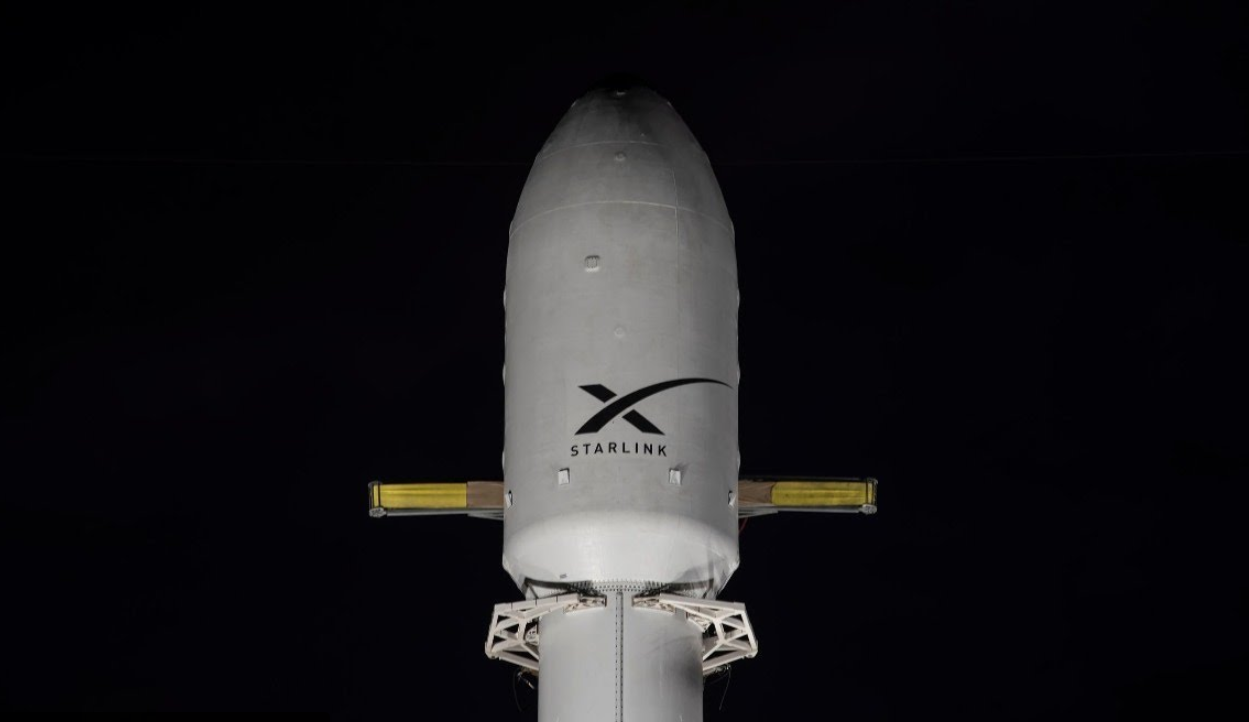
Six Orbital Launches Expected This Week, Four of Them Falcon 9 Starlink Missions
Four of six planned orbital launches this week are Falcon 9 Starlink missions. Amazon Kuiper also has a mission on the manifest. The pace reflects both Starlink constellation build-out and Kuiper’s accelerating deployment schedule following its first production batch launch in April.
Read the full story: NASASpaceFlight
Norway’s Arctic Launch Site Ready; EU Regulatory Framework Still Catching Up
Northern Norway has spaceport infrastructure in place but is waiting on EU space regulations to catch up before commercial launches can proceed. The European Commission is revising its Arctic policy, with an updated statement expected in autumn 2026. The 2021 policy didn’t adequately address launch licensing in Arctic regions, and operators are in a holding pattern until the new framework is published.
Read the full story: SpaceNews
Satellite of the Day
RISING 2
RISING 2, also known as Raijin-2, is a compact Earth observation satellite developed and operated by TOHO, a Japanese aerospace manufacturer. Launched on May 24, 2014, from Tanegashima Space Center aboard an H-IIA 202 rocket, this diminutive satellite weighs just 43 kilograms and measures roughly half a meter across—making it one of the smaller dedicated Earth observation platforms in orbit. Despite its tiny size, RISING 2 carries imaging instruments designed to observe our planet from its sun-synchronous polar orbit, contributing to Japan’s growing constellation of remote sensing assets.
The satellite represents an interesting case study in miniaturized space technology, demonstrating that meaningful Earth observation missions don’t require large, expensive platforms. Powered by solar cells and batteries, RISING 2 has maintained operations for over a decade, continuously gathering data from its 97.6-degree inclined orbit. Its low radar cross-section of 0.301 makes it relatively inconspicuous to ground-based tracking systems, though it remains catalogued and trackable by the space surveillance community.
| Detail | Value |
|---|---|
| NORAD ID | 39769 |
| Operator | TOHO (Japan) |
| Launch Date | May 24, 2014 |
| Orbit | Sun-synchronous, 97.65° inclination |
| Purpose | Earth observation |
| Status | Active |
Track this satellite in real-time: Track RISING 2
Upcoming Space Launches
May 26
-
SpaceX Falcon 9 Block 5: Starlink Group 17-37
- 29 Starlink V2 Mini Optimized satellites from Space Launch Complex 4E, Vandenberg Space Force Base, CA, USA (14:00 UTC) Booster B1078 will land on drone ship A Shortfall of Gravitas. Watch Live
-
China Aerospace Science and Technology Corporation Long March 7A: Unknown Payload
- Unknown payload from Pad 201, Wenchang Space Launch Site, People’s Republic of China (16:08 UTC)
May 29
-
SpaceX Falcon 9 Block 5: Starlink Group 10-53
- 29 Starlink V2 Mini Optimized satellites from Space Launch Complex 40, Cape Canaveral Space Force Station, FL, USA (11:52 UTC) Watch Live
-
United Launch Alliance Atlas V 551: Amazon Leo (LA-07)
- 29 Amazon Kuiper broadband internet satellites from Space Launch Complex 41, Cape Canaveral Space Force Station, FL, USA (23:33 UTC) This is the penultimate Atlas V mission for Amazon’s Kuiper constellation, which aims to deliver high-speed, low-latency broadband connectivity to underserved and remote areas globally. The Atlas V 551 configuration features five solid rocket boosters and a 5-meter fairing, with a lift capacity of up to 18,850 kg to low Earth orbit. Watch Live
May 30
- SpaceX Falcon 9 Block 5: Starlink Group 17-41
- 29 Starlink V2 Mini Optimized satellites from Space Launch Complex 4E, Vandenberg Space Force Base, CA, USA (14:00 UTC) Watch Live
May 31
- Rocket Lab Electron: The Grain Goddess Provides (iQPS Launch 7)
- Synthetic aperture radar Earth observation satellite for Japanese imaging company iQPS, from Rocket Lab Launch Complex 1, Mahia Peninsula, New Zealand (TBD) The Electron small-lift rocket uses electric-pump-fed Rutherford engines and is designed for rapid deployment of small satellites to low Earth orbit.
June 1
- Agency for Defense Development South Korean ADD Solid-Fuel SLV: Demo Flight
- Test flight from ADD Offshore Launch Platform, Sea Launch (05:00–09:00 UTC) Launch Preview
June 2
- SpaceX Falcon 9 Block 5: Starlink Group 17-47
- 29 Starlink V2 Mini Optimized satellites from Space Launch Complex 4E, Vandenberg Space Force Base, CA, USA (14:00 UTC) Watch Live
June 3
- SpaceX Falcon 9 Block 5: Starlink Group 10-43
- 29 Starlink V2 Mini Optimized satellites from Space Launch Complex 40, Cape Canaveral Space Force Station, FL, USA (08:02 UTC) Watch Live
June 10
- Indian Space Research Organization GSLV Mk II: GISAT-1A (EOS-05)
- Earth observation satellite from Satish Dhawan Space Centre Second Launch Pad, Satish Dhawan Space Centre, India (TBD) GISAT-1A (GEO Imaging Satellite) will operate from geostationary orbit to provide continuous imaging of the Indian subcontinent and enable rapid monitoring of natural hazards and disasters. The GSLV Mk II is India’s largest operational launch vehicle, featuring an indigenous cryogenic upper stage and a lift mass of approximately 401 tonnes.
Schedule Changes
- SpaceX Falcon 9 Block 5 | Starlink Group 10-47: Status updated from Go for Launch to Launch Successful — removed from the upcoming launch calendar.
- Indian Space Research Organization GSLV Mk II | GISAT-1A (EOS-05): Status downgraded from To Be Confirmed to To Be Determined, indicating increased uncertainty around the launch date.
Note: Launch dates and times are subject to change due to technical or weather considerations.

Maurice Stellarski