· space terms · 4 min read
Apogee and Perigee
Understanding the high and low points of every orbit - from the International Space Station's careful dance with Earth's atmosphere to the extreme ellipses that take satellites to the edge of space and back.
The Simple Truth About Satellite Paths
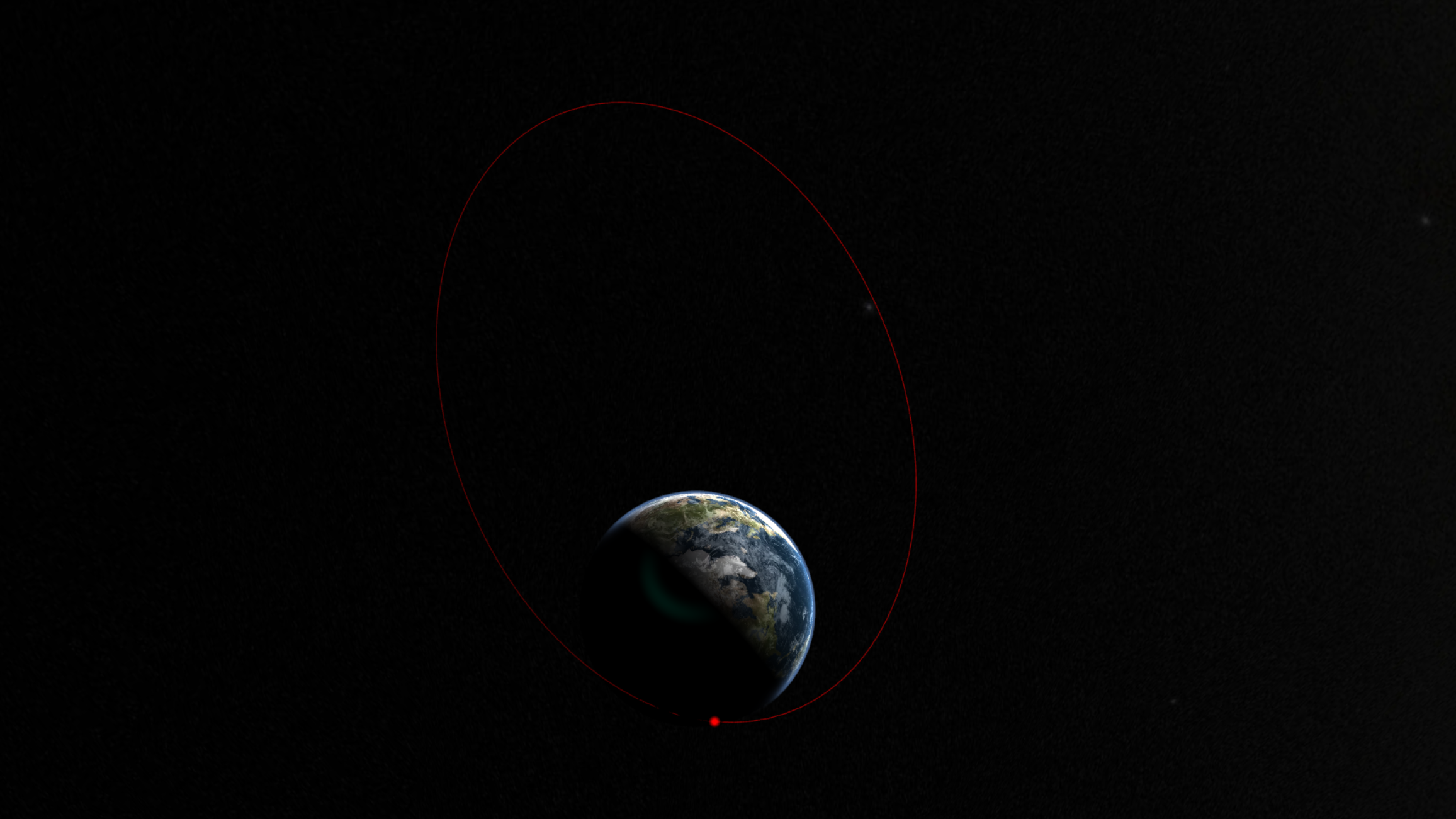
Apogee is the farthest point in an orbit from Earth. Perigee is the closest point. That’s it - no complicated physics required to understand the basics. But these two points control almost everything about how a satellite behaves, from how fast it moves to whether it’ll crash back to Earth next week or stay up for decades.
Every satellite follows an elliptical path, even if it looks circular from our perspective. The International Space Station orbits between 408-410 km altitude - its apogee and perigee are only about 2 km apart, making it nearly circular. A GPS satellite orbits in an almost perfect circle at 20,200 km. But some military spy satellites swing from 200 km at their lowest point all the way out to 40,000 km at their highest.
Here’s the weird part: satellites actually slow down as they get farther from Earth. At apogee, they’re crawling along at their slowest speed. At perigee, they’re racing through space at maximum velocity. It’s like a roller coaster in reverse - the “top” of the hill is where you go slowest.
Why This Matters in Real Life
The ISS needs regular boosts from cargo ships to stay in orbit. That’s because even 400 km up, there’s still enough atmosphere to create drag. But here’s what’s interesting - that drag doesn’t affect the orbit evenly. The station spends less time at perigee (where it’s moving fastest through the thin air) and more time at apogee (where it’s moving slower but the air is even thinner). Over time, this makes the orbit more circular before eventually bringing the whole thing down.
This explains something you might notice if you track satellites: old space junk in wobbly orbits gradually settles into more circular paths before finally burning up on reentry. The atmosphere naturally smooths out the ellipse first.
Soviet engineers figured out how to exploit extreme orbits back in the 1960s. They needed satellites to watch over northern Russia, but regular satellites whiz by too quickly. Their solution was the Molniya orbit - a 12-hour elliptical path that keeps satellites high over the northern hemisphere for about 8 hours per orbit. During that time, they barely seem to move across the sky.
The Numbers That Matter
When SpaceX announces they’ve launched satellites “into a 300 by 500 km orbit,” those numbers are perigee and apogee altitudes. The difference tells you what kind of mission you’re looking at. Small differences mean the satellite will stay put for years. Large differences might mean it’s a transfer orbit - the satellite will use its own engines later to circularize at the higher altitude.
Hubble orbits in an almost perfect circle around 550 km specifically to avoid complications. If it had an elliptical orbit, its instruments would need constant recalibration as the distance to targets changed. The telescope’s pointing system and thermal management work best with consistent conditions.
For anyone tracking satellites, apogee and perigee explain behavior that might otherwise seem random. Why does that military satellite disappear for hours then suddenly race across the sky? Because it’s spending most of its 12-hour orbit far away at apogee, then making a quick perigee pass. Why does the space station need reboosts every few months? Because atmospheric drag is slowly lowering its perigee until mission control decides the orbit needs correction.
The closer a satellite’s perigee gets to about 120 km altitude, the faster atmospheric drag takes over. Below that altitude, you’ve got maybe days or weeks before reentry, not years. It’s why the Chinese space station Tiangong-1 made headlines when it started dropping - once perigee got low enough, the crash became inevitable.
Understanding these two points gives you the key to predicting satellite behavior, whether you’re planning a mission, tracking objects for safety, or just trying to figure out when the ISS will be visible from your backyard.

Theodore Kruczek