· space terms · 5 min read
Graveyard Orbit
The final resting place for retired satellites — a disposal orbit where defunct spacecraft are sent to stay out of the way
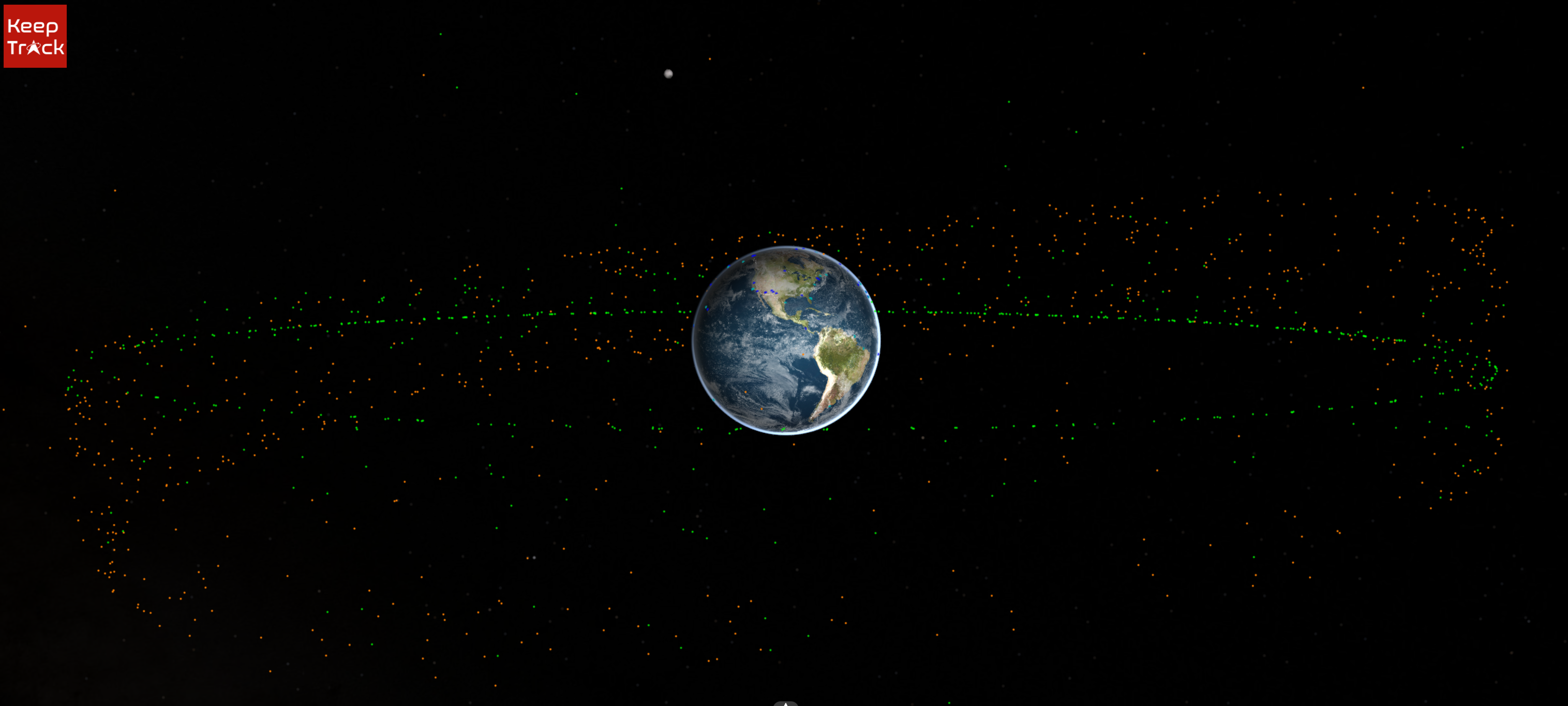
When a satellite runs out of fuel or reaches the end of its useful life, you can’t exactly tow it to a junkyard. Instead, operators use the satellite’s last remaining propellant to push it into a higher orbit where it won’t bother anyone — a graveyard orbit. It’s the space equivalent of moving old furniture to the attic rather than leaving it in the hallway.
The Technical Bits
A graveyard orbit (also called a supersynchronous orbit, disposal orbit, or junk orbit) is an orbit significantly above the operational geosynchronous orbit belt. The Inter-Agency Space Debris Coordination Committee (IADC) recommends that retiring GEO satellites be raised at least 300 kilometers above the geosynchronous altitude of 35,786 kilometers.
The exact minimum disposal altitude is calculated with a formula that accounts for the spacecraft’s area-to-mass ratio and solar radiation pressure effects, but the practical result is that most graveyard orbit maneuvers target an altitude roughly 300 to 400 kilometers above GEO — placing retired satellites at approximately 36,086 to 36,186 kilometers above Earth.
The maneuver itself is relatively simple: a series of small thruster burns over the satellite’s final days of operation gradually raise its orbit. It takes surprisingly little fuel — typically just a few meters per second of delta-v — which is why operators are expected to reserve enough propellant for this final act before the satellite is fully spent.
Why It Matters
The geosynchronous belt is one of the most valuable and limited orbital regions in space. Only a finite number of satellites can be spaced along the GEO arc without interfering with each other’s signals or risking collision. If every retired satellite simply stayed in its operational slot, the belt would eventually become unusable.
Graveyard orbits solve this by clearing the valuable real estate:
- Collision avoidance: A defunct satellite in GEO can’t maneuver to avoid other spacecraft. Moving it out of the way eliminates a potential collision hazard.
- Spectrum protection: Even a dead satellite physically occupying an orbital slot prevents that slot from being assigned to a new, operational satellite.
- Long-term sustainability: Without disposal practices, the GEO belt would accumulate debris over decades, threatening the communications, weather monitoring, and military surveillance satellites that modern civilization depends on.
Satellites like INTELSAT 511 (NORAD ID 15873), which has drifted into a highly inclined orbit at ~13.3 degrees, demonstrate what happens when a satellite is no longer actively station-kept — it begins to wander, and eventually its orbital slot becomes unusable for its original purpose. Track objects like this in real-time with KeepTrack.
What Most People Mix Up
The most common misconception is that all satellites go to graveyard orbits when they retire. In reality, graveyard orbits are primarily a solution for satellites in or near geosynchronous orbit. Satellites in low Earth orbit use a completely different disposal strategy — they’re typically deorbited to burn up in Earth’s atmosphere, either through a controlled reentry or by lowering their orbit enough that atmospheric drag pulls them down within 25 years.
The reason for the different approaches is simple physics: it takes far less energy to push a GEO satellite a few hundred kilometers higher than to deorbit it. Bringing a GEO satellite down from 36,000 kilometers would require an enormous amount of fuel — fuel that the satellite doesn’t have at end of life. Moving it 300 kilometers higher, by contrast, is cheap and practical.
Fun Fact Space Nerds Might Not Know
Nobody is entirely sure how many objects are in graveyard orbits. Because these orbits are above the heavily-monitored GEO belt, tracking coverage is thinner and many smaller debris fragments go undetected. Estimates suggest there are over 300 intact retired satellites in the graveyard zone, but there’s also an unknown population of debris from satellites that broke apart after disposal — whether from residual fuel explosions, battery failures, or micrometeorite impacts. The graveyard, it turns out, isn’t as peaceful as it sounds.
One particularly striking example: in 2023, a retired Intelsat satellite that had been in its graveyard orbit for years was observed to have broken into multiple pieces, adding new trackable debris to a region that was supposed to be a safe dumping ground. The incident highlighted that simply moving a satellite “out of the way” doesn’t eliminate all risk — it just relocates it.
The Future of Satellite Disposal
The graveyard orbit concept works, but it’s an imperfect solution. Those retired satellites will remain in their disposal orbits for thousands — potentially millions — of years. Unlike LEO debris that eventually reenters and burns up, graveyard orbit objects are essentially permanent additions to the space environment.
This has led to growing interest in active debris removal and on-orbit servicing. Instead of retiring a satellite to a graveyard, future missions might refuel it, repair it, or deliberately deorbit it. Several companies and agencies are developing technologies to grapple defunct satellites and either reposition them or guide them to controlled reentry. Until those capabilities mature, the graveyard orbit remains our best available option for keeping the geosynchronous belt clean.
Think of graveyard orbits as space’s version of a retirement home — it’s not glamorous, and the residents aren’t doing much, but at least they’re out of the way and not causing trouble in the busy lanes below.

Theodore Kruczek