· today in space history · 7 min read
The Day We First Landed on Venus
On December 15, 1970, a battered Soviet probe accomplished something no spacecraft had done before - it survived landing on another world and lived to tell about it.
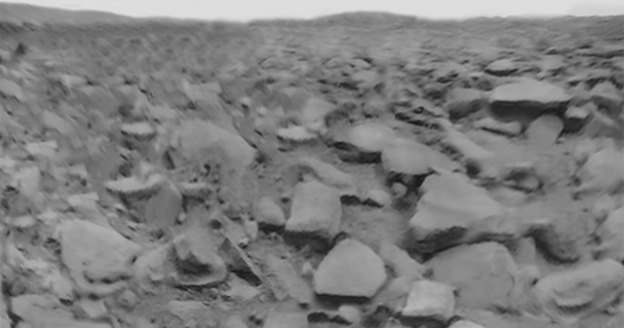
The tiny pod of Venera 7 spent about a third of 1970 traversing tens of millions of miles through space. Four crimson letters painted onto the heavy, white metal surrounding the heat-resistant inner workings of the spacecraft bore themselves to the universe: CCCP. The Soviet Union. Ground control watched erratically for a signal as the spacecraft dipped into the dense, acidic clouds of the Venusian atmosphere. It’s December 15th, 1970, and Venera 7 is about to make the first soft landing on another planet.
The Venera Program’s Rocky Road
Twelve failures. That was the fruit of countless hours of labor spent making a capsule to survive the unforgiving atmosphere of Venus. Sergei Korolev - the legendary Chief Designer who had already put the first satellite and the first human into space - was spread thin, supervising multiple Soviet space programs. The Venera program was slipping from his grasp. After his death in January 1966, a major restructuring effort reorganized management of multiple space projects, with Venera falling into the hands of Georgy Babakin.
The new Chief Designer at the Lavochkin Design Bureau had started his career in radio engineering at the Moscow telephone company in 1930, before conducting research at several military institutes. As his specialty shifted to surface-to-air missiles, he became a prominent name at Lavochkin, overseeing the development and production of probes and satellite designs that would one day see the Moon, Mars, and Venus.
Project Venera, his new responsibility, had relatively simple goals: study the atmosphere, surface, and geographical features of Venus.
But why Venus? The bronze planet is more similar to Earth than you’d expect. Considered “Earth’s twin” by the Soviets, they were allured by its mystique, hoping to find what was hiding under the opaque clouds that made observing it extremely difficult. The first time the gap between Earth and Venus was crossed was by America, with Mariner 2 flying by the planet in December 1962 - the first successful interplanetary mission in history. Just five years later, Babakin had his first success with Venus to match the Americans.
Mariner 2 Flyby
America's probe becomes the first spacecraft to successfully encounter another planet
Venera 4 Success
First probe to transmit data from within another planet's atmosphere
Venera 7 Launch
Launches from Baikonur on a Molniya-M rocket
Venera 7 Landing
First soft landing on another planet; transmits data for 23 minutes from the surface
On October 18, 1967, Venera 4 successfully plunged into the Venusian atmosphere. The capsule heated rapidly, descending for 93 minutes while its parachute slowed its fall. It broke the first record under the Venera program for the Soviets, sending back a trembling signal analyzing the atmosphere of Venus, reporting an abundance of carbon dioxide. But the rapidly increasing pressure tightened its fist around the pod until it was crushed - well before reaching the surface.
The first probe to observe and send in-situ atmospheric data during descent, Venera 4 was a success, but it was a success that disintegrated in the atmosphere. Babakin was shocked that the atmospheric pressure far exceeded the expectation of about 10 atmospheres - the reality was closer to 90. Plans for a capsule resilient to pressure and heat went underway almost immediately. A fervor was brewing in Moscow for a soft landing on the planet.
A Capsule Ready for Hell
Venera 7 was designed with the flaws and successes of its predecessors in mind. The main bus and spherical lander stayed similar to Venera 4, 5, and 6, but the landing capsule was modified to withstand pressures of 180 atmospheres and temperatures as sizzling as 540°C. The Soviets went with massive overengineering - better to survive than to collect elegant data while being crushed.
Before sending the probe off on its voyage, Babakin knew it must be tested. The unprecedented pressure of Venus would be incredibly hard to replicate. He created a custom high-pressure, high-temperature test chamber to subject the capsule to Venusian conditions. The man’s iron grip on the program was evident throughout the process; he himself worked for up to 16 hours a day, demanding superior engineering and analytical justification behind every feature.
The perfected design was submitted for evaluation. After roughly a year of rigorous work, the probe was approved for launch.
Way Down We Go
On the morning of August 17, 1970, the Molniya-M rocket lifted off from Baikonur, carrying Venera 7. The trip lasted 120 days, with the probe reaching its target on December 15th.
The landing module detached from the transfer bus and entered the atmosphere on the nightside of Venus. The lander remained attached to the interplanetary bus during the initial stages of atmospheric entry, allowing the bus to keep the lander cooled to -8°C for as long as possible. After aerodynamic braking slowed its entry from 11.5 km/s to about 200 m/s, a parachute deployed at around 60 kilometers altitude.
This time the parachute was different - smaller, with heat-rated fabric and a thermal fusible reefing system designed to let the probe fall faster through the hostile atmosphere. Time was the enemy now. The longer Venera 7 lingered in that carbon dioxide furnace, the more likely something critical would fail.
The probe was holding up better than previous missions. Then the parachute’s fiberglass material failed, sending the probe plummeting toward the surface much faster than planned. It slammed into the ground at about 16.5 m/s - roughly 60 km/h.
Ground control initially thought they had another failure on their hands. The signal seemed to cease on impact. But recording tapes kept rolling back on Earth. A few weeks later, upon review by radio astronomer Oleg Rzhiga, another 23 minutes of very weak signals were found on them. The spacecraft had landed on Venus, probably bounced onto its side, and - remarkably - kept transmitting.
First Whispers from Another World
The probe sat on the arid, barren surface and transmitted temperatures of around 475°C and pressures of approximately 90 atmospheres for those precious 23 minutes before its systems finally died.
The success of Venera 7 was historic. This was the first time that data was transmitted directly from the surface of another planet. The mission opened the door for later Venera missions (8 through 14), which would measure light levels, analyze soil composition, and eventually send back the first photographs ever taken from the surface of another world.
The harsh conditions of Venus made this win all the more impressive. The probe had to conquer temperatures that could melt lead, pressures that would crush a submarine, and acidic clouds - all while accomplishing a feat that had seemed impossible just a few years earlier.
The Race for Redemption
Within the context of the Space Race, this was a crucial win for the Soviet Union. America had claimed the ultimate victory by landing humans on the Moon just a year prior, so the Soviets worked hard to reclaim international prestige through robotic exploration. Where NASA sent astronauts, Moscow sent machines - tough, disposable machines that could go places no human could survive.
Babakin’s career reflected this victory. He was elected as a Corresponding Member of the USSR Academy of Sciences and continued to produce probes for missions to Mars and other destinations. He died of a heart attack in 1971, shortly before the completion of Mars 2 and Mars 3 - but the Lavochkin bureau he built continued racking up planetary firsts for another decade.
Venera 7’s 23 minutes on the surface proved something important: we could build machines capable of surviving, however briefly, on worlds utterly unlike our own. Every subsequent lander on Venus, Mars, Titan, and beyond owes something to that battered Soviet probe that refused to die quietly in the Venusian dark.

Mariana Mokhova