· today in space history · 10 min read
The Day America Sent Two Secrets to the Sky
Sixty-five years ago, America launched two very different space missions within hours of each other - one broadcast live to a fascinated nation, the other quietly reaching orbit from a fog-shrouded California launchpad while no one was watching
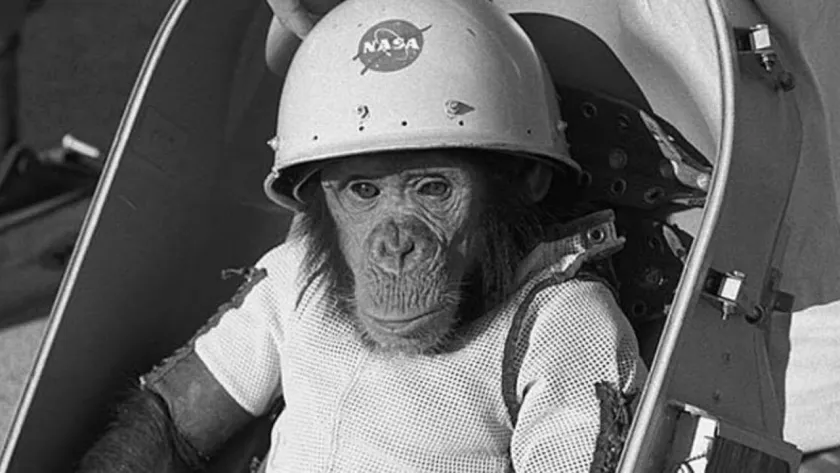
On the morning of January 31, 1961, a three-year-old chimpanzee named Ham sat strapped into a Mercury capsule at Cape Canaveral, waiting to ride a column of fire into history. Cameras rolled. Reporters crowded the press site. The world watched as America prepared to take its most public step yet toward putting a human in space.
That same afternoon, 2,500 miles away at Vandenberg Air Force Base, another rocket stood ready on a fog-shrouded launchpad. No cameras. No press. The pad wasn’t even visible from the blockhouse. At 3:21 PM Eastern time, an Atlas-Agena lifted off carrying SAMOS 2 - a reconnaissance satellite so secret that the Air Force wouldn’t acknowledge its true purpose for another fifty years.
Two missions. Two coasts. Two entirely different visions of what America’s space program was for. One would make the cover of LIFE magazine; the other would quietly enter the first sun-synchronous orbit in history while the nation’s attention was fixed elsewhere. Together, they marked the moment when American spaceflight definitively split into two streams - one conducted in the full glare of Cold War publicity, the other hidden in the shadows of classification.
The Chimp Who Stole the Show
Ham - officially known as “Number 65” until he returned alive - had been selected from 40 chimpanzees brought to Holloman Air Force Base in New Mexico for astronaut-adjacent training. The chimps were chosen because their organ placement and internal suspension matched humans closely enough to serve as reasonable test subjects, and because their average response time to physical stimuli was 0.7 seconds - close enough to the human average of 0.5 seconds to be useful.
The training was straightforward: pull levers in response to flashing lights. Get it right within five seconds, receive a banana pellet. Get it wrong, receive a mild electric shock to the feet. By the time Ham arrived at Cape Canaveral in early January, he was, by all accounts, thoroughly bored with the whole enterprise.
At 11:54 AM Eastern time, Mercury-Redstone 2 lifted off. What followed was a flight that went simultaneously right and wrong in almost every conceivable way. The Redstone’s engine burned too long, pushing the capsule higher and faster than intended. The abort system triggered automatically, firing the escape rocket and adding even more velocity. Ham experienced 14.7 Gs during acceleration - nearly 50% more than planned - and would eventually endure 18 Gs during reentry.
A valve malfunction caused the cabin to partially depressurize, dropping from 5.5 to 1 psi. Ham’s pressure suit kept him safe, but he didn’t know that. All he knew was that the ride was rougher than any training run, the shocks kept coming, and when he finally splashed down 422 miles downrange - 132 miles further than planned - the capsule began taking on water through holes punched in the heat shield by the force of impact.
Through it all, Ham kept pulling his levers. His performance was only a fraction of a second slower than on Earth. When recovery crews finally opened the capsule, Ham reached out to shake hands with the ship’s commander, accepted an apple, and showed no obvious ill effects beyond some understandable agitation when photographers’ flashbulbs started going off.
The Satellite Nobody Mentioned
While Ham’s flight dominated the news cycle, SAMOS 2 slipped into orbit with considerably less fanfare. The satellite was officially described as conducting “investigation of spaceflight techniques and technology” - government-speak that conveyed nothing useful whatsoever.
The reality was considerably more ambitious. SAMOS represented the Air Force’s attempt to leapfrog the CIA’s CORONA program with a reconnaissance satellite that could beam images directly to ground stations rather than dropping film capsules for mid-air recovery. The E-1 camera system would photograph a 160 by 160 kilometer frame, scan the film electronically in orbit, and transmit the resulting images by radio.
The satellite also carried an F-1 “Ferret” payload - an electronic intelligence system designed to intercept Soviet radar emissions. In an era when the exact capabilities of Soviet air defenses remained largely unknown, this kind of signals intelligence was nearly as valuable as photographs.
SAMOS 2 worked - technically. The cameras transmitted images, the Ferret system collected data, and for about a month the satellite performed its mission. But the image quality was, to put it charitably, mediocre. The resolution of approximately 100 feet couldn’t compete with what CORONA was already achieving with its film-return capsules.
Then, on orbit 21, ground controllers sent a command to jettison the F-1 antenna, which was partially obstructing the camera’s field of view. Something went catastrophically wrong. All telemetry ceased. Engineers suspected the separation mechanism had caused the satellite to partially or completely disintegrate. SAMOS 2 would tumble silently in orbit for another decade before finally reentering the atmosphere in October 1971.
Two Programs, One Contradiction
The contrast between the two launches couldn’t have been starker. Mercury-Redstone 2 was covered by every major news outlet. Ham’s face appeared on magazine covers. NASA held press conferences, released footage, and made the whole enterprise a public relations triumph despite the flight’s numerous malfunctions.
SAMOS 2, by contrast, vanished into the classification system. The Air Force acknowledged the launch but said nothing about what the satellite was actually doing. Even the mission’s failure - or partial failure, since some data was collected - remained secret. The program would continue for another two years, with increasingly disappointing results, before being quietly cancelled in January 1963.
Two Launches, One Day
| Mercury-Redstone 2 (Ham) Public Face | SAMOS 2 Shadow Program | |
|---|---|---|
| Launch Time (EST) | 11:54 AM | 3:21 PM |
| Launch Site | Cape Canaveral LC-5 | Vandenberg SLC-3W |
| Purpose | Human spaceflight qualification | Reconnaissance/ELINT |
| Publicity | Live TV coverage, global press | None - foggy conditions, no observers |
| Classification | Unclassified | Top Secret |
| Outcome | Success (with anomalies) | Partial success, then failure |
- Launch Time (EST)
- 11:54 AM
- Launch Site
- Cape Canaveral LC-5
- Purpose
- Human spaceflight qualification
- Publicity
- Live TV coverage, global press
- Classification
- Unclassified
- Outcome
- Success (with anomalies)
- Launch Time (EST)
- 3:21 PM
- Launch Site
- Vandenberg SLC-3W
- Purpose
- Reconnaissance/ELINT
- Publicity
- None - foggy conditions, no observers
- Classification
- Top Secret
- Outcome
- Partial success, then failure
The divergence was intentional. President Eisenhower had insisted on maintaining the fiction that American space activities were purely peaceful and scientific. NASA’s civilian program would be conducted in the open, with all its triumphs and failures on display. Military and intelligence programs would operate in darkness, their successes unheralded and their failures invisible.
This bifurcation had profound consequences. The Mercury astronauts became national heroes. The engineers building reconnaissance satellites couldn’t tell their families what they did for a living. One program would shape how Americans thought about space; the other would shape how American policymakers thought about the Soviet Union.
The Astronauts Were Not Amused
There’s a famous photograph from the day of Ham’s flight: the chimpanzee, still in his space suit, reaches out to shake hands with the commander of the USS Donner while flashing what appears to be a smile. (It wasn’t - chimpanzees bare their teeth when threatened, not happy. Ham had just endured one of the rougher rides in early spaceflight history.)
The Mercury astronauts watched the coverage with decidedly mixed feelings. They had trained for two years to be the first Americans in space. Their egos were, by most accounts, substantial. And now a three-year-old primate had beaten them to the punch.
“You can imagine their frustration, given their sort of outsized egos, when they had to sit on the sidelines while an animal sat in their seat,” space historian Jordan Bimm has observed. The frustration only deepened when the problems Ham’s flight revealed led Wernher von Braun to insist on yet another unmanned test flight before risking a human astronaut.
That decision - Mercury-Redstone BD, for Booster Development - pushed Alan Shepard’s flight from March to May 1961. It’s one of the great what-ifs of spaceflight history. Had Shepard launched in March as originally planned, he might have beaten Yuri Gagarin into space by several weeks. Instead, Gagarin orbited the Earth on April 12, and Shepard had to settle for being the first American in space rather than the first human.
The astronauts blamed von Braun’s Germanic over-engineering. NASA Headquarters blamed the need for caution after Ham’s anomaly-filled flight. Ham, presumably, had no opinion on the matter. He was transferred to the National Zoo in Washington, D.C., in 1963, where he lived for 17 years before moving to the North Carolina Zoo. He died in 1983 at age 26, having never shown any particular interest in returning to space.
What the Day Revealed
January 31, 1961, exposed the fundamental tension at the heart of American space policy - a tension that persists to this day. The public face of spaceflight was about exploration, discovery, and national prestige. The hidden face was about intelligence gathering, military advantage, and the hard calculus of Cold War strategy.
Ham’s flight proved that a primate could survive the stresses of launch, weightlessness, and reentry while still performing cognitive tasks. That was genuinely important for the Mercury program. But it also made for irresistible television, which may have been equally important to NASA’s political survival.
SAMOS 2’s flight proved something different: that the electro-optical readout concept, however elegant in theory, wasn’t ready for operational use. The technology that was supposed to let America beam reconnaissance photos from orbit in real-time would take another two decades to mature. In the meantime, the film-return capsules of CORONA would do the actual work of monitoring Soviet military capabilities.
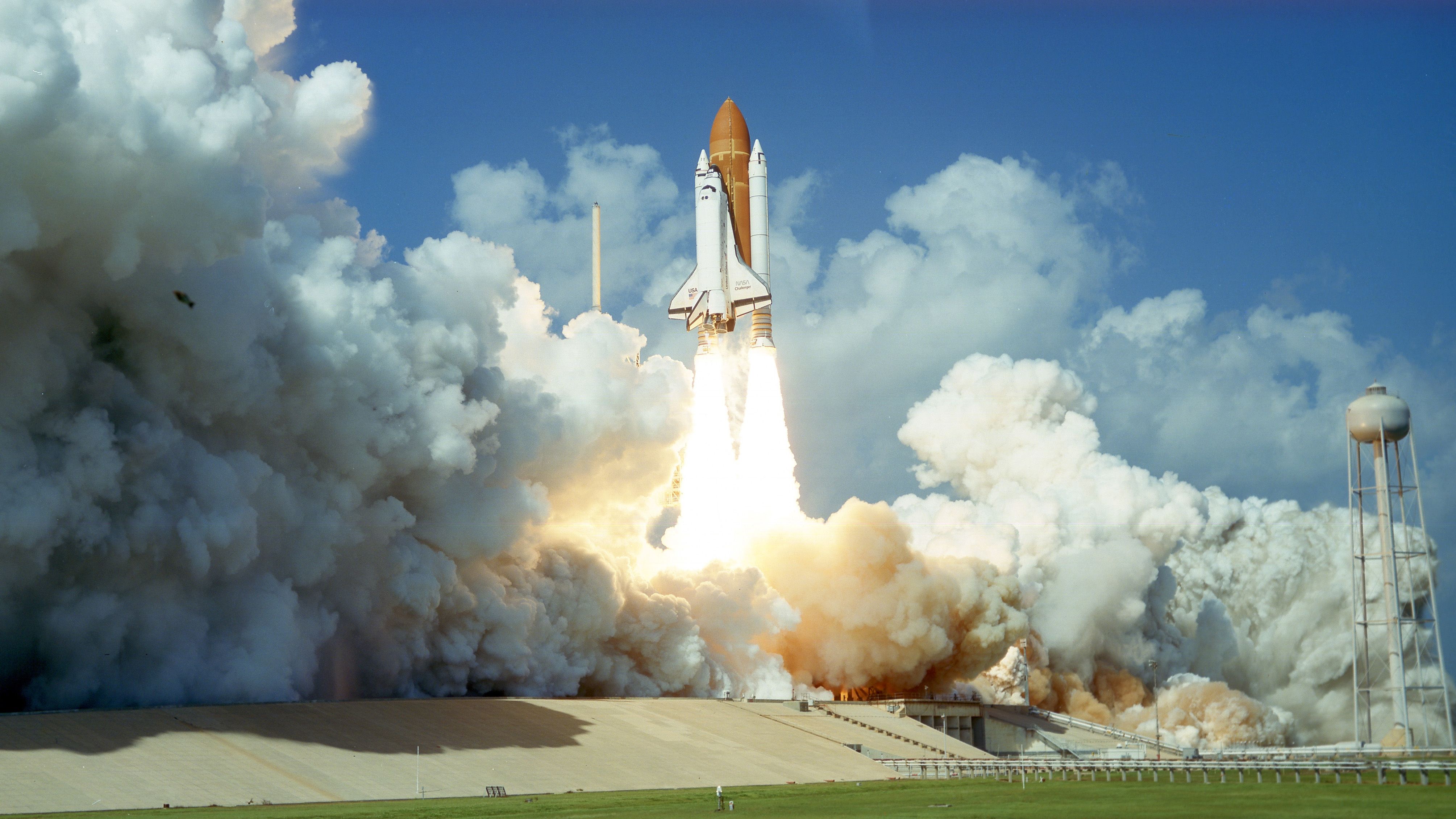
Mercury-Redstone 2 Launch
Ham lifts off from Cape Canaveral, experiencing significant anomalies but surviving to become the first great ape in space.
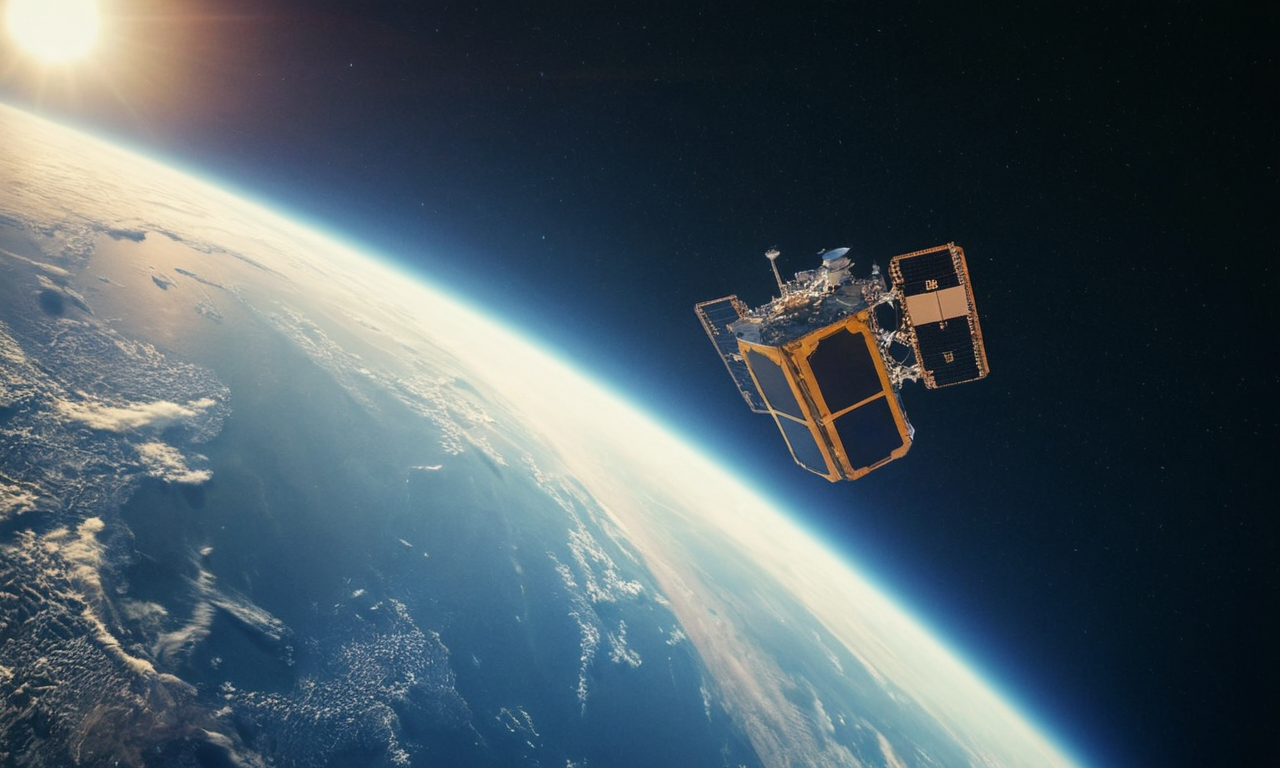
SAMOS 2 Launch
The first satellite enters a sun-synchronous orbit, carrying cameras and signals intelligence equipment. The Air Force says nothing about its true purpose.
Gagarin Orbits Earth
The Soviet Union wins the race to put a human in orbit. American caution after Ham's flight may have cost them the prize.
Shepard's Suborbital Flight
Alan Shepard finally launches, becoming the first American in space - three months after Ham showed it could be done.
SAMOS Program Cancelled
Exactly two years after SAMOS 2's launch, the reconnaissance satellite program is quietly terminated. The electro-optical readout concept has failed to deliver.
The irony is that both programs were, in their own ways, building toward the same goal: demonstrating American technological superiority over the Soviet Union. Mercury would do it through public spectacle, proving that America could match and eventually exceed Soviet achievements in human spaceflight. SAMOS and its successor programs would do it through quiet intelligence gathering, giving American decision-makers the information they needed to avoid miscalculation in a nuclear age.
The Long Shadow
The split inaugurated on January 31, 1961, has never fully healed. NASA’s human spaceflight program remains one of the most visible activities of the federal government. The National Reconnaissance Office, which would eventually absorb the lessons (and the failures) of programs like SAMOS, remained officially secret until 1992 - and many of its specific programs are still classified today.
Ham’s legacy lives on in the continued use of animals in spaceflight research, though ethical standards have evolved considerably since a captured African ape was strapped into a capsule and subjected to forces no training could fully prepare him for. His skeleton resides at the National Museum of Health and Medicine; his soft tissue was buried at the International Space Hall of Fame in Alamogordo, New Mexico, not far from where he trained.
SAMOS’s legacy is harder to trace, in part because so much remains classified. The electro-optical technology that failed in 1961 would eventually mature into the digital imaging systems that power modern reconnaissance satellites. The sun-synchronous orbit pioneered by SAMOS 2 became standard for Earth observation missions. The signals intelligence capabilities tested by the F-1 Ferret system evolved into today’s ELINT satellites.
But perhaps the most important legacy is conceptual. January 31, 1961, established a pattern that would persist for decades: space as public theater and space as secret weapon, existing in parallel, serving different masters, operating under different rules. When Americans watched the moon landings, they were seeing one version of their space program. When analysts pored over satellite photographs of Soviet missile sites, they were seeing another.
Both versions were real. Both were important. And both began, in their modern form, on a single winter day sixty-five years ago - one launch broadcast to the world, the other vanishing into the California fog.
References(8)
- Mercury-Redstone 2 - Wikipedia
- Ham (chimpanzee) - Wikipedia
- SAMOS (satellite) - Wikipedia
- Mercury Primate Capsule and Ham the Astrochimp - National Air and Space Museum
- First American in Space: The Flight of Alan B. Shepard - National Air and Space Museum
- 60 years ago, a space chimpanzee made history - Inverse
- Lockheed WS-117L (CORONA / SAMOS / MIDAS) - Designation Systems
- SAMOS - Jonathan's Space Pages

Theodore Kruczek