· today in space history · 10 min read
The Day America Shot Down Its Own Spy Satellite
Seventeen years ago, a Navy cruiser in the Pacific fired a missile at a tumbling reconnaissance satellite that had failed within hours of reaching orbit - officially to prevent toxic fuel from reaching the ground, unofficially to prove something far more significant to China and the world
At 10:26 PM Eastern time on February 20, 2008, Fire Controlman 2nd Class Andrew Jackson pressed a button aboard the guided missile cruiser USS Lake Erie, positioned roughly 2,300 kilometers west of Hawaii in the Pacific Ocean. A Standard Missile-3 erupted from its vertical launch cell and climbed into the night sky, accelerating toward a target traveling at 7.8 kilometers per second more than 240 kilometers above the Earth’s surface.
Three minutes later, the missile’s kinetic kill vehicle - a 23-kilogram slug of metal with no explosive warhead - slammed into USA-193, a dead National Reconnaissance Office satellite that had been tumbling uncontrollably since losing contact with ground controllers fourteen months earlier. The closing velocity exceeded 35,000 kilometers per hour. The impact vaporized both objects, scattering debris across low Earth orbit and igniting a firestorm of international controversy that continues to shape space policy today.
The Pentagon called it Operation Burnt Frost. They said it was about protecting people from toxic rocket fuel. Almost nobody believed them.
The $1 Billion Corpse
USA-193 was supposed to be a triumph. Launched on December 14, 2006 - the inaugural mission for the newly formed United Launch Alliance - the satellite represented the cutting edge of American reconnaissance technology. It was part of the Future Imagery Architecture program, a $25 billion initiative that the New York Times would later call “perhaps the most spectacular and expensive failure in the 50-year history of American spy satellite projects.”
The satellite worked for approximately one orbit. Ground controllers at the NRO’s operations center in Chantilly, Virginia, established contact, ran through initial checkout procedures, and then watched helplessly as USA-193 stopped responding. Every attempt to regain control failed. Within days, it became clear that the most advanced reconnaissance satellite the United States had ever built was nothing more than a 2,300-kilogram piece of orbital debris.
The failure was almost certainly related to the FIA program’s troubled development. Boeing had won the contract in 1999, underbidding Lockheed Martin by roughly $1 billion with proposals for innovative electro-optical and radar imaging systems. By 2005, the program was $4-5 billion over budget, years behind schedule, and still not producing working satellites. The NRO eventually stripped Boeing of the electro-optical portion and handed it back to Lockheed Martin, but the radar component - including USA-193 - continued under the original contractor.
What went wrong with USA-193 specifically remains classified. The satellite was believed to be a technology demonstrator for the FIA radar imaging system, designed to test systems that would eventually fly on operational reconnaissance spacecraft. Whatever it was supposed to do, it never had the chance.
The Convenient Problem
For fourteen months, USA-193 drifted silently in an orbit that decayed a little more each day. By January 2008, it had fallen below 350 kilometers and was accelerating toward reentry. Under normal circumstances, this wouldn’t have been noteworthy - hundreds of pieces of debris reenter Earth’s atmosphere every year, and the vast majority burn up harmlessly.
But USA-193 wasn’t normal debris. It carried approximately 453 kilograms of hydrazine propellant in a titanium tank designed to survive reentry. Hydrazine is genuinely nasty stuff - a toxic, potentially carcinogenic compound that can cause severe respiratory damage in high concentrations. The Pentagon claimed that if the hydrazine tank survived and ruptured on impact, it could spread a hazardous cloud across an area roughly the size of two football fields.
On January 4, 2008, President George W. Bush ordered the military to develop options for destroying the satellite. The decision came just thirteen months after China had shocked the world by conducting its own anti-satellite test, using a ground-launched missile to obliterate a defunct weather satellite and scatter thousands of pieces of debris across low Earth orbit. That debris remains a navigation hazard today.
The timing was probably not coincidental.
Sending a Message
The Chinese ASAT test on January 11, 2007, had genuinely alarmed American defense planners. China’s destruction of the Fengyun-1C weather satellite demonstrated a capability that directly threatened American military power - the ability to blind the reconnaissance satellites, communications systems, and GPS constellations that modern U.S. forces depend upon absolutely. If war ever came, Chinese missiles could potentially cripple America’s eyes in space within hours.
The international outcry over the debris created by China’s test - more than 3,000 trackable fragments that will persist in orbit for decades - had been severe. But condemnation alone doesn’t deter a rival power. The United States needed to demonstrate that it possessed equivalent capabilities.
This was uncharted territory. No one had ever done anything like this before.
Operation Burnt Frost provided a convenient opportunity. The stated objective was humanitarian - rupturing the hydrazine tank before the satellite reentered to protect people on the ground. But the mission also demonstrated that the United States could track a tumbling target in low Earth orbit, modify an existing missile defense system for ASAT use, and achieve a direct hit at closing velocities that far exceeded typical ballistic missile intercepts.
General Kevin Chilton, then commander of U.S. Strategic Command, later acknowledged that the administration had explicitly considered how the shootdown would be perceived as an ASAT demonstration. President Bush made the decision to proceed anyway, reasoning that the genuine (if small) risk from the hydrazine justified the action regardless of geopolitical implications.
The Kill
The Navy selected USS Lake Erie for the mission because she was the most experienced ballistic missile defense ship in the fleet. Homeported at Pearl Harbor, the Ticonderoga-class cruiser had conducted more SM-3 intercept tests than any other vessel. Her Aegis combat system and trained crew gave the operation its best chance of success.
Three SM-3 Block IA missiles were modified for the unusual mission. The standard missile was designed to intercept ballistic warheads traveling on predictable trajectories - objects that were hot, fast, and following the laws of physics in straightforward ways. USA-193 presented different challenges. The satellite was cooler than a ballistic target, tumbling unpredictably, and traveling in an orbital path rather than a ballistic arc. Engineers adjusted the missile’s infrared seekers to acquire the satellite’s lower thermal signature and updated the fire control software to handle the unusual engagement geometry.
USA-193 Launches
The satellite reaches orbit aboard a Delta II rocket from Vandenberg AFB - the first launch for the newly formed United Launch Alliance. Contact is lost within hours.
China's ASAT Test
China destroys its Fengyun-1C weather satellite with a kinetic kill vehicle, creating thousands of debris fragments and alarming American defense planners.
Bush Orders Options
President Bush directs the military to develop a plan to destroy USA-193 before reentry.
Pentagon Announces Plan
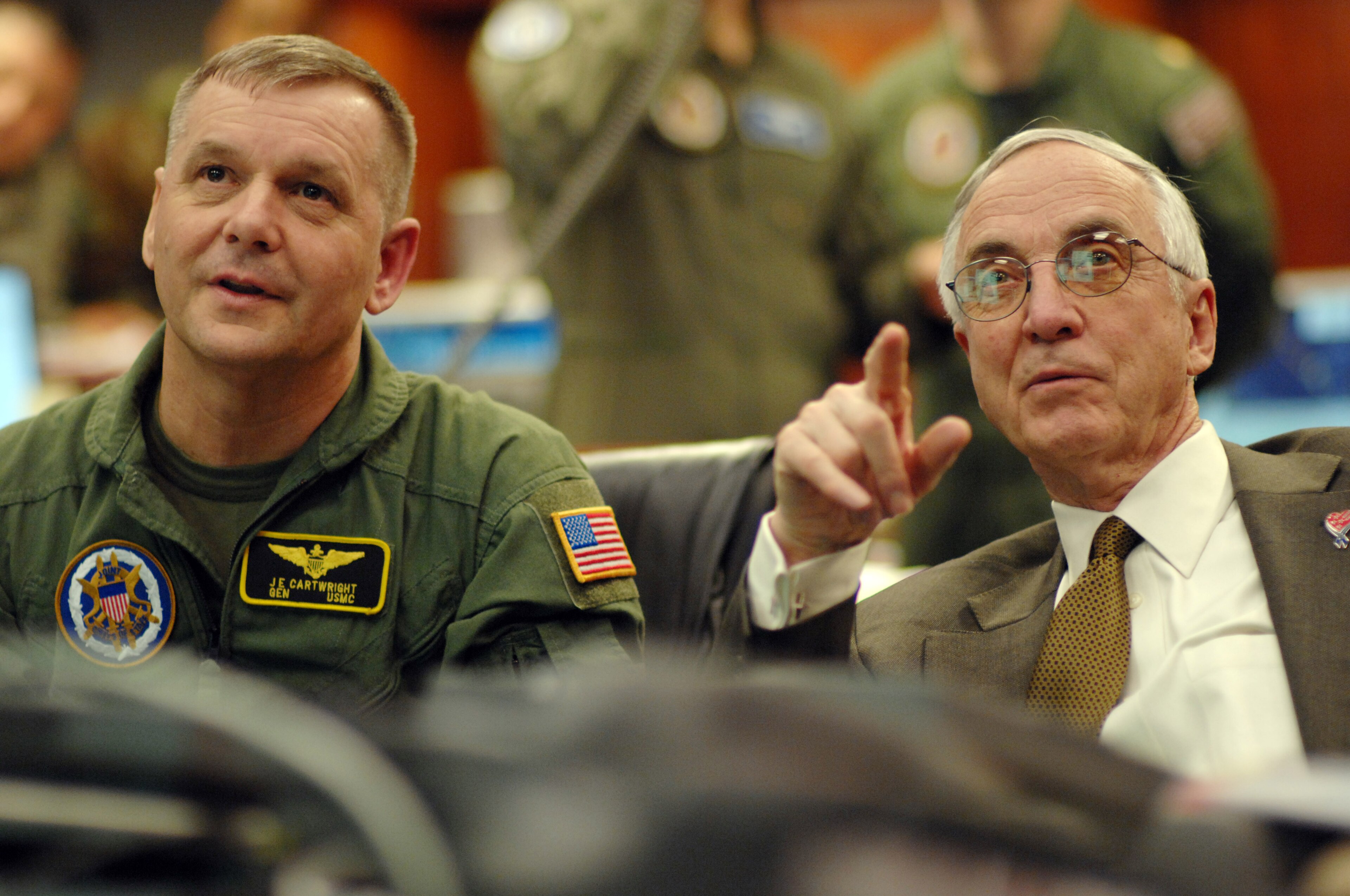
General James Cartwright publicly confirms that the Navy will attempt to shoot down USA-193, citing the hydrazine hazard.
Operation Burnt Frost
USS Lake Erie fires a single SM-3 missile at 10:26 PM EST. The missile intercepts USA-193 at 247 km altitude three minutes later.
Success Confirmed
The Pentagon announces that the hydrazine tank was destroyed with 'high confidence.' Nearly all debris reenters the atmosphere within weeks.
USS Lake Erie sailed to her firing position several hundred miles northwest of Hawaii, accompanied by USS Decatur as a backup shooter and USS Russell waiting in reserve at Pearl Harbor. The timing was constrained by several factors: the Space Shuttle Atlantis needed to land safely from mission STS-122 before any debris could threaten it, USA-193’s orbit needed to decay enough that most fragments would reenter quickly, and the intercept had to occur before the satellite entered the denser atmosphere where its tumbling would become truly unpredictable.
On February 20, Secretary of Defense Robert Gates approved the mission at 1:00 PM Eastern time. Nine hours later, Fire Controlman Jackson pressed the launch button.
The intercept was perfect. Aegis radar tracked USA-193 as it crossed the Pacific, the SM-3’s kinetic kill vehicle separated from its booster and acquired the target, and the two objects merged in a flash of kinetic energy that observers from multiple nations detected almost immediately. Ground-based radars soon confirmed what the Navy already knew: USA-193 had been reduced to a cloud of debris.
The Aftermath
The Pentagon declared victory within days. Analysis of the debris field indicated that the hydrazine tank had been struck directly - the kinetic kill vehicle had threaded through the tumbling spacecraft and hit the one component that supposedly justified the entire operation. Nearly all of the 174 cataloged debris fragments reentered the atmosphere within weeks, avoiding the long-term orbital pollution that had made China’s test so damaging.
Russia and China protested predictably, suggesting that the real purpose was testing ASAT capabilities and possibly preventing classified technology from falling into foreign hands. The United States denied both charges, maintaining that the operation was purely about protecting human life from the hydrazine hazard.
The truth was almost certainly somewhere in between. The hydrazine concern was real, if overstated - there was genuine uncertainty about whether the tank would survive reentry and where it might land. But the timing, coming just thirteen months after China’s test, sent an unmistakable signal about American capabilities. The United States had demonstrated that its naval ballistic missile defense system could be adapted for ASAT missions with relatively minor modifications, and that it could execute such a mission on short notice when the need arose.
The Legacy of Burnt Frost
Operation Burnt Frost established a pattern that continues today. India conducted its own ASAT test in March 2019, destroying a satellite at approximately 283 kilometers altitude - low enough to minimize debris persistence, just as the United States had done. Russia followed in November 2021, but chose a higher orbit for its target and created a debris field that forced the crew of the International Space Station to shelter in their escape vehicles.
The episode also revealed uncomfortable truths about the vulnerability of space systems. USA-193’s failure demonstrated that even the most expensive, most advanced satellites can become paperweights without warning. The successful intercept demonstrated that any nation with competent missile technology can threaten objects in low Earth orbit. The combination suggested a future where space is contested, dangerous, and far less reliable than military planners had assumed.
The Future Imagery Architecture program that produced USA-193 was eventually cancelled and replaced by other systems. The radar satellite technology apparently worked better in later iterations - four FIA-derived radar satellites entered orbit between 2010 and 2016 and appear to have functioned normally. But the optical component of FIA was a complete loss, forcing the NRO to restart production of legacy KH-11 reconnaissance satellites while developing yet another new system.
As for USS Lake Erie, she continued her role as the Navy’s premier ballistic missile defense test ship for years afterward. The Aegis system she carried has been upgraded repeatedly, and the SM-3 missile family has evolved through several generations. The current SM-3 Block IIA, developed jointly with Japan, has demonstrated the ability to intercept targets at altitudes and velocities that would have seemed impossible in 2008.
Fire Controlman Andrew Jackson returned to relative anonymity after his moment of history. His name appears in the official Navy caption of the launch photograph and in a handful of contemporary news reports, then vanishes from the record. He was the man who pushed the button that destroyed a billion-dollar satellite to protect the world from a risk that may or may not have been real, while demonstrating a capability that definitely was.
The operation lasted three minutes. Its implications continue to unfold seventeen years later.
References(8)
- Operation Burnt Frost - Wikipedia
- USA-193 - Wikipedia
- Future Imagery Architecture - Wikipedia
- 2007 Chinese Anti-Satellite Missile Test - Wikipedia
- U.S. Navy Missile Defense: Operation Burnt Frost - Defense Media Network
- USA 193 Post-Shootdown Analysis - CelesTrak
- U.S. missile shoots down satellite - but why? - Christian Science Monitor
- In Death of Spy Satellite Program, Lofty Plans and Unrealistic Bids - New York Times

Theodore Kruczek