· x report · 3 min read
25 Starlinks Lofted from Vandenberg in Latest West Coast Push | KeepTrack X Report
SpaceX launched 25 Starlink satellites from Vandenberg SFB on March 8, growing a constellation now totaling 9,924 active orbital nodes.

Latest Developments
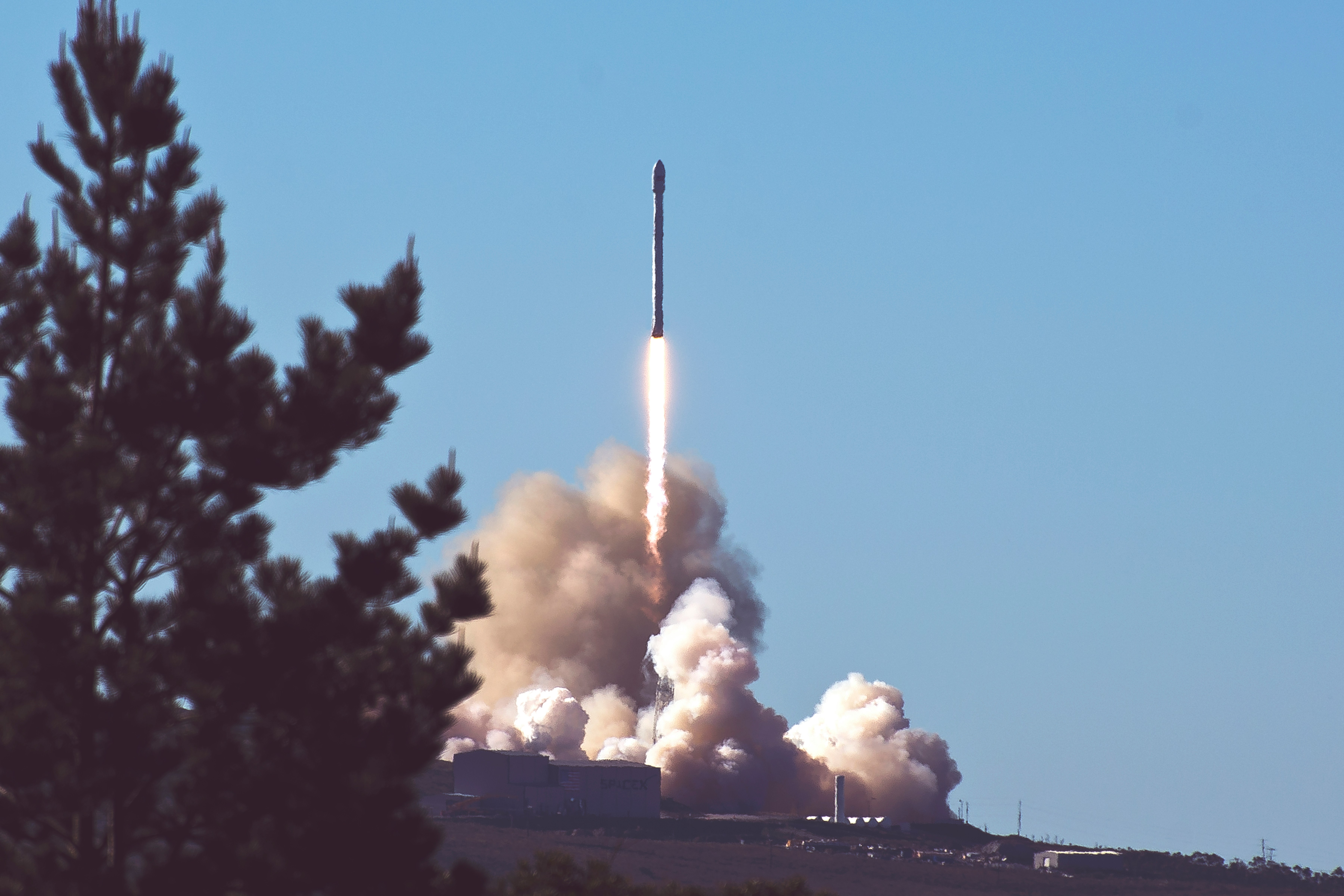
SpaceX conducted another Starlink expansion mission on Sunday, March 8, 2026, lifting 25 satellites aboard a Falcon 9 from Space Launch Complex 4 East at Vandenberg Space Force Base in California. The mission continues SpaceX’s relentless pace of constellation replenishment and growth, with the broader Starlink network now standing at 11,463 satellites launched, 9,924 in orbit, and 9,913 confirmed operational. West Coast launches like this one typically target polar or high-inclination orbital shells, filling in coverage gaps at higher latitudes where demand for maritime, aviation, and government connectivity services is accelerating. No anomalies were reported in association with this mission, making it another nominal entry in what has become one of the most routine yet strategically significant launch cadences in spaceflight history.
Space Safety
The Starlink conjunction threat picture over the next week presents three moderate-risk events alongside seven lower-probability encounters, with no HIGH-risk conjunctions currently identified. The most concerning event involves STARLINK-3191 approaching debris from the 2007 Fengyun 1C anti-satellite test on Mar 14, 2026, carrying a 13.27% collision probability at just 27 meters separation. Concurrently, two operational Starlink satellites face reentry predictions within the coming days, with STARLINK-30995 expected to decay on Mar 11 and STARLINK-1738 on Mar 12, both with ±48-hour uncertainty windows.
| Risk | Starlink Sat | Other Object | Status | Min Range (km) | Rel Speed (km/s) | Max Prob | Time of Closest Approach |
|---|---|---|---|---|---|---|---|
| MODERATE | STARLINK-3191 | FENGYUN 1C DEB | Non-operational | 0.027 | 6.172 | 13.27% | Sat, 14 Mar 2026 11:14 UTC |
| MODERATE | STARLINK-5905 | YAOGAN-30 11B | Operational | 0.029 | 7.487 | 11.97% | Mon, 09 Mar 2026 11:58 UTC |
| MODERATE | STARLINK-4731 | FENGYUN 1C DEB | Non-operational | 0.030 | 5.916 | 11.11% | Tue, 10 Mar 2026 11:50 UTC |
| LOW | STARLINK-2569 | BISONSAT | Operational | 0.030 | 11.554 | 9.35% | Mon, 09 Mar 2026 13:35 UTC |
| LOW | STARLINK-3844 | TIANQI-15 | Operational | 0.037 | 3.632 | 8.14% | Thu, 12 Mar 2026 23:56 UTC |
| LOW | STARLINK-34755 | ESEO | Operational | 0.025 | 15.017 | 7.57% | Mon, 09 Mar 2026 21:14 UTC |
| LOW | STARLINK-35697 | COSMOS 970 DEB | Non-operational | 0.035 | 12.178 | 6.88% | Mon, 09 Mar 2026 17:51 UTC |
| LOW | STARLINK-35815 | PUCP-SAT 1 | Non-operational | 0.037 | 10.649 | 6.73% | Tue, 10 Mar 2026 13:55 UTC |
| LOW | STARLINK-5262 | OBJECT D | Operational | 0.042 | 12.379 | 4.54% | Wed, 11 Mar 2026 00:45 UTC |
| LOW | STARLINK-11505 | DELTA 2 R/B(1) | Non-operational | 0.068 | 4.301 | 3.89% | Sun, 15 Mar 2026 10:53 UTC |
| Satellite | NORAD ID | Predicted Decay | Window (min) | Inclination | Lat | Lon |
|---|---|---|---|---|---|---|
| STARLINK-30995 | 58474 | Mar 11, 02:18 UTC | ±2880 | 43° | 42.0° | 114.2° |
| STARLINK-1738 | 46336 | Mar 12, 15:52 UTC | ±2880 | 53° | 4.3° | 34.2° |
Detailed Coverage
SpaceX Deploys 25-Satellite Starlink Batch from California in Routine West Coast Mission
A Falcon 9 rocket lifted off from Space Launch Complex 4 East at Vandenberg Space Force Base on Sunday, March 8, 2026, carrying 25 Starlink broadband satellites to low Earth orbit. The mission, designated Starlink 17-18, was conducted under clear conditions and proceeded nominally from launch through booster recovery and payload deployment. Booster B1097 is believed to have been involved, continuing SpaceX’s standard practice of high-frequency booster reuse that dramatically reduces per-launch costs.
Vandenberg serves as SpaceX’s primary high-inclination launch corridor, allowing payloads to reach orbital planes that provide coverage over polar regions, the North Atlantic, and the Pacific maritime domain — all strategically important zones for Starlink’s growing defense and commercial customer base. With each batch of 25 satellites added to an already nearly 10,000-strong operational fleet, SpaceX continues to reinforce Starlink’s position as the world’s dominant broadband satellite constellation by a substantial margin. Observers tracking the deployment with tools like KeepTrack can expect the new satellites to appear in a characteristic train formation before gradually maneuvering to their operational slots over the coming days and weeks.
Read the full story: Space.com
Constellation Status
The Starlink constellation remains stable with no changes since the last check. As of March 8, 2026, SpaceX maintains 11,463 total satellites launched, with 9,924 currently in orbit, 9,913 of which are operational, while 1,539 have decayed from their orbits.
- Total Launched: 11463
- Total On Orbit: 9924
- Total Working: 9913
Track Starlink satellites in real-time: Track Starlink

B1049