· x report · 6 min read
Starship V3 Debut Slips as Booster 19 Rolls to Pad 2 | KeepTrack X Report
Starship V3's maiden flight is delayed as SpaceX rolls Booster 19 to Pad 2 for Flight 9, while Falcon 9 completes its 30th mission of 2026.

Latest Developments
SpaceX is facing a schedule slip on one of its most anticipated milestones: the maiden launch of Starship V3 has been pushed back even as NASA applies pressure on the company to accelerate development of the lunar lander variant. In parallel, the program took a forward step with Booster 19 rolling out to Pad 2 at Starbase — marking the first pad rollout in 147 days and signaling the path toward Starship Flight 9. On the Falcon 9 front, SpaceX logged its 30th mission of 2026 with the successful deployment of the 15,000-pound EchoStar XXV satellite to geosynchronous transfer orbit, while a separate Starlink launch from Vandenberg added another 25 satellites to the constellation, which now stands at 11,463 launched, 9,924 in orbit, and 9,913 operational.
Space Safety
The current Starlink conjunction picture presents one HIGH risk event requiring immediate attention, alongside four MODERATE risk conjunctions scheduled across mid-March 2026. STARLINK-32469 faces a critical close approach with OBJECT BC on Mar 14, 11:08 UTC, with a minimum range of only 0.01 km and maximum collision probability of 1.0, indicating deterministic intersection geometry that demands urgent maneuver assessment. Beyond this acute threat, three operational Starlink satellites are currently tracked in reentry predictions with decay windows between Mar 12-13, 2026, with STARLINK-30995 expected to reenter over the South Pacific on Mar 12, 02:58 UTC within a ±24 hour window.
| Risk | Starlink Sat | Other Object | Status | Min Range (km) | Rel Speed (km/s) | Max Prob | Time of Closest Approach |
|---|---|---|---|---|---|---|---|
| HIGH | STARLINK-32469 | OBJECT BC | Operational | 0.01 | 9.757 | 1.0 | Mar 14, 11:08 UTC |
| MODERATE | STARLINK-3043 | GRUS-1E | Operational | 0.014 | 9.173 | 0.334 | Mar 12, 04:44 UTC |
| MODERATE | STARLINK-2558 | ICEYE-X31 | Operational | 0.014 | 12.349 | 0.331 | Mar 16, 09:03 UTC |
| MODERATE | STARLINK-1548 | ASRTU-1 (AO-123) | Operational | 0.013 | 14.013 | 0.324 | Mar 15, 23:13 UTC |
| MODERATE | STARLINK-30801 | CZ-6A DEB | Non-operational | 0.029 | 8.865 | 0.115 | Mar 15, 01:07 UTC |
| LOW | STARLINK-30136 | CONNECTA IOT-10 | Operational | 0.030 | 12.230 | 0.091 | Mar 14, 01:29 UTC |
| LOW | STARLINK-1727 | STARLINK-11117 | Operational | 0.061 | 11.147 | 0.079 | Mar 14, 19:57 UTC |
| LOW | STARLINK-32014 | OBJECT P | Non-operational | 0.031 | 14.757 | 0.057 | Mar 10, 23:11 UTC |
| LOW | STARLINK-30162 | OBJECT B | Operational | 0.046 | 11.393 | 0.042 | Mar 11, 18:37 UTC |
| LOW | STARLINK-34495 | MACSAT 2 (M 2) | Unknown | 0.042 | 14.912 | 0.040 | Mar 15, 04:50 UTC |
| Satellite | NORAD ID | Predicted Decay | Window (min) | Inclination | Lat | Lon |
|---|---|---|---|---|---|---|
| STARLINK-30995 | 58474 | Mar 12, 02:58 UTC | 1440 | 43° | -41.2° | 240.4° |
| STARLINK-1738 | 46336 | Mar 12, 15:52 UTC | 2880 | 53° | 4.3° | 34.2° |
| STARLINK-1112 | 44925 | Mar 13, 09:17 UTC | 2880 | 53° | -48.1° | 148.1° |
Detailed Coverage
Starship V3 Launch Date Slips Amid NASA Pressure to Accelerate
SpaceX has pushed back the first launch of Starship V3 — the most capable and heavily revised iteration of the vehicle to date — according to reporting from SpaceNews. The delay comes at an awkward moment: NASA has formally requested that SpaceX accelerate development of the Human Landing System variant, which is a derivative of Starship, in support of the Artemis lunar program timeline. Elon Musk acknowledged the updated target date on his X account, though specific new dates remain fluid. The slip introduces fresh uncertainty into an already compressed schedule for crewed lunar surface operations.
Read the full story: SpaceNews
Booster 19 Rolls to Pad 2, Ending 147-Day Gap Since Last Starship Flight
For the first time since Starship Flight 11 on October 13, 2025, a Super Heavy booster has rolled out to the orbital launch mount at Starbase. Booster 19’s arrival at Pad 2 represents a significant operational milestone and sets the stage for Starship’s ninth integrated flight test. The 147-day gap between pad rollouts reflects both the complexity of integrating hardware changes and the extensive ground infrastructure upgrades undertaken at Boca Chica. With Ship 39 also undergoing propellant system testing — generating striking imagery in the process — the next Starship stack is taking shape rapidly.
Read the full story: NASASpaceFlight
Ship 39 Propellant Testing Offers First Close Look at Starship V3 Hardware
SpaceX put Ship 39, one of the first Starship V3 upper-stage vehicles, through propellant loading tests that produced visually dramatic results and gave observers their clearest look yet at the new design’s ground behavior. The V3 variant features significant upgrades intended to increase payload capacity and reusability margins over the V2 series. Engineers are evaluating system performance ahead of a stacking campaign with Booster 19, though the overall launch timeline has now shifted following the announced delay. Satellite trackers and Starship watchers will be monitoring Boca Chica closely for the next major integration milestone.
Read the full story: Space.com
SpaceX Delivers 15,000-Pound EchoStar XXV to GTO in Mission 30 of 2026
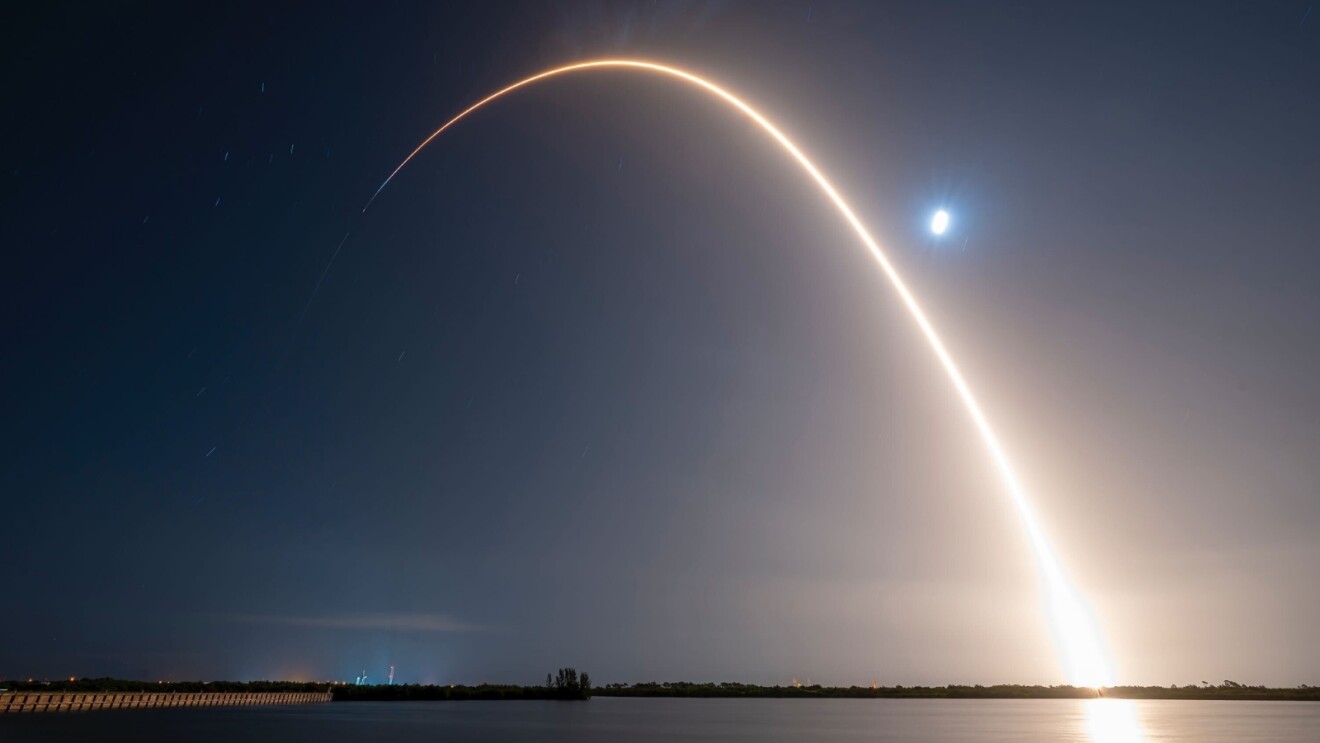
A Falcon 9 lifted off from Space Launch Complex 40 at Cape Canaveral Space Force Station at 12:19 a.m. EDT on March 10, carrying the EchoStar XXV direct-broadcast television satellite to geosynchronous transfer orbit. The 15,000-pound spacecraft is the heaviest communications satellite SpaceX has flown to GTO this year and represents the company’s first GTO mission of 2026. The launch marks SpaceX’s 30th mission of the calendar year — a pace that, if sustained, would rival its record-setting 2024 cadence. Booster recovery was executed nominally following the high-energy trajectory.
Read the full story: Space.com
EchoStar XXV Launch: First GTO Deployment of 2026 Detailed
SpaceflightNow’s live coverage of the EchoStar XXV launch confirmed liftoff at 0419 UTC from Pad 40, with the mission proceeding smoothly through stage separation, second-engine start, and satellite deployment. The EchoStar 25 spacecraft will serve as a direct television broadcasting platform once it completes its own on-orbit maneuvers to geostationary arc. SpaceX’s ability to flex between high-volume Starlink rideshare cadences and demanding GTO commercial missions on the same Falcon 9 fleet continues to demonstrate the rocket’s operational versatility. For ground-based satellite trackers, the transfer orbit trajectory will make EchoStar XXV observable during its multi-day apogee-raising sequence.
Read the full story: Spaceflight Now
25 More Starlink Satellites Deployed from Vandenberg in Group 17-18 Mission
On Sunday, March 8, a Falcon 9 carrying 25 Starlink satellites lifted off from Space Launch Complex 4 East at Vandenberg Space Force Base, continuing SpaceX’s steady drumbeat of constellation augmentation flights from the California coast. The booster, B1097, extended its flight record with this latest recovery. The deployment brings additional capacity to Starlink’s polar and high-inclination orbital shells, which serve users at higher latitudes across North America, Europe, and the Southern Ocean. With 9,913 satellites currently active in the constellation, each additional batch represents incremental gains in coverage density and service redundancy rather than gap-filling.
Read the full story: Space.com
Starbase by Night: Musk’s Aerial Photo Frames a Spaceport at an Inflection Point
Elon Musk shared a nighttime aerial photograph of Starbase in Boca Chica, Texas, offering a striking visual of how dramatically the facility has grown from a remote beach test site into a sprawling orbital launch complex. The image highlights illuminated launch infrastructure, production facilities, and the broader Starbase city footprint — a development that has reshaped the southernmost tip of Texas. With Booster 19 now on the pad and Starship V3 hardware in active testing, the photograph lands at a moment when the site’s transformation feels most tangible. For observers tracking SpaceX’s infrastructure buildout, Starbase’s pace of construction remains one of the more remarkable industrial stories in current spaceflight.
Read the full story: Teslarati
Constellation Status
There have been no changes to the Starlink constellation since the last check. The constellation currently consists of 11,463 total launched satellites, with 9,924 remaining in orbit, of which 9,913 are operational and 1,539 have decayed.
- Total Launched: 11463
- Total On Orbit: 9924
- Total Working: 9913
Track Starlink satellites in real-time: Track Starlink

B1049