· x report · 3 min read
SpaceX Launches GPS III SV10 for US Space Force | KeepTrack X Report
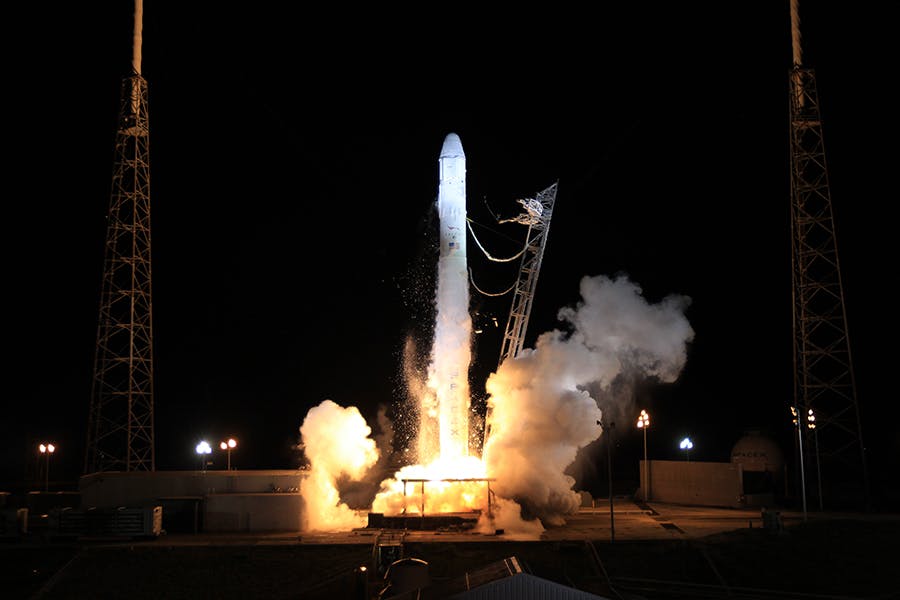
SpaceX delivered the US Space Force's GPS III SV10 satellite to orbit early April 21, boosting America's precision navigation capabilities.
Latest Developments
SpaceX successfully launched the U.S. Space Force’s GPS III SV10 satellite aboard a Falcon 9 rocket in the early hours of April 21, marking a significant milestone for America’s Global Positioning System modernization program. The mission adds a next-generation GPS III spacecraft to the constellation, delivering improved accuracy, stronger anti-jamming capabilities, and enhanced signal resilience for both military and civilian users worldwide. With SpaceX’s Starlink mega-constellation now standing at 11,853 satellites launched, 10,279 in orbit, and 10,263 actively working, the company continues to demonstrate the operational tempo needed to serve both commercial and government launch customers. This GPS III mission underscores SpaceX’s growing role as the backbone of U.S. national security space launch.
Space Safety
The current Starlink conjunction picture presents a moderate debris threat with four MODERATE-risk events concentrated in mid-April 2026, none rising to HIGH severity. The most concerning conjunction involves STARLINK-33563 and COSMOS 2251 DEB on Apr 13, 2026, with a maximum collision probability of 0.3973 and minimum range of 0.012 km, though interaction with non-operational debris somewhat mitigates acute risk. Meanwhile, seven Starlink satellites are predicted to reenter Earth’s atmosphere between Apr 20-21, 2026, with decay windows ranging from 10 to 24 hours, representing a manageable and expected operational attrition rate.
| Risk | Starlink Sat | Other Object | Status | Min Range (km) | Rel Speed (km/s) | Max Prob | Time of Closest Approach |
|---|---|---|---|---|---|---|---|
| MODERATE | STARLINK-33563 | COSMOS 2251 DEB | Non-operational | 0.012 | 11.318 | 0.3973 | Apr 13, 21:44 UTC |
| MODERATE | STARLINK-5601 | DELTA 1 DEB | Non-operational | 0.014 | 8.499 | 0.3479 | Apr 11, 06:26 UTC |
| MODERATE | STARLINK-33680 | FLOCK 4G-17 | Operational | 0.024 | 12.627 | 0.1287 | Apr 09, 13:55 UTC |
| MODERATE | STARLINK-35339 | THEA | Operational | 0.022 | 14.11 | 0.1272 | Apr 11, 01:33 UTC |
| LOW | STARLINK-32841 | YAOGAN-43 01D | Operational | 0.038 | 9.497 | 0.0672 | Apr 11, 14:30 UTC |
| LOW | STARLINK-36431 | WT 1B | Unknown | 0.052 | 1.153 | 0.04499 | Apr 14, 13:45 UTC |
| LOW | STARLINK-32376 | OBJECT AD | Operational | 0.046 | 11.243 | 0.04409 | Apr 12, 08:38 UTC |
| LOW | STARLINK-30245 | SL-19 R/B | Non-operational | 0.037 | 14.371 | 0.04406 | Apr 07, 16:55 UTC |
| LOW | STARLINK-35657 | ION SCV-008 | Operational | 0.041 | 13.969 | 0.03903 | Apr 12, 19:09 UTC |
| LOW | STARLINK-31383 | TEVEL2-7 | Operational | 0.038 | 14.746 | 0.03837 | Apr 08, 19:55 UTC |
| Satellite | NORAD ID | Predicted Decay | Window (min) | Inclination | Lat | Lon |
|---|---|---|---|---|---|---|
| STARLINK-3603 | 51816 | Apr 20, 08:34 UTC | 780 | 53.2° | 1.6° | 122° |
| STARLINK-1965 | 47566 | Apr 20, 16:25 UTC | 600 | 53.0° | -13.7° | 321.9° |
| STARLINK-4465 | 53496 | Apr 20, 17:10 UTC | 900 | 97.6° | -1.4° | 158.5° |
| STARLINK-2095 | 47679 | Apr 20, 19:24 UTC | 1440 | 53.0° | -50.2° | 290° |
| STARLINK-1683 | 46578 | Apr 21, 05:26 UTC | 1440 | 53.0° | -52.2° | 207.7° |
| STARLINK-1800 | 46700 | Apr 21, 09:41 UTC | 1440 | 53.0° | 48.6° | 120.3° |
| STARLINK-1612 | 46164 | Apr 21, 13:38 UTC | 1440 | 53.0° | 4.7° | 114.9° |
Detailed Coverage
SpaceX Delivers GPS III SV10 to Orbit for U.S. Space Force
SpaceX launched the U.S. Space Force’s GPS III SV10 satellite early on April 21, sending the advanced navigation spacecraft skyward aboard a Falcon 9 rocket. GPS III satellites represent the most capable generation of GPS spacecraft ever fielded, offering three times better accuracy and up to eight times improved anti-jamming performance compared to their predecessors — critical attributes as contested electromagnetic environments become the norm in modern warfare and geopolitical competition.
The SV10 spacecraft, built by Lockheed Martin, joins a growing fleet of GPS III satellites that the Space Force has been steadily deploying to replace aging legacy GPS Block II assets. From a satellite tracking perspective, the insertion of SV10 into medium Earth orbit at roughly 20,200 kilometers altitude places it well above the densely populated low Earth orbit bands where Starlink and other LEO constellations operate, reducing conjunction risk concerns. SpaceX’s continued cadence on national security missions further cements its position as the United States’ most reliable heavy-lift launch provider.
Read the full story: Space.com
Constellation Status
There have been no changes to the Starlink constellation since the last check. As of April 19, 2026, the constellation consists of 11,853 total launched satellites, with 10,279 currently in orbit, 10,263 of which are functioning normally, while 1,574 have decayed from their operational orbits.
- Total Launched: 11853
- Total On Orbit: 10279
- Total Working: 10263
Track Starlink satellites in real-time: Track Starlink

B1049