· x report · 5 min read
NROL-72 Spy Satellites Launched; Starlink PNT Blocked | KeepTrack X Report
SpaceX's 13th NRO proliferated-arch mission lifted off May 11 as Starlink shuts its GPS-rival feature ahead of a looming IPO.

Latest Developments
SpaceX capped a packed Sunday with the NROL-72 launch from Vandenberg Space Force Base, delivering another batch of intelligence-gathering satellites for the National Reconnaissance Office’s proliferated architecture constellation — the program’s 13th dedicated mission to date. Hours earlier, Ars Technica broke the story that Starlink has quietly shuttered the signal-of-opportunity positioning feature that researchers had leveraged as a GPS alternative, a move widely linked to SpaceX’s anticipated IPO and the regulatory sensitivities surrounding dual-use navigation infrastructure. With 10,375 satellites currently in orbit and 10,359 confirmed operational, the constellation underpinning both stories is larger than ever, making these policy and security decisions increasingly consequential. The week ahead remains unusually busy, with nine total launches manifested across the United States and China.
Space Safety
The Starlink conjunction picture shows moderate activity with four MODERATE risk events predicted for April 2026, though no HIGH risk conjunctions are currently identified. The most significant threat involves STARLINK-33563 approaching COSMOS 2251 DEB on Apr 13, 2026 with a maximum collision probability of 0.3973 and minimum range of 12 meters, followed by STARLINK-5601 and DELTA 1 DEB on Apr 11, 2026 with probability 0.3479. Meanwhile, three Starlink satellites are predicted to reenter Earth’s atmosphere in May 2026, with STARLINK-1019 providing the widest uncertainty window of 2,880 minutes centered over the Atlantic.
| Risk | Starlink Sat | Other Object | Status | Min Range (km) | Rel Speed (km/s) | Max Prob | Time of Closest Approach |
|---|---|---|---|---|---|---|---|
| MODERATE | STARLINK-33563 | COSMOS 2251 DEB | Non-operational | 0.012 | 11.318 | 0.3973 | Apr 13, 21:44 UTC |
| MODERATE | STARLINK-5601 | DELTA 1 DEB | Non-operational | 0.014 | 8.499 | 0.3479 | Apr 11, 06:26 UTC |
| MODERATE | STARLINK-33680 | FLOCK 4G-17 | Operational | 0.024 | 12.627 | 0.1287 | Apr 9, 13:55 UTC |
| MODERATE | STARLINK-35339 | THEA | Operational | 0.022 | 14.11 | 0.1272 | Apr 11, 01:33 UTC |
| LOW | STARLINK-32841 | YAOGAN-43 01D | Operational | 0.038 | 9.497 | 0.0672 | Apr 11, 14:30 UTC |
| LOW | STARLINK-36431 | WT 1B | Unknown | 0.052 | 1.153 | 0.04499 | Apr 14, 13:45 UTC |
| LOW | STARLINK-32376 | OBJECT AD | Operational | 0.046 | 11.243 | 0.04409 | Apr 12, 08:38 UTC |
| LOW | STARLINK-30245 | SL-19 R/B | Non-operational | 0.037 | 14.371 | 0.04406 | Apr 7, 16:55 UTC |
| LOW | STARLINK-35657 | ION SCV-008 | Operational | 0.041 | 13.969 | 0.03903 | Apr 12, 19:09 UTC |
| LOW | STARLINK-31383 | TEVEL2-7 | Operational | 0.038 | 14.746 | 0.03837 | Apr 8, 19:55 UTC |
| Satellite | NORAD ID | Predicted Decay | Window (min) | Inclination | Lat | Lon |
|---|---|---|---|---|---|---|
| STARLINK-1733 | 46564 | May 13, 11:41 UTC | 1440 | 53° | 15.2° | 262.1° |
| STARLINK-1019 | 44724 | May 14, 18:37 UTC | 2880 | 53° | 4.9° | 9.8° |
| STARLINK-1790 | 46691 | May 15, 17:57 UTC | 1140 | 53° | -52.8° | 336° |
Detailed Coverage
Starlink Kills Its GPS-Rival Feature — Researchers Vow to Find Another Way
In what analysts are calling the most strategically significant Starlink story of the year, SpaceX has blocked external access to the positioning, navigation, and timing (PNT) signals that independent researchers had been exploiting as a high-accuracy GPS alternative. The shutdown arrived with minimal public notice, and sources familiar with the work suggest it was timed deliberately ahead of SpaceX’s expected IPO, where uncontrolled dual-use navigation capabilities could attract unwanted regulatory scrutiny from the FCC, DoD, and international spectrum bodies.
Despite the closure, the academic and defense research communities working on Starlink-based PNT say they are not giving up. With over 10,000 operational satellites broadcasting Ku- and Ka-band signals at high power levels, the physics of signal exploitation have not changed — only SpaceX’s cooperation has. Expect this story to evolve rapidly as IPO filings and spectrum license renewals bring Starlink’s navigation ambitions into sharper public focus.
Read the full story: Ars Technica
NROL-72: SpaceX Delivers 13th Batch of NRO Proliferated-Architecture Spy Satellites
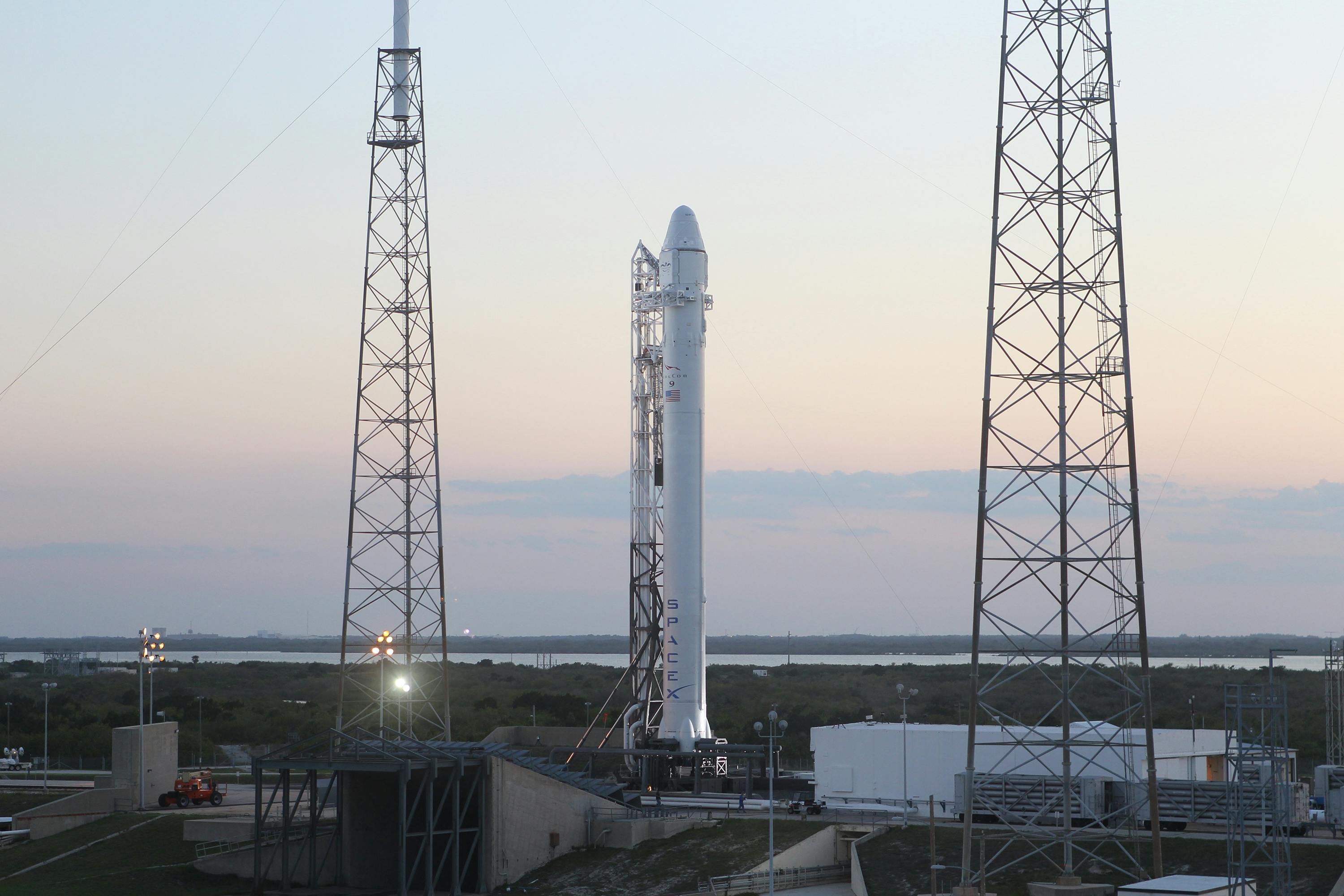
A Falcon 9 lifted off from Space Launch Complex 4E at Vandenberg Space Force Base at 7:13:50 p.m. PDT on May 11, carrying a classified payload for the National Reconnaissance Office designated NROL-72. The mission is the 13th to support the NRO’s proliferated low-Earth orbit architecture — a deliberate move away from single large exquisite satellites toward constellations of smaller, more numerous intelligence-gathering spacecraft that are harder to target and faster to reconstitute.
Details on the number of satellites deployed and their orbital parameters remain classified, though the foggy central coast departure azimuth is consistent with a sun-synchronous or high-inclination reconnaissance orbit optimized for imaging. The booster recovery status was not immediately confirmed in public reporting. The NRO’s continued heavy reliance on SpaceX for these national-security launches underscores how deeply Falcon 9’s reliability and cadence are now embedded in U.S. intelligence infrastructure.
Read the full story: Spaceflight Now
Photos: Falcon 9 Pierces California Fog on NROL-72 Spy Satellite Run
Space.com captured striking imagery of the NROL-72 Falcon 9 ascending through the characteristically thick marine layer that blankets Vandenberg’s central coast on spring evenings. The visual drama of a rocket punching through low overcast before the vehicle — and its classified cargo — disappeared into darkness has become something of a signature for NRO launches from SLC-4E.
The photo coverage serves as a useful complement to the mission data, offering ground-level confirmation of trajectory and separation timing that classified payload manifests do not provide. For satellite trackers, early visual observations and amateur radio Doppler captures in the minutes after deployment will be the primary tools for characterizing the constellation’s new orbital slots.
Read the full story: Space.com
Nine Launches Scheduled for the Week of May 11 — SpaceX and China Dominate Manifest
NASASpaceFlight’s weekly launch preview confirms that the week of May 11 is one of the most congested on this year’s manifest, with nine launches planned across American and Chinese operators. SpaceX accounts for multiple entries, with Starlink replenishment and the now-completed NROL-72 mission bookending a stretch that also sees Chinese Long March vehicles pressing Beijing’s own LEO megaconstellation ambitions.
For satellite trackers using tools like KeepTrack, a nine-launch week means a significant influx of new objects entering the catalog — potentially dozens of Starlink satellites plus Chinese constellation spacecraft, all requiring fresh TLE sets and conjunction screening against the 10,375 objects already on orbit. The density of the manifest also compresses launch window flexibility, raising the operational tempo for range safety teams at both Vandenberg and Cape Canaveral.
Read the full story: NASASpaceFlight
Constellation Status
There have been no changes to the Starlink constellation since the last check. The constellation currently consists of 11,979 total launched satellites, with 10,375 remaining in orbit, 10,359 of which are operational, while 1,604 have decayed from orbit.
- Total Launched: 11979
- Total On Orbit: 10375
- Total Working: 10359
Track Starlink satellites in real-time: Track Starlink

B1049