· deep dive · 10 min read
SaxaVord Spaceport
The UK's orbital ambitions rest on a remote Shetland island. How SaxaVord became Europe's first fully licensed vertical launch spaceport - and why, despite being ready for years, it's still waiting for a rocket that works.
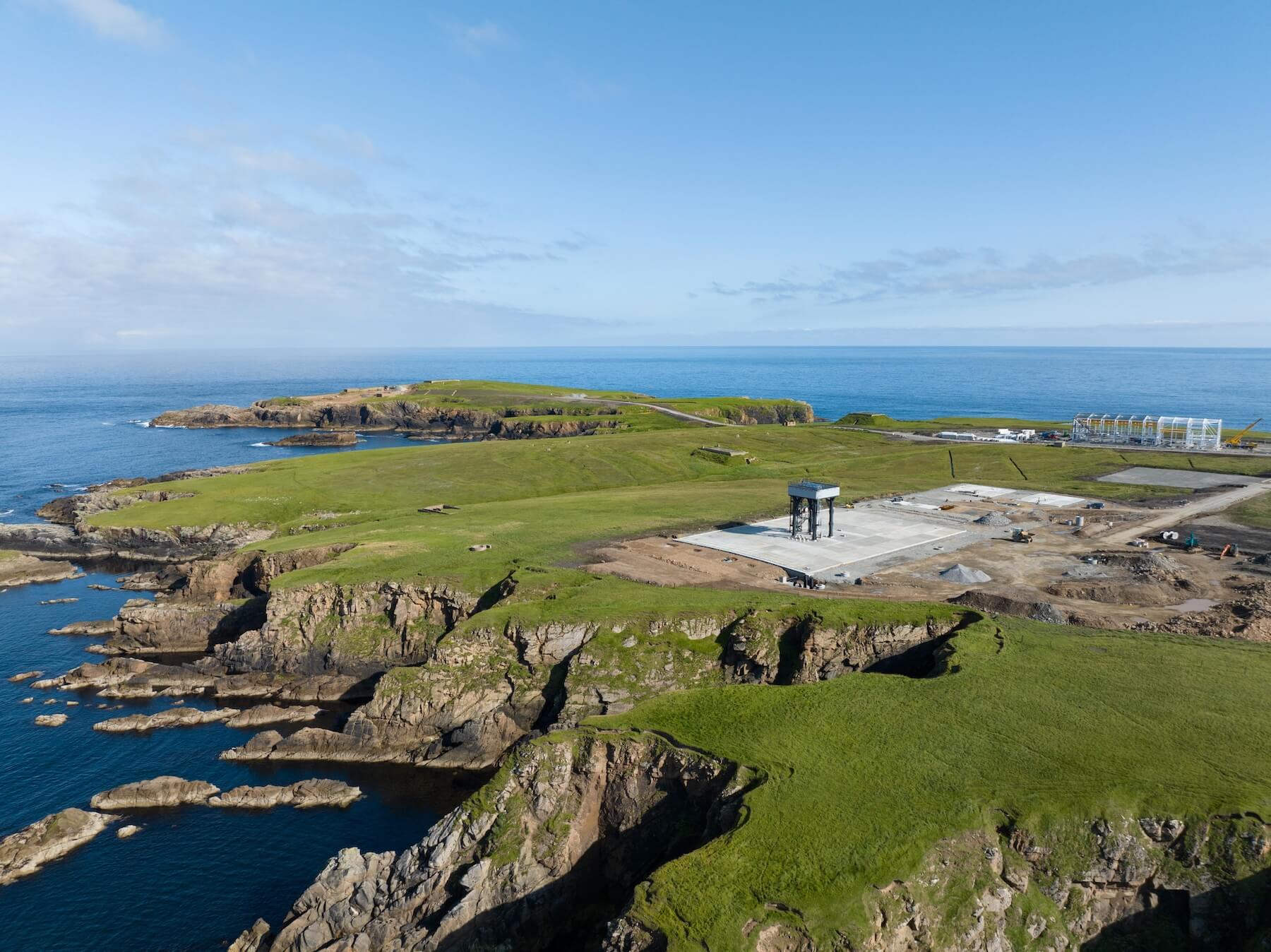
On an island closer to Norway than to London, Frank Strang spent years turning a seemingly impossible idea into Europe’s first fully licensed vertical launch spaceport. His death in August 2025 came just as SaxaVord stood on the brink of history - and just as that history kept slipping further into the future. The UK space industry’s patience is being tested, but the infrastructure is finally ready. Now it just needs a rocket that works.
The Virgin Orbit failure at Spaceport Cornwall on January 9, 2023 was supposed to be Britain’s orbital breakthrough. Instead, it became a cautionary tale about the gap between announcement and achievement in the launch business. Three years later, SaxaVord is trying to write a different story, but the script keeps getting revised.
German rocket developer Rocket Factory Augsburg received the UK’s first-ever vertical orbital launch license on January 16, 2025. The Civil Aviation Authority cleared them for up to 10 flights per year from SaxaVord’s northernmost launch pad, called Fredo. By mid-2025, spaceport officials were telling MPs that satellite launches could begin that summer. By November 2025, the first launch had officially slipped to 2026. As of January 2026, RFA is targeting Q3 2026 for its maiden flight.
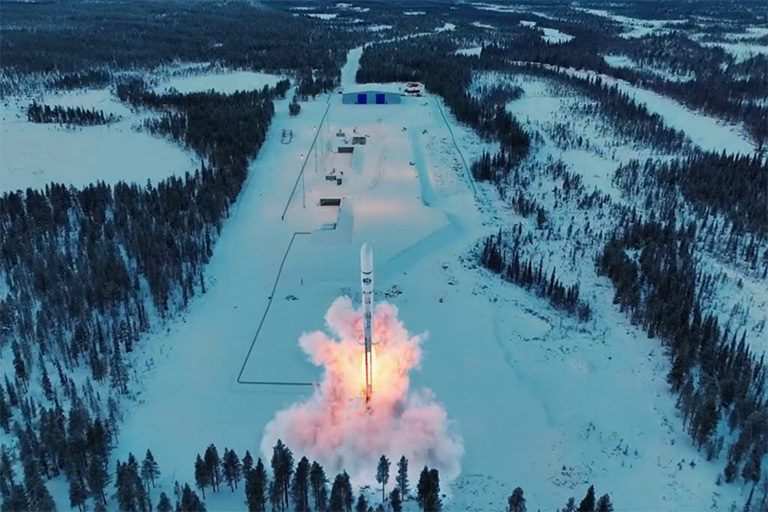
Meanwhile, Norway beat everyone to the punch. On March 30, 2025, Isar Aerospace’s Spectrum rocket lifted off from Andøya Spaceport - the first orbital launch attempt from continental Europe outside Russia. It failed about 30 seconds into flight after losing attitude control. But the fact that it flew at all means the race SaxaVord thought it was winning has already moved on.
Can the UK still claim a meaningful “first”? At this point, the goal isn’t beating Norway to attempt - that ship has sailed. The goal is achieving orbit.
The Explosion That Changed Everything
On August 19, 2024, RFA conducted a static fire test of their nine-engine first stage at SaxaVord. The test experienced an anomaly. The anomaly resulted in a fire. The fire became an explosion. The explosion destroyed the stage and damaged the launch mount.
For a few hours, it looked like Britain’s orbital hopes had gone up in flames along with RFA’s rocket. But the company’s response was remarkably composed. Within days, they’d released footage, preliminary analysis, and a commitment to return to SaxaVord. Their post-mortem identified a fire in the oxygen pump of one engine as the root cause - the damage cascaded to neighboring engines faster than any safety measures could respond.
The spaceport infrastructure survived. No personnel were injured. The launch mount needed repairs, but the facility itself demonstrated exactly what it was designed to do - contain failures safely. Those are the easier problems to solve.
Europe’s Crowded Starting Line
SaxaVord’s situation looks different now than it did even a year ago. In 2024, it seemed like a two-horse race between RFA at SaxaVord and Isar Aerospace at Andøya. Now the field has expanded considerably.
The competitive picture has shifted. Isar Aerospace has already flown hardware from European soil - even if it didn’t reach orbit, they’re iterating. Their second flight could achieve orbit before RFA even attempts its first. PLD Space is preparing for orbital flights from Kourou, adding another European competitor. MaiaSpace, an ArianeGroup subsidiary, is expected to attempt an inaugural test flight in 2026 from the former Soyuz facility at the Guiana Space Centre.
SaxaVord remains the UK’s best prospect for vertical launch capability, but “first orbital launch from the UK” is now a more modest milestone than “first orbital launch from Western Europe.”
The Real Bottleneck
The standard narrative frames SaxaVord’s delays as an infrastructure bottleneck - one completed pad with multiple rocket companies waiting in line. That framing obscures the real constraint.
UK Space Agency launch head Matthew Archer put it bluntly, “SaxaVord, at the moment, they’ve got one completed pad ready for RFA. Others have had some of the ground infrastructure started, so they’ve prepared the ground for concrete to be laid, but it’s not there yet.”
Multiple rocket companies want to launch from SaxaVord. Scottish company Skyrora has a CAA license but no contract with the spaceport. Orbex, having mothballed its own Sutherland spaceport in October 2024, relocated to SaxaVord and now aims for late 2026 - pushed back from 2025 due to licensing rework. German company HyImpulse has permissions but moved its SR75 sounding rocket debut to Australia, citing infrastructure delays.
Even when rockets are ready, pad availability will constrain launch frequency. But more fundamentally, the European small launch sector is still in development. Expect conservative launch schedules industry-wide until multiple vehicles demonstrate orbital capability.
The Defense Dimension
Britain isn’t just interested in SaxaVord for commercial reasons. The Trinity House Agreement between the UK and Germany, signed on October 23, 2024, commits to deepening defense cooperation across all domains - including space. At SpaceComm Expo 2025, RFA announced support for intelligence and commercial satellites from SaxaVord following this bilateral agreement.
“In a world where security challenges are evolving at an unprecedented pace, the partnership between RFA, SaxaVord, and the UK and German governments has never been more important,” RFA co-founder Jörn Spurmann stated.
This defense dimension matters for understanding SaxaVord’s long-term prospects - but it also introduces a potential threat.
NATO delegates visited SaxaVord in May 2025 following a STARLIFT meeting, examining launch capabilities and discussing rapid-response space access. The STARLIFT programme aims to give NATO countries agile access to space for rapid satellite deployment. For alliance members seeking alternatives to American launch sites, a UK facility offers obvious advantages - assuming the rockets materialize.
Who’s Actually Going to Launch?
Let’s be specific about SaxaVord’s customer pipeline:
RFA One remains first in line, with launch now expected Q3 2026. The rocket carries up to 1,300 kg to low-Earth orbit and uses nine Helix staged-combustion engines on the first stage - the first such engines in the European Union. RFA has a new CEO, Indulis Kalnins, who confirmed the 2026 timeline at SpaceTechExpo in Bremen in November 2025. The ESA has contracted RFA for two additional missions under the Flight Ticket Initiative, demonstrating institutional confidence despite the August 2024 setback.
Orbex Prime aims for late 2026, having reworked licensing after relocating from Sutherland. Their microlauncher targets 180 kg to sun-synchronous orbit. CEO Phil Chambers hasn’t ruled out eventually returning to Sutherland once SaxaVord operations mature.
Skyrora XL is licensed by the CAA for up to 16 sub-orbital Skylark L launches per year from SaxaVord, but no spaceport contract is in place. Timeline uncertain but the company remains committed to UK operations.
HyImpulse has SaxaVord permissions but is currently testing elsewhere. Could return once infrastructure matures.
The pattern is clear - multiple customers, but sequencing challenges. RFA is first in line. Everyone else waits for pad availability, licensing, and their own vehicle development timelines.
Frank Strang’s Legacy
SaxaVord’s founder didn’t live to see his spaceport’s first orbital launch. Frank Strang, MBE, passed away on August 13, 2025 - just weeks after publicly announcing a terminal cancer diagnosis - at age 67. His obituaries emphasized determination over engineering - the ability to navigate landowners, regulators, investors, and skeptics with equal persistence.
“When we first identified the prospects for a spaceport at Lamba Ness in Unst, Frank would not take no for an answer,” his colleague Scott Hammond noted. “He was a real force of nature.”
Hammond, who co-founded the original Shetland Space Centre with Frank and Debbie Strang back in 2017, has taken over as CEO. A former RAF Tornado pilot, he led the technical setup of the site including trajectory analysis, rocket evaluation, and operating procedures.
Shetland Space Centre founded
Frank Strang, Scott Hammond, and Debbie Strang begin developing the spaceport concept
Spaceport license granted
CAA grants SaxaVord license for up to 30 launches per year
Range license granted
CAA grants range license for sea and airspace control north of the site
Official opening
SaxaVord officially opens as UK's first vertical spaceport
RFA static fire anomaly
First stage destroyed in test, launch mount damaged
RFA launch license granted
First UK vertical orbital launch license issued
Frank Strang passes away
Founder dies at 67, Scott Hammond becomes CEO
First launch delayed to 2026
RFA confirms slip from 2025 to 2026
For those tracking European launch development, Strang’s story illustrates something important - spaceports are as much political and financial achievements as technical ones. The rockets eventually come from established aerospace companies with engineering expertise. The launch sites require a different skill set - coalition building, regulatory navigation, and sheer bloody-mindedness.
The open question is whether Strang’s vision was successfully transferred to his team. The institutional continuity - whether the drive that powered SaxaVord’s creation survived its founder - will matter for the facility’s trajectory. Hammond’s early moves suggest competence and commitment. But spaceports, like any ambitious enterprise, often depend on the unreasonable persistence of a single individual.
What Success Looks Like
Assume RFA achieves a successful orbital launch in late 2026. What does SaxaVord’s trajectory look like after that?
The spaceport’s long-term vision includes 30 launches per year across multiple pads - comparable to Andøya’s ambitions in Norway. That’s probably a 2030s target rather than anything achievable near-term. More realistic expectations for 2026-2028: RFA’s flight campaign beginning late 2026, with 2-4 missions annually if the vehicle proves reliable. A second launch company - likely Orbex - could be operational by late 2026 or 2027. Total facility throughput might reach 5-10 missions annually by 2028.
For tracking purposes, this means SaxaVord will transition from “novel tracking challenge” to “routine catalog contributor” gradually rather than suddenly. Plan for intermittent activity initially, with potential for steady cadence growth as multiple launch providers mature.
Assessing the Risks
How likely is SaxaVord to achieve its near-term milestones?
The infrastructure risk is low. The spaceport is built and licensed. Additional pads are still in progress, but rockets remain the true bottleneck. Regulatory risk is similarly low - UK licensing is established and political support remains strong.
Market risk runs moderate. Small launch is highly competitive, and pricing pressure from rideshare options persists. Strategic risk is also moderate - GOSA’s progress could weaken long-term German reliance on UK infrastructure.
The highest risks are technical and timeline-related. RFA has never reached orbit. The August 2024 static fire explosion showed vehicle maturity risks, and more setbacks are likely before reliability is established. Based on industry history, expect 12-18 month slips from announced dates as a reasonable baseline assumption.
The Waiting Game
SaxaVord represents Britain’s best near-term prospect for vertical orbital launch capability. The spaceport is ready. The licenses are issued. Multiple rocket companies are committed customers. The remaining variable is whether any of those rockets actually work.
That’s not a criticism - it’s the reality of new launch system development. RFA’s Helix engines are the first oxidizer-rich staged-combustion engines in the EU, a genuine technical achievement. The company has over 400 employees and substantial backing from OHB. They’re not a paper rocket operation hoping for government grants. But they also haven’t reached orbit yet. Neither has anyone else building small launchers in Europe, despite Isar’s attempt last March.
Meanwhile, Andøya is preparing for Isar’s second flight. Kourou is getting ready for PLD Space and MaiaSpace. The European small launch race that seemed like a two-way competition between SaxaVord and Andøya has become a crowded field where “first” matters less than “reliably operational.”
SaxaVord has the infrastructure. It has the licenses. It has the customers. What it needs now is patience - and a rocket that lights up, climbs to orbit, and delivers its payload where it’s supposed to go.
References(12)
- SaxaVord Spaceport - Wikipedia
- RFA and SaxaVord Target UK's First Vertical Orbital Launch - NASASpaceFlight
- RFA Secures UK Operator Licence - Orbital Today
- First Launch from SaxaVord Postponed Until Next Year - Shetland News
- RFA First Test Flight Slated for Q3 2026 - Shetland News
- Orbex Halts Work on Own Spaceport, Shifts to SaxaVord - SpaceNews
- The UK's Launch Timelines are Slipping - Payload
- SaxaVord Spaceport Mourns Loss of Founder Frank Strang MBE - Orbital Today
- Inaugural Isar Aerospace Spectrum Flight Ends in Failure - European Spaceflight
- UK-Germany Trinity House Agreement on Defence - GOV.UK
- European Rocket Launches in 2026 - European Spaceflight
- Flight Ticket Initiative: More Tickets Booked with RFA One - ESA

Theodore Kruczek