· space brief · 4 min read
Space Brief 23 Feb 2025
SpaceX launches Starlink satellites from both coasts, while first 3D atmospheric map of an exoplanet reveals extreme weather patterns, and Starlink missions push total count over 8,000 satellites.

📄Top Stories
SpaceX has successfully launched a combined total of 43 Starlink satellites from California and Florida, exceeding the milestone of 8,000 satellites deployed in their constellation. Meanwhile, astronomers have created the first-ever 3D atmospheric map of an exoplanet, uncovering extraordinary weather patterns. These events highlight significant advancements in both satellite deployment and astronomical discovery.
📰Detailed Coverage
SpaceX Doubles Down on Starlink Deployments
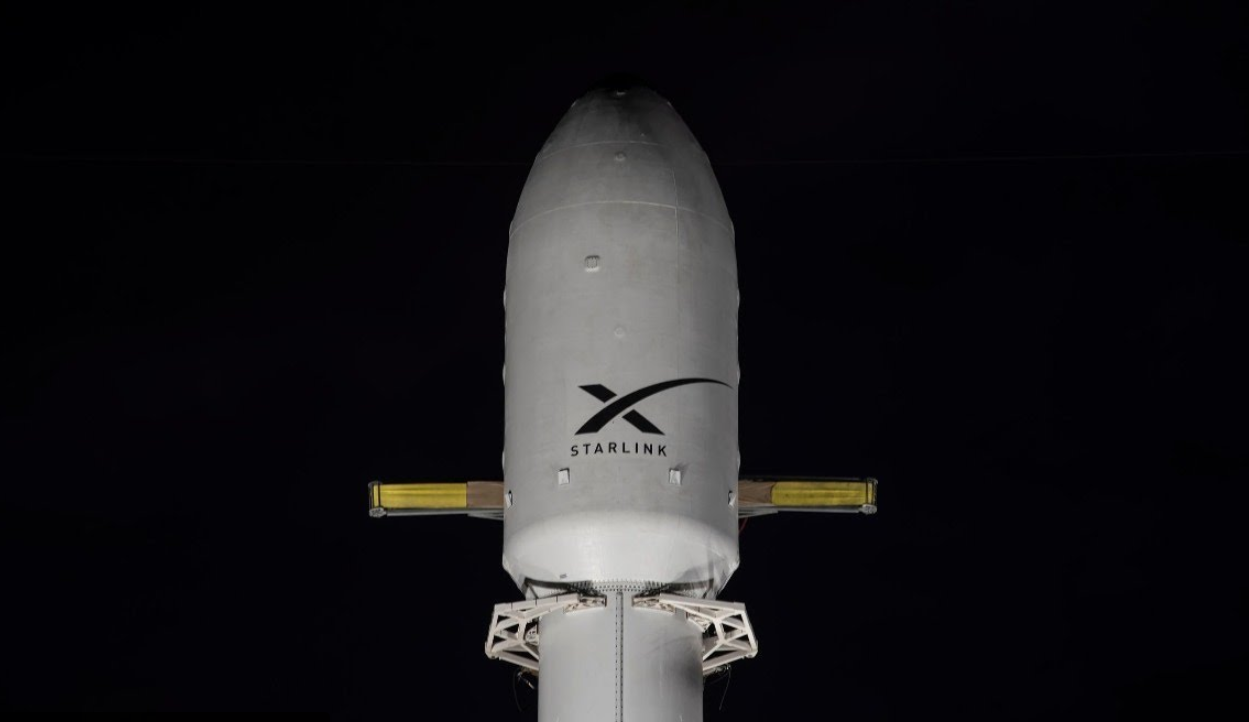
SpaceX has successfully launched two batches of Starlink internet satellites; the first from Vandenberg Space Force Base in California, and the second from Cape Canaveral in Florida. The launches included a total of 43 satellites, 13 of which are equipped with Direct to Cell capabilities, marking a significant step in expanding both coverage and feature set of the Starlink network.
These launches also pushed SpaceX’s total number of deployed Starlink satellites past the 8,000 mark. The missions utilized the Falcon 9 rocket, showcasing its reliability and efficiency in deploying large groups of satellites into orbit. These advancements can be tracked and visualized using our web app, enhancing your satellite tracking experience.
Read the full stories: Space.com and Spaceflight Now
Exoplanet’s Atmospheric Map Unveils Extreme Weather
For the first time, scientists have mapped the 3D atmospheric structure of an exoplanet, specifically focussing on WASP-121b’s turbulent skies. Using the Very Large Telescope, researchers have detected high-speed winds carrying iron and titanium, providing a vivid glimpse into the dynamic weather systems far from Earth.
These findings create a new frontier in exoplanetary science, offering insights not only into the mechanisms driving these extreme conditions but also into potential parallels with more familiar weather systems on gas giants closer to home, such as Jupiter or Saturn.
Read the full story: Space Daily
🛰️Satellite Spotlight
- Satellite Name: FLOCK 4Y 34
- NORAD ID: 55082
- Launch Date: 2023-01-03
- Mission: FLOCK 4Y 34 is part of a technology demonstration mission, contributing to Earth observation capabilities with advanced imaging payloads.
- Orbit: Inclination 97.3821°, Period 92.98 minutes, Eccentricity 0.0008989
- Operator: PLAN
- Fun Fact: This CubeSat is part of Planet Labs’ expansive network, known for providing high-resolution Earth imagery for various purposes, from agriculture to disaster response.
Current TLE Data:
1 55082U 23001CB  25053.18031150  .00052111  00000-0  96727-3 0  9994
2 55082  97.3821 123.1897 0008989 352.6326   7.4791 15.48735785119196
Track this satellite in real-time on our web app: Track FLOCK 4Y 34
Upcoming Space Launches
February 24
- SpaceX Falcon 9:
- Starlink Group 12-13 from Cape Canaveral SFS, FL, USA (04:42 UTC) A batch of 21 satellites for the Starlink mega-constellation - SpaceX’s project for space-based Internet communication system.
February 25
-
Galactic Energy Ceres-1:
- Unknown Payload from Jiuquan Satellite Launch Center, People’s Republic of China (07:59 UTC)
-
Blue Origin New Shepard:
- NS-30 from Corn Ranch, Van Horn, TX, USA (14:30 UTC) NS-30 is the 10th crewed flight for the New Shepard program and the 30th in its history.
February 26
- SpaceX Starship:
- Flight 8 from SpaceX Starbase, TX, USA (23:30 UTC) Eighth test flight of the two-stage Starship launch vehicle.
February 27
-
SpaceX Falcon 9:
- Nova-C IM-2 & Lunar Trailblazer from Kennedy Space Center, FL, USA (00:17 UTC) This is the second mission of Nova-C lunar lander developed and built by Intuitive Machines. The mission carries a NASA payload called PRIME-1 (Polar Resources Ice Mining Experiment-1), aiming for the first demonstration of in-situ resource utilization on the Moon.
-
Long March 2C:
- Unknown Payload from Jiuquan Satellite Launch Center, People’s Republic of China (07:01 UTC)
-
Russian Federal Space Agency (ROSCOSMOS) Soyuz 2.1a:
- Progress MS-30 (91P) from Baikonur Cosmodrome, Republic of Kazakhstan (21:24 UTC) Progress resupply mission to the International Space Station.
February 28
- Arianespace Ariane 62:
- CSO-3 from Guiana Space Centre, French Guiana (00:00 UTC) The CSO-3 (Composante Spatiale Optique-3) satellite is the third of three new-generation high-resolution optical imaging satellites for the French military, replacing the Helios 2 spy satellite series.
Note: Launch dates and times are subject to change due to technical or weather considerations.

Maurice Stellarski