· space brief · 5 min read
Space Brief 12 Dec 2025
Today's space brief highlights the U.S. Space Force's new satellite naming scheme, the Air Force Secretary's warnings on China's space advances, BAE Systems' DARPA award, strategies for future space defense, the importance of GEO satellite refueling, and Blue Origin's plans for Space Force certification.
📰Top Stories
Space Force Implements New Satellite and Space Weapon Naming Scheme
The U.S. Space Force has introduced a unified taxonomy for naming satellites and space weapons, as announced by Gen. Chance Saltzman. This system aims to link system names to mission areas, reflecting legacy traditions seen across various military sectors. This structural overhaul aids in operational clarity and strategic communications.
Read the full story: SpaceNews
U.S. Air Force Secretary on China’s Innovative Space Strategies
U.S. Air Force Secretary warns that China’s advancements in space capabilities are fueled by innovation, not merely by imitating U.S. technologies. Highlighting the competitive edge that Beijing is gaining, this insight calls for increased vigilance and innovation in U.S. space strategies to maintain its global position.
Read the full story: SpaceNews
BAE Systems Secures DARPA Contract to Enhance Autonomous Satellite Tasking
BAE Systems has been awarded $16 million for Phase 2 of DARPA’s Oversight program, focused on advancing autonomous satellite tasking technology. This development underlines the growing importance of autonomous operations in space, enhancing real-time responsiveness to dynamic situations.
Read the full story: SpaceNews
Building the Future of Space Defense: A Focus on Golden Dome
In a new episode of Space Minds, Voyager Technologies’ President Matt Magaña discusses the “Golden Dome” initiative, highlighting its critical role in shaping national security space strategies. This ambitious project is set to strengthen defense mechanisms against emerging space threats.
Read the full story: SpaceNews
Strategic Importance of GEO Satellite Refueling
A recent analysis by COSMIC underscores the vital role of geostationary satellite refueling in maintaining national security and supporting commercial interests. This capability promises to extend satellite lifespans, enhancing operational flexibility and reducing costs associated with launching new satellites.
Read the full story: SpaceNews
Blue Origin’s New Glenn Eyes Space Force Certification
Blue Origin has laid out a four-flight campaign for its New Glenn rocket, in a strategic move to secure certification from the Space Force. With Lt. Gen. Phil Garrant’s endorsement, this campaign aligns with military objectives, showcasing Blue Origin’s commitment to becoming a key player in national space operations.
Read the full story: SpaceNews
🛰️Satellite Spotlight
- Satellite Name: COSMOS 1929
- NORAD ID: 18942
- Launch Date: March 11, 1988
- Mission: Military Communication
- Orbit: LEO (Low Earth Orbit)
- Operator: Unspecified
- Fun Fact: COSMOS 1929 was part of the Strela series, which was designed for military communications, helping to facilitate secure and reliable communication for the Soviet military during the Cold War.
Track this satellite in real-time on our web app: Track COSMOS 1929
🌌Space Weather
Next 24 Hours
-
Radio Blackouts Probability
- Minor: 65
- Major: 10
- Risk: None
-
Solar Radiation
- Probability: 10
- Risk: None
-
Geomagnetic Storming
- Scale: 1
- Impact: minor
- Activity: Moderate
-
Impact Summary
- No risk of radio blackouts.
- No risk of solar radiation storms.
- Moderate geomagnetic activity with minor geomagnetic storms expected.
- G1 (Minor) storming likely early on 12 Dec due to weak solar wind enhancements.
- Slight chance for S1 (Minor) radiation storm on 12 Dec as western hemisphere regions move beyond the limb.
- As major flare-producing regions move beyond the west limb, chances for R1-R2 (Minor-Moderate) radio blackouts decrease over 12-14 Dec.
Long Term Forecast
- Impact Summary
- M-class flares (R1-R2/Minor-Moderate) likely throughout the outlook period, with a slight chance for X-class flares (R3/Strong or greater).
- A slight chance for greater than 10 MeV proton flux to reach 10 pfu (S1-Minor) during this period.
- Greater than 2 MeV electron flux expected to reach high levels on 08-09, 12-13, 16-17, 25-29 Dec, and 01-03 Jan, with normal to moderate levels otherwise.
- G1 (Minor) storm levels likely on 08 and 10 Dec, with anticipated G2-G3 (Moderate-Strong) storming on 09 Dec due to a CME.
- G1 storming is expected on 21-23 Dec and again on 24-26 Dec under varying CH HSS influences.
- G2 (Moderate) storms likely on 30 Dec, with G1 storming anticipated on 31 Dec due to further negative polarity CH HSS influences.
🚀 Upcoming Space Launches
December 13
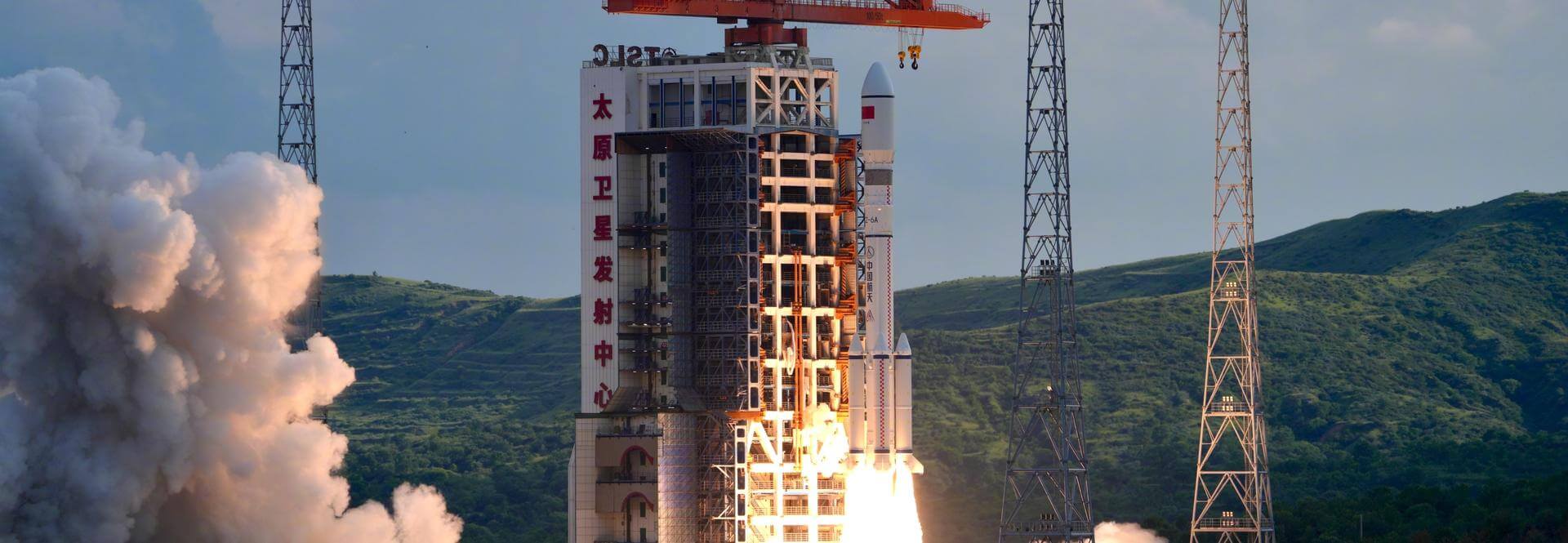
- China Aerospace Science and Technology Corporation Long March 6:
- Unknown Payload from Taiyuan Satellite Launch Center, People’s Republic of China (01:00 UTC)
December 14
- Rocket Lab Electron:
- RAISE-4 from Rocket Lab Launch Complex 1, Mahia Peninsula, New Zealand (03:00 UTC) RAISE-4 (RApid Innovative payload demonstration Satellite-4) is a JAXA satellite for on-orbit demonstrations of 15 components. This mission includes the re-flight of demonstration payloads originally planned for RAISE-3.
- SpaceX Falcon 9 Block 5:
- Starlink Group 15-12 from Vandenberg Space Force Base, CA, USA (05:20 UTC) A batch of 27 satellites for the Starlink mega-constellation—SpaceX’s project for space-based Internet communication.
December 15
- SpaceX Falcon 9 Block 5:
- Starlink Group 6-82 from Cape Canaveral Space Force Station, FL, USA (02:43 UTC) A batch of 29 satellites for the Starlink mega-constellation—SpaceX’s project for space-based Internet communication.
- Galactic Energy Ceres-2:
- Demo Flight from Jiuquan Satellite Launch Center, People’s Republic of China (03:58 UTC) First test launch of Galactic Energy’s Ceres-2 rocket.
- United Launch Alliance Atlas V 551:
- Amazon Leo (LA-04) from Cape Canaveral Space Force Station, FL, USA (08:49 UTC) Amazon Leo is a mega constellation of satellites offering broadband internet access, managed by Kuiper Systems LLC, a subsidiary of Amazon.
- Khrunichev State Research and Production Space Center Proton-M/Blok DM-03:
- Elektro-L No.5 from Baikonur Cosmodrome, Republic of Kazakhstan (12:20 UTC) Elektro-L is a series of meteorological satellites for capturing real-time images and heliogeophysical measurements.
- SpaceX Falcon 9 Block 5:
- Starlink Group 6-99 from Kennedy Space Center, FL, USA (13:11 UTC) A batch of 29 satellites for the Starlink mega-constellation—SpaceX’s project for space-based Internet communication.
Note: Launch dates and times are subject to change due to technical or weather considerations.

Maurice Stellarski