· space brief · 5 min read
Space Brief 23 Dec 2025
Today's briefing covers the Long March 12A's first launch, a major advance in space radio communication, and highlights from key military developments impacting space operations.
📰Top Stories
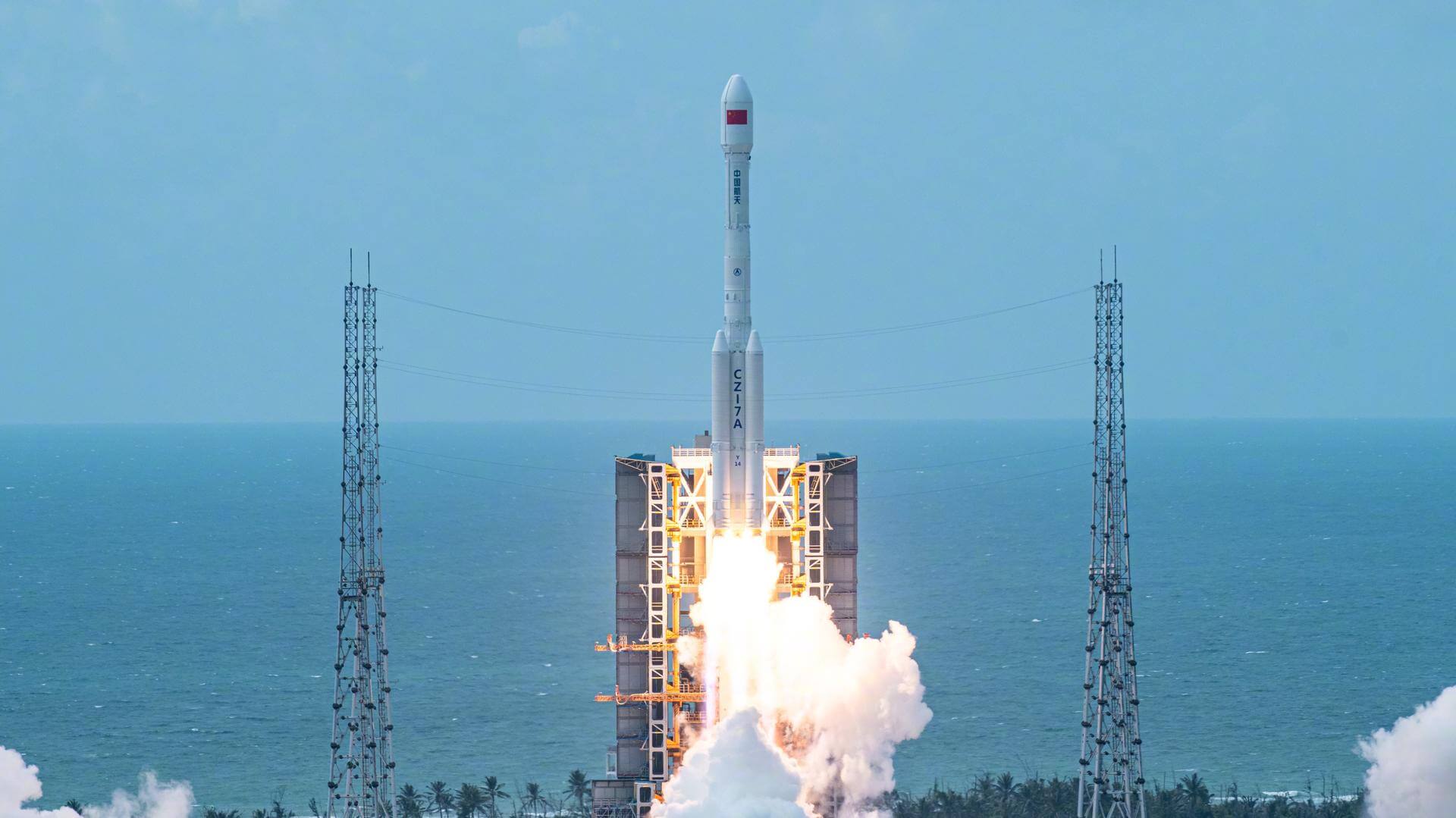
Long March 12A Achieves Orbit, Landing Attempt Fails
In a milestone event for Chinese aerospace, the Long March 12A rocket successfully reached orbit during its first reusable launch attempt. Despite the achievement of getting the payload to orbit, the attempt to recover the first stage was unsuccessful, marking a partial setback in China’s reusable rocket pursuit. Understanding the challenges and recovery techniques from such launches can aid in advancing future reusable spacecraft efforts.
Read the full story: SpaceNews
Leonardo DRS Space Radio Passes Critical Secure Data Test
Innovative strides in secure satellite communications were made as Leonardo DRS completed its first on-orbit test. The multi-channel software-defined radio (SDR) with advanced cryptography successfully demonstrated its secure data transport capabilities tailor-made for U.S. military operations. These developments are crucial for robust, secure communications in space, providing a tactical edge.
Read the full story: SpaceWar
Air Force Cyber Resilience Takes Center Stage
Cyber resilience is gaining prominence as a frontier mission for the U.S. Air Force. At the forefront, the Alamo ACE 2025 conference highlighted developments in cyber offense and defense strategies integral for the next phase of military space operations. Enhancing capabilities to withstand and recover from cyber threats ensures the safety and functionality of vital space assets.
Read the full story: Breaking Defense
Next-Gen Air Dominance and Leadership Shifts: 2025 in Review
Reflecting on 2025, a year marked by significant shifts in air dominance strategies and leadership within the Air Force, vital insights into evolving defense priorities have been highlighted. These changes are expected to influence space-related defense tactics, including satellite deployment and defensive measures in Earth’s orbit.
Read the full story: Breaking Defense
Pentagon’s Acquisition Overhaul and Its Space Implications
The Pentagon’s 2025 review reveals a broad overhaul in acquisition practices, impacting Army operations and overall military strategies. These structural changes hold potential implications for space logistics, procurement of advanced satellite systems, and overall strategic defense capabilities in space.
Read the full story: Breaking Defense
Mars Life Search Prioritized for Human Missions
New findings suggest that the quest for life should be the top scientific objective for the first human missions to Mars. As per the National Academies report, human-led explorations could surpass robotic capabilities in uncovering clues about Martian life, marking a pivotal goal in interplanetary exploration strategy.
Read the full story: Mars Daily
🛰️Satellite Spotlight
- Satellite Name: RADUGA 8
- NORAD ID: 12351
- Launch Date: March 18, 1981
- Mission: This satellite was launched for communication purposes, particularly to facilitate stable communication channels.
- Orbit: Geostationary Orbit (GEO)
- Operator: GUKOS
- Fun Fact: RADUGA 8 features three Delta-1 and three Delta-2 C-Band transponders, making it quite versatile for communication tasks during its operational lifetime.
Track this satellite in real-time on our web app: Track RADUGA 8
🌌Space Weather
Next 24 Hours
-
Radio Blackouts Probability
- Minor: 30
- Major: 5
- Risk: None
-
Solar Radiation
- Probability: 1
- Risk: None
-
Geomagnetic Storming
- Scale: 1
- Impact: minor
- Activity: Moderate
-
Impact Summary
- No risk of radio blackouts means stable communication for satellite operators and ground-based systems.
- No solar radiation storms expected, ensuring safe operations for satellites and spacecraft.
- Moderate geomagnetic activity may cause minor effects on satellite navigation and communication systems.
- Operators should prepare for potential G1 (Minor) geomagnetic storms on December 23 due to persistent coronal hole high-speed stream (CH HSS) influences.
Long Term Forecast
- Solar activity is predicted to remain low to moderate, which is beneficial for satellite operations.
- No significant proton events are expected at geosynchronous orbit, reducing risk for satellites.
- Expect high levels of greater than 2 MeV electron flux on specific dates, which could impact satellite electronics and operations.
- Geomagnetic storms at G2 (Moderate) levels are anticipated on December 30, while G1 (Minor) storms are likely on December 22-23, December 31, and January 17.
- Active conditions predicted on several days may also affect satellite drag in low Earth orbit (LEO).
🚀Upcoming Space Launches
December 22
- Innospace HANBIT-Nano:
- Mission: Spaceward from Alcântara Space Center, Federative Republic of Brazil (15:00 UTC) Maiden orbital launch attempt for the South Korean startup Innospace and its HANBIT-Nano small launch vehicle, carrying five small satellites and other payloads from various organizations.
December 24
- Indian Space Research Organization LVM-3:
- Mission: BlueBird Block 2 #1 from Satish Dhawan Space Centre, India (02:50 UTC) This launch will deploy a single BlueBird Block 2 satellite, featuring substantial communications capabilities, into Low Earth Orbit.
- ROSCOSMOS Soyuz 2.1a:
- Mission: Obzor-R No.1 from Plesetsk Cosmodrome, Russian Federation (14:00 UTC) The Obzor-R satellite is designed for X-band radar earth observation.
December 25
- China Aerospace Science and Technology Corporation Long March 8A:
- Mission: Unknown Payload from Wenchang Space Launch Site, People’s Republic of China (23:18 UTC) Details TBD.
December 26
- China Rocket Co. Ltd. Smart Dragon 3:
- Mission: Unknown Payload from Haiyang Oriental Spaceport (06:26 UTC) Possibly an Earth observation satellite for the Pakistan government’s SUPARCO. Details TBD.
- China Aerospace Science and Technology Corporation Long March 3B/E:
- Mission: Fengyun-4C from Xichang Satellite Launch Center, People’s Republic of China (16:00 UTC) This mission will launch a geostationary meteorological satellite as part of China’s Feng Yun 4 meteorological satellite program.
December 28
- SpaceX Falcon 9 Block 5:
- Mission: CSG-3 from Vandenberg SFB, CA, USA (02:08 UTC) CSG-3 is an Earth observation satellite for the Italian Space Agency, part of a reconnaissance constellation using synthetic aperture radars.
- ROSCOSMOS Soyuz 2.1b/Fregat-M:
- Mission: AIST-2T 01 & 02 from Vostochny Cosmodrome, Siberia, Russian Federation (13:18 UTC) Launch includes a pair of Russian optical Earth observation satellites and 20 small rideshare payloads.
December 30
- China Aerospace Science and Technology Corporation Long March 7A:
- Mission: Unknown Payload from Wenchang Space Launch Site, People’s Republic of China (21:00 UTC) Details TBD.
Note: Launch dates and times are subject to change due to technical or weather considerations.

Maurice Stellarski