· space brief · 4 min read
Space Brief 24 Dec 2025
Today's highlights include the successes and setbacks in recent rocket launches, a notable satellite anomaly, and a significant expansion announcement from ESA.
📰Top Stories
Long March 12A’s Missed Landing After Successful Orbit
China’s ambitious attempt at launching a reusable rocket hit a snag with the Long March 12A. While the rocket successfully deployed its payload into orbit, the first stage wasn’t recovered as planned. This setback highlights the challenges still faced in rocket reusability, a space technology frontier critical for reducing launch costs.
Read the full story: SpaceNews
Indian Rocket Launches AST SpaceMobile’s BlueBird 6
India’s LVM3 rocket successfully launched AST SpaceMobile’s BlueBird 6 satellite, marking a significant step in commercial communications. This next-generation satellite is part of a series designed to enhance direct-to-device communication worldwide, capitalizing on the largest commercial antenna ever deployed in low Earth orbit.
Read the full story: SpaceNews
SpaceX Starlink Satellite Anomaly Photographed
A SpaceX Starlink satellite has been captured in stunning detail by WorldView-3 following an anomaly. This development calls attention to the importance of satellite tracking capabilities, which our app offers, to monitor and analyze such incidents in orbit.
Read the full story: Space.com
ESA’s Workforce Expansion Plans for 2026
As space agencies continue to grow, the European Space Agency (ESA) announced plans to hire 520 new staff starting in 2026. This expansion is part of a larger strategy to bolster the agency’s workforce, ensuring it can meet future challenges in space exploration and technology.
Read the full story: SpaceNews
2025: A Year in Defense and Space
Reflecting on the year, significant changes in defense contracting practices have influenced space project development. Notably, efforts to fund and enhance the Army’s satellite network have been highlighted.
Read the full story: Breaking Defense
🛰️Satellite Spotlight
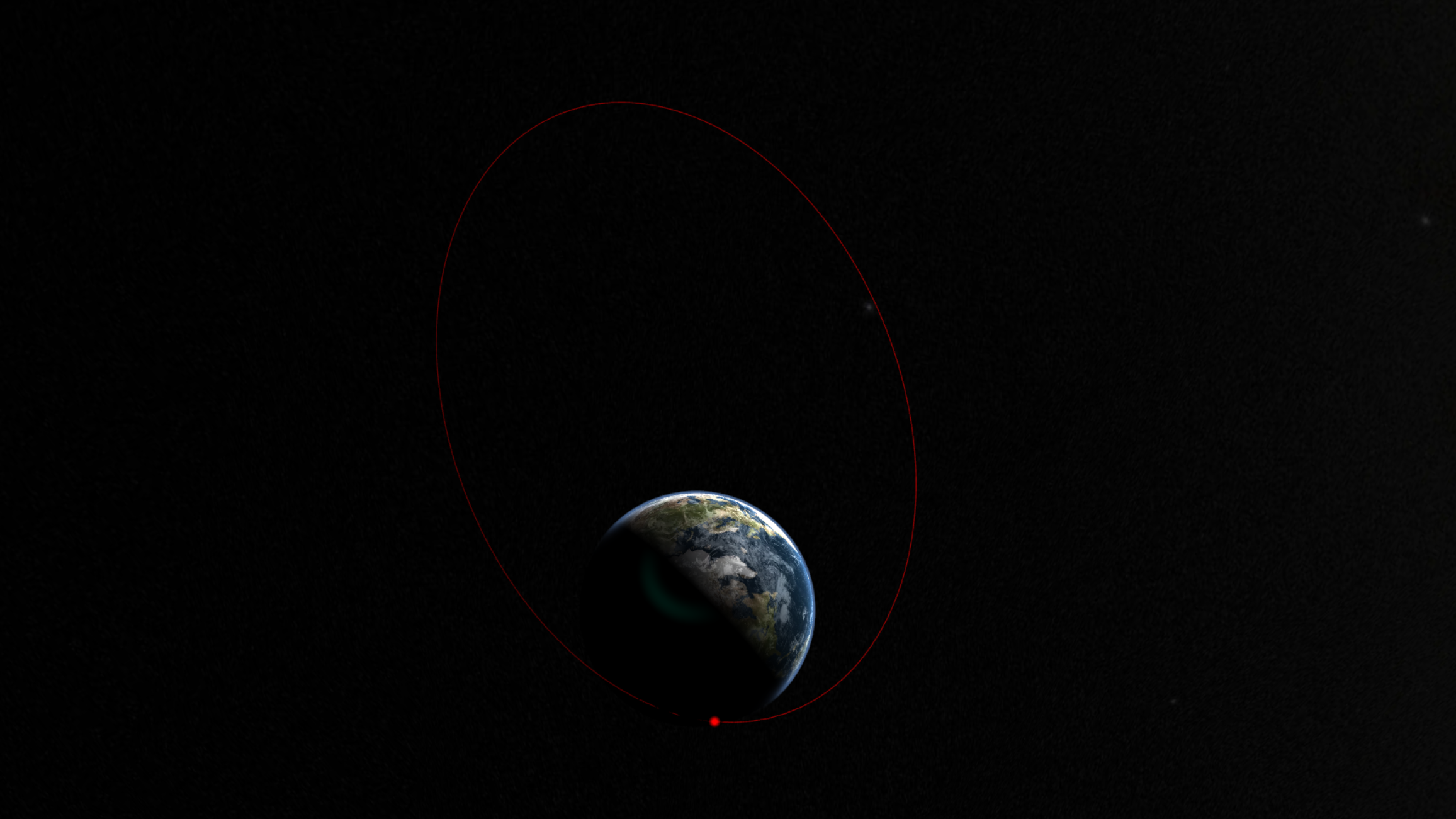
- Satellite Name: CARBONITE 1 (CBNT-1)
- NORAD ID: 40718
- Launch Date: July 10, 2015
- Mission: Technology demonstration and Earth observation.
- Orbit: Low Earth Orbit (LEO)
- Operator: SSTL (Surrey Satellite Technology Limited)
- Fun Fact: CARBONITE 1 is designed to evaluate new technology for Earth observation and successfully operates with a compact cube-like design.
Track this satellite in real-time on our web app: Track CARBONITE 1
🌌Space Weather
Next 24 Hours
-
Radio Blackouts Probability
- Minor: 30
- Major: 5
- Risk: None
-
Solar Radiation
- Probability: 1
- Risk: None
-
Geomagnetic Storming
- Scale: 1
- Impact: minor
- Activity: Moderate
-
Impact Summary
- No risk of radio blackouts means uninterrupted satellite communications and operations.
- The absence of solar radiation storms reduces radiation exposure for astronauts and satellite systems.
- Moderate geomagnetic activity may affect high-frequency radio communications and lead to minor fluctuations in satellite orbits. Increased drag on low Earth orbit (LEO) satellites is possible.
Long Term Forecast
- Forecast of Solar and Geomagnetic Activity (December 22 - January 17, 2026)
- Solar activity is expected to remain low to moderate, minimizing impacts on satellite operations.
- No proton events are anticipated, ensuring stable conditions for satellites at geosynchronous orbit.
- High electron flux levels predicted during late December and early January may pose risk for satellite operations, necessitating monitoring for potential anomalies.
- Geomagnetic storm levels forecasted to reach G2 (Moderate) on December 30 and G1 (Minor) on multiple dates throughout the outlook period, which could intermittently impact communication systems and satellite positioning.
🚀Upcoming Space Launches
December 24
- Russian Federal Space Agency (ROSCOSMOS) Soyuz 2.1a:
- Obzor-R No.1 from Plesetsk Cosmodrome, Russian Federation (14:00 UTC)
The Russian Obzor-R satellite is a planned X-band radar earth observation satellite designed by TsSKB-Progress.
- Obzor-R No.1 from Plesetsk Cosmodrome, Russian Federation (14:00 UTC)
December 25
- China Aerospace Science and Technology Corporation Long March 8A:
- Unknown Payload from Wenchang Space Launch Site, People’s Republic of China (23:18 UTC)
Details TBD.
- Unknown Payload from Wenchang Space Launch Site, People’s Republic of China (23:18 UTC)
December 26
- China Rocket Co. Ltd. Smart Dragon 3:
- Unknown Payload from Haiyang Oriental Spaceport (06:26 UTC)
Possibly an Earth observation satellite for the Pakistan government’s SUPARCO, details TBD.
- Unknown Payload from Haiyang Oriental Spaceport (06:26 UTC)
- China Aerospace Science and Technology Corporation Long March 3B/E:
- Fengyun-4C from Xichang Satellite Launch Center, People’s Republic of China (16:00 UTC)
China’s geostationary meteorological satellite Fengyun-4C is part of the second-generation geostationary meteorological satellite program.
- Fengyun-4C from Xichang Satellite Launch Center, People’s Republic of China (16:00 UTC)
December 27
- Galactic Energy Ceres-2:
- Demo Flight from Jiuquan Satellite Launch Center, People’s Republic of China (03:58 UTC)
First test launch of Galactic Energy’s Ceres-2 rocket.
- Demo Flight from Jiuquan Satellite Launch Center, People’s Republic of China (03:58 UTC)
December 28
- SpaceX Falcon 9 Block 5:
- CSG-3 from Vandenberg Space Force Base, CA, USA (02:08 UTC)
CSG-3 is an Earth observation satellite for the Italian Space Agency, part of a reconnaissance constellation using synthetic aperture radars operating in the X-band.
- CSG-3 from Vandenberg Space Force Base, CA, USA (02:08 UTC)
- Russian Federal Space Agency (ROSCOSMOS) Soyuz 2.1b/Fregat-M:
- AIST-2T 01 & 02 from Vostochny Cosmodrome, Siberia, Russian Federation (13:18 UTC)
A pair of Russian optical Earth observation satellites for obtaining stereo images, plus 50 small ride-share payloads.
- AIST-2T 01 & 02 from Vostochny Cosmodrome, Siberia, Russian Federation (13:18 UTC)
December 30
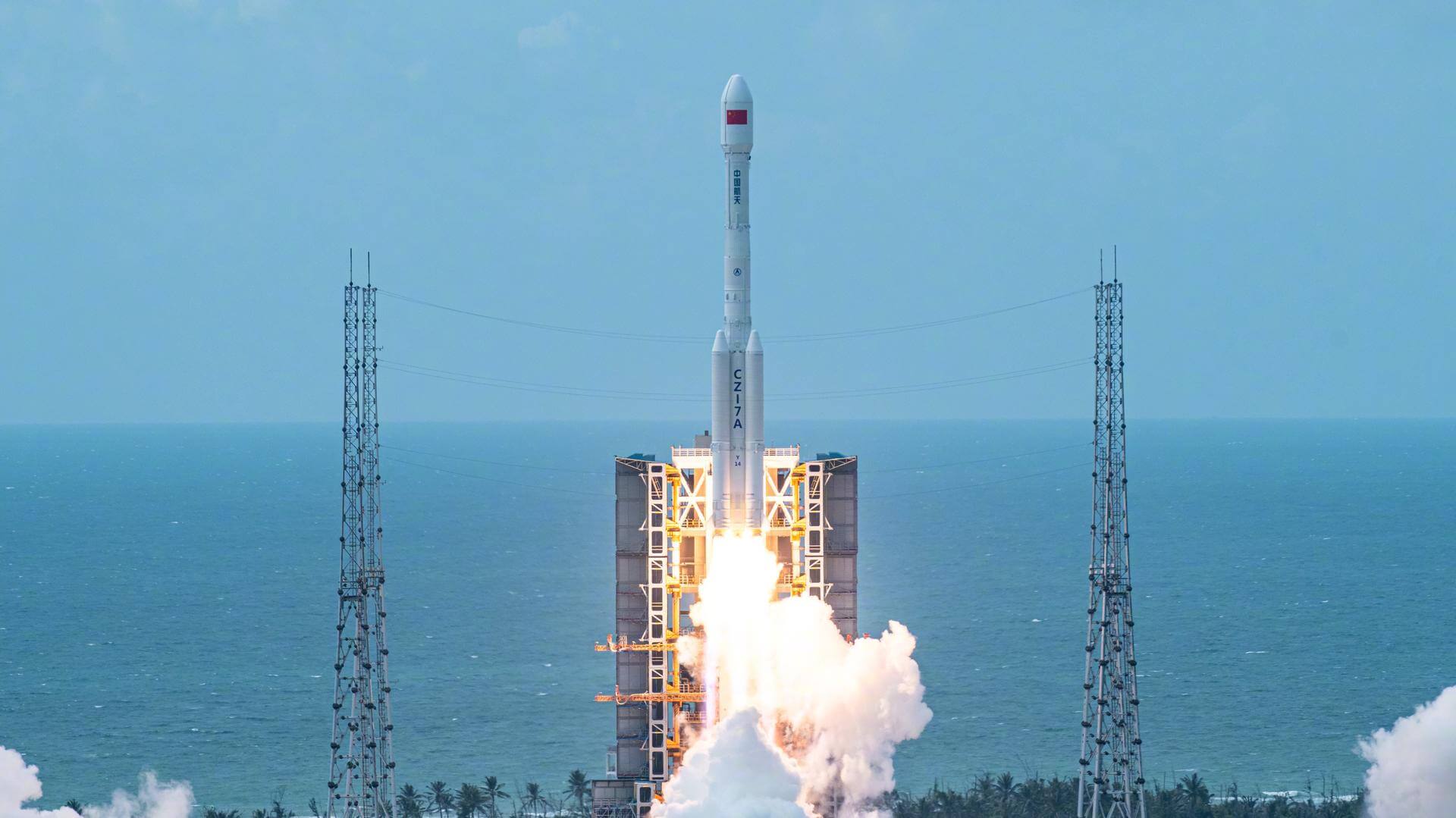
- China Aerospace Science and Technology Corporation Long March 7A:
- Unknown Payload from Wenchang Space Launch Site, People’s Republic of China (21:00 UTC)
Details TBD.
- Unknown Payload from Wenchang Space Launch Site, People’s Republic of China (21:00 UTC)
December 31
- CAS Space Kinetica 2:
- Demo Flight from Jiuquan Satellite Launch Center, People’s Republic of China (00:00 UTC)
First test launch of CAS Space’s Kinetica-2 rocket.
- Demo Flight from Jiuquan Satellite Launch Center, People’s Republic of China (00:00 UTC)
Note: Launch dates and times are subject to change due to technical or weather considerations.

Maurice Stellarski