· space brief · 8 min read
LeoLabs Launches Delta Military SSA Platform | KeepTrack Space Brief
LeoLabs debuts Delta, a space monitoring tool designed for military operators to detect adversarial orbital activity beyond standard conjunction warnings.
Top Stories
LeoLabs Debuts Delta: A Space Monitoring Tool Built for Military Operators
LeoLabs has released a new platform called Delta, aimed specifically at military users. Unlike standard space situational awareness tools that focus on collision warnings, Delta is designed to detect and flag potential adversarial activity in orbit.
The distinction matters. Conjunction alerts tell you two objects are close. Delta is meant to tell you whether that proximity looks deliberate. For defense analysts and operators using KeepTrack to monitor on-orbit behavior, this kind of intent-layer analysis is exactly what commercial SSA has been missing. Worth watching how this integrates with existing DoD space domain awareness pipelines.
Read the full story: SpaceNews
AFCENT Awards Kraus Hamdani $270M for Solar-Powered Long-Endurance Drones
Air Forces Central has awarded Kraus Hamdani Aerospace a $270 million contract for its K1000ULE solar-powered drone. The aircraft previously set an endurance record with a three-day continuous flight and has been used across multiple military exercises.
At this contract value, the K1000ULE moves from proof-of-concept to operational procurement. Long-endurance solar platforms operating at high altitude occupy a similar surveillance niche to low-orbit ISR satellites — persistent, wide-area coverage with minimal logistics overhead.
Read the full story: Breaking Defense
Pentagon Claims Decisive Victory Over Iran, Two-Week Ceasefire Begins
Chairman of the Joint Chiefs Gen. Dan Caine stated the U.S. has “destroyed Iran’s defense industrial base” and its ability to rebuild those capabilities “for years to come.” A two-week ceasefire is now in effect.
The strikes on Iranian defense infrastructure would include facilities tied to missile and potentially space-launch programs. Iran’s space launch capability — which shares significant overlap with its ballistic missile program — may be among the affected systems. The status of Iranian launch sites and production facilities will be worth tracking in coming weeks.
Read the full story: Breaking Defense
France Adds $42 Billion to Defense Budget, Considers Interim Tank Program
France plans to increase defense spending by $42 billion. Armed Forces Minister Catherine Vautrin indicated the country is evaluating an interim tank, likely sourced from KNDS Germany or KNDS France.
The budget increase is part of a broader European rearmament push. France’s expanded defense envelope also funds space and satellite capabilities — the French military operates a growing constellation of reconnaissance and communications satellites under CERES and Syracuse programs.
Read the full story: Breaking Defense
Space Sovereignty Debate Intensifies as Nations Reassess Orbital Dependencies
SpaceNews publishes an analysis arguing that space infrastructure — satellite timing, secure communications, ISR — has become so foundational to national security that dependency on foreign systems is no longer a manageable risk.
The argument isn’t new, but the geopolitical backdrop makes it more actionable. Nations that rely on allied or commercial constellations for GPS timing or communications are increasingly pushing to field sovereign alternatives. This trend directly drives procurement decisions in Europe, the Middle East, and the Indo-Pacific.
Read the full story: SpaceNews
Turkey’s Roketsan Opens Largest-Ever Domestic Defense Production Facilities
Roketsan CEO Murat Ikinci described newly opened production facilities as “the largest defense industry investments in the history of the Republic.” The company simultaneously delivered new missile systems to the Turkish armed forces.
Roketsan produces a range of missiles including the SOM cruise missile and the HİSAR air defense family. Expanded domestic production capacity reduces Turkish dependence on foreign suppliers and supports ongoing export ambitions across the Middle East and Central Asia.
Read the full story: Breaking Defense
U.S. Army Opens Data Operations Center to Field Requests
The U.S. Army’s Data Operations Center is now accepting requests from units. According to program lead Michael Kaloostian, the center is designed to offload data processing work from division-level operational data teams so those teams can stay focused on commander priorities.
Centralizing data operations is a structural shift in how the Army manages battlefield intelligence. As satellite-derived data — imagery, signals, positioning — flows into tactical networks at higher volume, having a dedicated processing layer above the division level reduces bottlenecks that would otherwise slow decision cycles.
Read the full story: Breaking Defense
Satellite of the Day
APSTAR-6D
APSTAR-6D is a high-capacity communication satellite operated by Asia Pacific Satellite Telecommunications Company (APTS) and launched on July 9, 2020, from Xichang Satellite Launch Center aboard a Chang Zheng 3B rocket. Manufactured by China Academy of Space Technology (CAST), this satellite carries a Ka-band high throughput communications payload designed to deliver broadband and telecommunications services across the Asia-Pacific region. With a launch mass of 5,000 kg and a projected operational lifetime of 15 years, APSTAR-6D represents the latest generation of geostationary communication satellites in the APSTAR constellation.
The satellite operates from a geostationary orbit and employs the proven DFH-4E bus platform, featuring two deployable solar arrays and an onboard battery system to sustain its communications mission. Its Ka-band payload enables higher frequency operation and greater bandwidth efficiency compared to traditional Ku-band systems, making it valuable for modern broadband applications. APSTAR-6D continues the legacy of the APSTAR series, which has been a cornerstone of regional telecommunications infrastructure for decades.
| Detail | Value |
|---|---|
| NORAD ID | 45863 |
| Operator | APTS (China) |
| Launch Date | July 9, 2020 |
| Orbit | Geostationary, 0.0458° inclination |
| Purpose | Communication |
| Status | Active |
Track this satellite in real-time: Track APSTAR-6D
Upcoming Space Launches
April 9
-
Avio S.p.A Vega-C:
- Solar wind Magnetosphere Ionosphere Link Explorer (SMILE) from Guiana Space Centre, French Guiana (06:29 UTC) A joint European Space Agency (ESA) and Chinese Academy of Sciences (CAS) mission, SMILE will deploy into a highly elliptical Earth orbit 57 minutes after liftoff. Carrying four science instruments, the spacecraft will study how Earth responds to the solar wind, improving our understanding of solar storms, geomagnetic storms, and space weather phenomena. It has a planned mission life of three years. Watch Live
-
Isar Aerospace Spectrum:
- Onward and Upward from Andøya Spaceport (20:00 UTC) The second test flight of Isar Aerospace’s Spectrum small launch vehicle, carrying five CubeSats: CyBEEsat (TU Berlin), TriSat-S (University of Maribor), Platform 6 (EnduroSat), FramSat-1 (NTNU), and SpaceTeamSat1 (TU Wien Space Team), plus a “Let it Go” experiment from Dcubed. Exolaunch is managing payload integration and deployment. Previously delayed from January 21 due to a pressurization valve issue. Watch Live Launch Preview
April 10
- CAS Space Kinetica 1:
- Unknown Payload from Jiuquan Satellite Launch Center, People’s Republic of China (03:54 UTC) A Kinetica 1 (Lijian-1) solid-propellant light launch vehicle carrying an undisclosed payload. Kinetica 1 is China’s largest solid-propellant launcher to date, capable of placing approximately 2 tonnes into low Earth orbit. Launch Preview
April 11
-
SpaceX Falcon 9 Block 5:
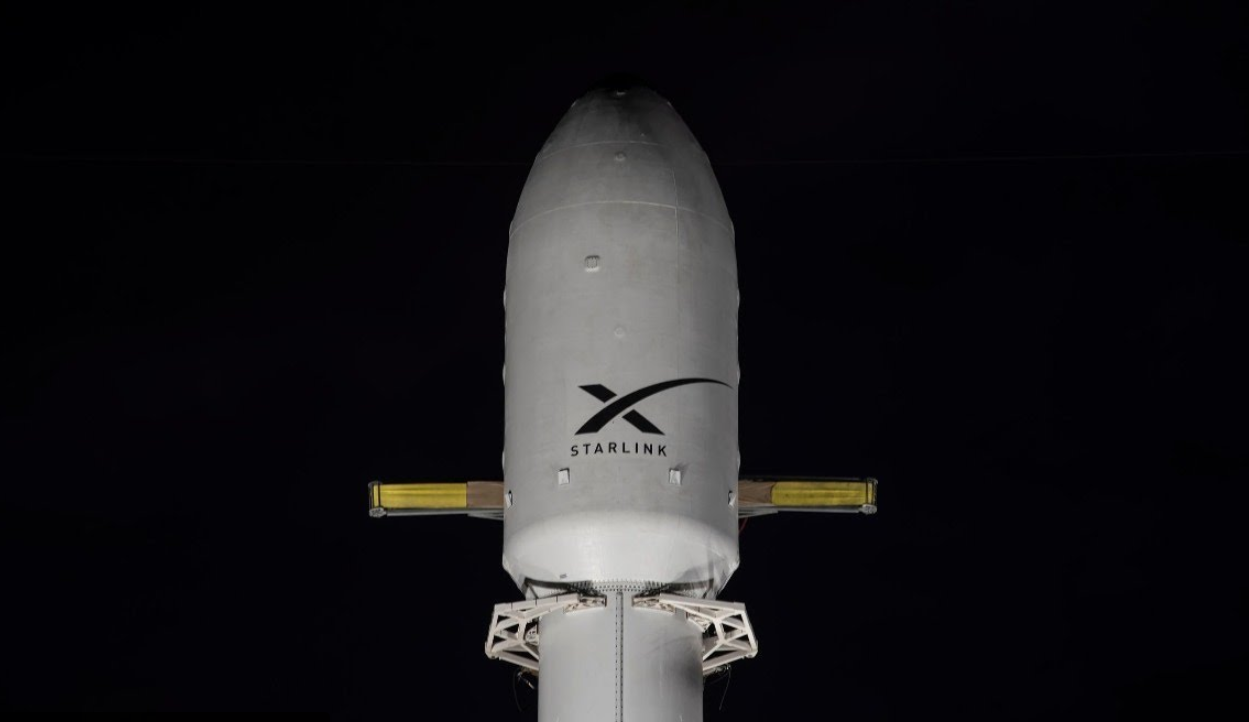
- Starlink Group 17-21 from Vandenberg Space Force Base, CA, USA (02:39 UTC) A batch of 25 Starlink V2 Mini Optimized satellites launching to low Earth orbit. Booster B1063 will fly for its 32nd time, landing on the drone ship Of Course I Still Love You in the Pacific Ocean. Watch Live Launch Preview
-
China Rocket Co. Ltd. Smart Dragon 3:
- Unknown Payload from Haiyang Oriental Spaceport (11:22 UTC) A Smart Dragon-3 solid-fuel commercial orbital rocket carrying an undisclosed payload, launching from the South China Sea.
-
SpaceX Falcon 9 Block 5:
- Cygnus CRS-2 NG-24 (S.S. Steven R. Nagel) from Space Launch Complex 40, Cape Canaveral Space Force Station, FL, USA (11:41 UTC) A SpaceX Falcon 9 will deliver a Northrop Grumman Cygnus cargo spacecraft to the International Space Station under NASA’s Commercial Resupply Services program. The spacecraft is named the S.S. Steven R. Nagel in honor of the former NASA astronaut who flew four Space Shuttle missions and logged 723 hours in space. This mission is managed jointly by NASA and Northrop Grumman Space Systems. Watch Live Launch Preview
April 14
- SpaceX Falcon 9 Block 5:
- Starlink Group 10-24 from Space Launch Complex 40, Cape Canaveral Space Force Station, FL, USA (06:13 UTC) A batch of 25 Starlink V2 Mini Optimized satellites launching to low Earth orbit. Watch Live Launch Preview
April 15
- SpaceX Falcon 9 Block 5:
- Starlink Group 17-27 from Space Launch Complex 4E, Vandenberg Space Force Base, CA, USA (02:00 UTC) A batch of 25 Starlink V2 Mini Optimized satellites launching to low Earth orbit. Watch Live Launch Preview
April 16
- Blue Origin New Glenn:
- BlueBird Block 2 #2 from Launch Complex 36A, Cape Canaveral Space Force Station, FL, USA (10:45 UTC) The third-ever flight of a New Glenn rocket will deploy AST SpaceMobile’s second next-generation BlueBird Block 2 satellite into low Earth orbit. The BlueBird constellation is designed to provide space-based cellular broadband services to commercial and government customers. Booster recovery intentions for this mission have not been announced by Blue Origin.
April 18
- SpaceX Falcon 9 Block 5:
- Starlink Group 17-22 from Space Launch Complex 4E, Vandenberg Space Force Base, CA, USA (14:00 UTC) A batch of 25 Starlink V2 Mini Optimized satellites launching to low Earth orbit. Watch Live
Schedule Changes
- New launch added: SpaceX Falcon 9 Block 5 | Starlink Group 17-22 has been added to the manifest, scheduled for April 18, 2026 at 14:00 UTC from Vandenberg Space Force Base, CA.
- Status update: Long March 6A | SatNet LEO Group 21 has been removed from the upcoming launch calendar after its status changed from Go for Launch to Launch Successful.
Note: Launch dates and times are subject to change due to technical or weather considerations.

Maurice Stellarski