· x report · 4 min read
Cygnus NG-24 Carries 11,000 lbs to ISS | KeepTrack X Report
SpaceX's Falcon 9 lofts 11,000 lbs aboard Cygnus NG-24 to the ISS as Amazon pushes Leo's commercial debut to mid-2026.

Latest Developments
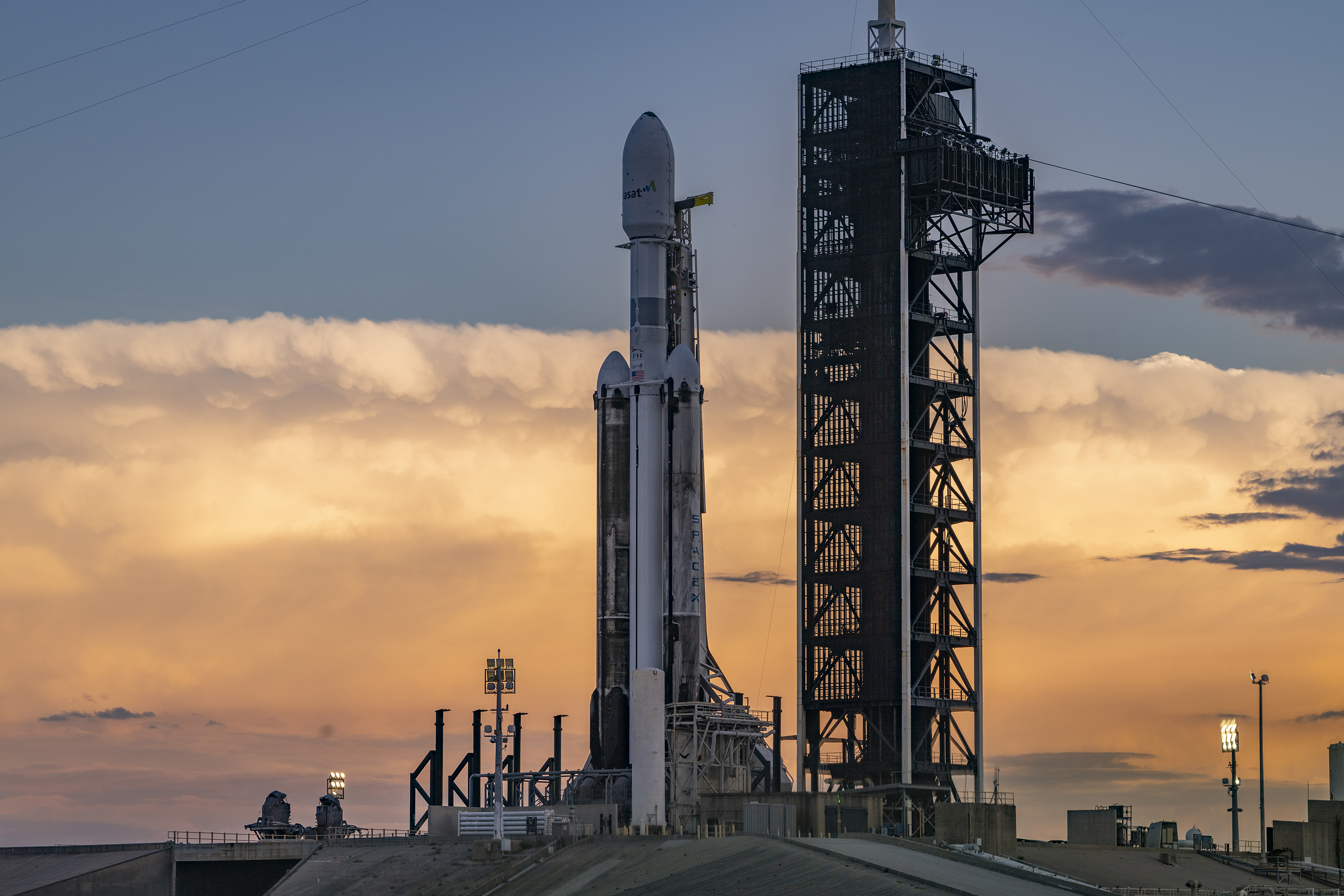
SpaceX’s Falcon 9 took center stage this weekend as it launched Northrop Grumman’s Cygnus NG-24 spacecraft carrying roughly 11,000 pounds of cargo destined for the International Space Station, underscoring the rocket’s indispensable role in keeping low-Earth orbit infrastructure operational. On the competitive front, Amazon CEO Andy Jassy confirmed that the company’s broadband constellation service, rebranded from Project Kuiper to Leo, is now targeting mid-2026 for full commercial availability — a slip from its originally announced late-2025 debut. With Starlink’s constellation now standing at 11,749 satellites launched, 10,192 in orbit, and 10,179 operationally working, Amazon faces a formidable market lead to close before Leo sees meaningful subscriber growth. The dual storylines this week highlight SpaceX’s dual dominance — as both the infrastructure backbone for rival constellation operators and the benchmark against which all broadband LEO competitors are measured.
Space Safety
The current Starlink conjunction and reentry threat picture shows moderate activity with no HIGH risk events identified. Four MODERATE risk conjunctions are forecast for mid-April 2026, with the most significant being STARLINK-33563 approaching COSMOS 2251 DEB on Apr 13 at 21:44 UTC (39.73% collision probability at 0.012 km minimum range). Concurrently, seven Starlink satellites are tracking toward reentry between Apr 9–12, 2026, with standard ±24 hour prediction windows and no high-interest designations noted across the fleet.
| Risk | Starlink Sat | Other Object | Status | Min Range (km) | Rel Speed (km/s) | Max Prob | Time of Closest Approach |
|---|---|---|---|---|---|---|---|
| MODERATE | STARLINK-33563 | COSMOS 2251 DEB | Non-operational | 0.012 | 11.318 | 0.3973 | Apr 13, 21:44 UTC |
| MODERATE | STARLINK-5601 | DELTA 1 DEB | Non-operational | 0.014 | 8.499 | 0.3479 | Apr 11, 06:26 UTC |
| MODERATE | STARLINK-33680 | FLOCK 4G-17 | Operational | 0.024 | 12.627 | 0.1287 | Apr 09, 13:55 UTC |
| MODERATE | STARLINK-35339 | THEA | Operational | 0.022 | 14.110 | 0.1272 | Apr 11, 01:33 UTC |
| LOW | STARLINK-32841 | YAOGAN-43 01D | Operational | 0.038 | 9.497 | 0.0672 | Apr 11, 14:30 UTC |
| LOW | STARLINK-36431 | WT 1B | Unknown | 0.052 | 1.153 | 0.0450 | Apr 14, 13:45 UTC |
| LOW | STARLINK-32376 | OBJECT AD | Operational | 0.046 | 11.243 | 0.0441 | Apr 12, 08:38 UTC |
| LOW | STARLINK-30245 | SL-19 R/B | Non-operational | 0.037 | 14.371 | 0.0441 | Apr 07, 16:55 UTC |
| LOW | STARLINK-35657 | ION SCV-008 | Operational | 0.041 | 13.969 | 0.0390 | Apr 12, 19:09 UTC |
| LOW | STARLINK-31383 | TEVEL2-7 | Operational | 0.038 | 14.746 | 0.0384 | Apr 08, 19:55 UTC |
| Satellite | NORAD ID | Predicted Decay | Window (min) | Inclination | Lat | Lon |
|---|---|---|---|---|---|---|
| STARLINK-1031 | 44736 | Apr 09, 20:59 UTC | 1440 | 53.0° | 18.6° | 181.1° |
| STARLINK-36340 | 68188 | Apr 09, 23:00 UTC | 1440 | 53.2° | 21.9° | 320.6° |
| STARLINK-1575 | 46349 | Apr 10, 03:54 UTC | 1440 | 53.0° | 51.2° | 316.3° |
| STARLINK-1657 | 46354 | Apr 10, 07:58 UTC | 1440 | 53.0° | -24.1° | 189.8° |
| STARLINK-2116 | 47724 | Apr 10, 14:24 UTC | 1440 | 53.0° | 51.8° | 298.7° |
| STARLINK-30187 | 57473 | Apr 10, 18:23 UTC | 1440 | 43.0° | 36.5° | 118.4° |
| STARLINK-6256 | 56401 | Apr 12, 13:20 UTC | 2880 | 43.0° | 29.8° | 251.6° |
Detailed Coverage
SpaceX Falcon 9 Keeps the Space Station Supplied with NG-24 Cargo Run
SpaceX’s workhorse Falcon 9 rocket successfully delivered Northrop Grumman’s Cygnus NG-24 spacecraft to orbit this weekend, ferrying approximately 11,000 pounds of critical supplies, science experiments, and hardware to the International Space Station. The mission reinforces SpaceX’s position as a cornerstone provider of U.S. commercial cargo logistics, with Falcon 9 serving as the launch vehicle of choice even for NASA partners whose spacecraft are built by competing aerospace primes.
The Cygnus vehicle will berth with the ISS following a phasing orbit period, with station crew using the robotic Canadarm2 to capture and install the craft. Trackers monitoring the vehicle’s early-orbit profile noted a clean insertion, with no reported anomalies during ascent or spacecraft separation — keeping the mission squarely on a nominal trajectory toward the station.
Read the full story: Teslarati
Amazon Leo Slips to Mid-2026 as Kuiper Rebrands and Resets Expectations
Amazon CEO Andy Jassy publicly confirmed this week that Leo — the consumer-facing rebrand of the long-in-development Project Kuiper broadband constellation — will not reach proper commercial availability until mid-2026, pushing the timeline roughly six months past the company’s original late-2025 target. The announcement came alongside acknowledgment that an “enterprise preview” program had already quietly begun, suggesting Amazon is managing a staged rollout rather than a clean commercial launch date.
A persistent structural challenge for Leo is its lack of a captive launch vehicle. Unlike SpaceX, which deploys Starlink satellites aboard its own Falcon 9 and Starship rockets at marginal cost, Amazon must purchase rides from third-party providers — including, notably, SpaceX itself — until Jeff Bezos’ reusable New Glenn rocket achieves the cadence needed to sustain constellation buildout. For satellite trackers, this dependency means Leo’s on-orbit object count will grow unevenly and remain far behind Starlink’s 10,192-satellite operational fleet for the foreseeable future.
Read the full story: The Verge
Constellation Status
No changes have been detected in the Starlink constellation since the last check. The constellation currently consists of 11,749 launched satellites, with 10,192 remaining in orbit, 10,179 of which are fully operational, while 1,557 have decayed from their orbits.
- Total Launched: 11749
- Total On Orbit: 10192
- Total Working: 10179
Track Starlink satellites in real-time: Track Starlink

B1049