· x report · 4 min read
SpaceX Names AI Megaconstellation "Starmind" | KeepTrack X Report
SpaceX officially names its planned AI megaconstellation Starmind while a Falcon 9 upper stage targets a lunar impact this August.
Latest Developments
SpaceX made headlines this week by officially naming its planned AI-driven megaconstellation “Starmind,” extending the company’s now-familiar stellar branding and signaling a strategic expansion well beyond the current Starlink network. Meanwhile, a spent Falcon 9 upper stage is on a confirmed collision course with the Moon, expected to impact in August — raising fresh questions about debris accountability in cislunar space. On the ground, small satellite operators are sounding alarms over a growing access bottleneck as SpaceX’s rideshare manifest tightens. With 12,342 Starlink satellites launched to date, 10,682 currently in orbit, and 10,666 actively working, the constellation’s dominance continues to reshape the commercial launch market in ways that ripple far beyond Starlink itself.
Space Safety
Current conjunction and reentry assessment for Starlink shows elevated operational risk, with one HIGH-risk conjunction event identified involving STARLINK-30922 and TIANMU-1 15 on June 24, 2026, presenting a minimum range of only 0.007 km and maximum collision probability of 1.0. The reentry picture remains active with nine Starlink satellites currently under decay prediction, distributed across a six-day window from June 25-29, 2026, with decay uncertainties ranging from 120 to 1,140 minutes. Continued monitoring of the near-term conjunction event and extended tracking of the reentry cohort is warranted given the concentration of predictions over this period.
| Risk | Starlink Sat | Other Object | Status | Min Range (km) | Rel Speed (km/s) | Max Prob | Time of Closest Approach |
|---|---|---|---|---|---|---|---|
| HIGH | STARLINK-30922 | TIANMU-1 15 | Operational | 0.007 | 14.292 | 1.0 | Wed, 24 Jun 2026 10:27:05 UTC |
| Satellite | NORAD ID | Predicted Decay | Window (min) | Inclination | Lat | Lon |
|---|---|---|---|---|---|---|
| STARLINK-11678 | 64326 | Jun 25, 20:50 UTC | 120 | 43° | 43° | 326° |
| STARLINK-1931 | 46790 | Jun 27, 04:23 UTC | 540 | 53° | 17.5° | 125.8° |
| STARLINK-1665 | 46356 | Jun 27, 07:53 UTC | 360 | 53° | -53.1° | 19.7° |
| STARLINK-1922 | 46753 | Jun 27, 10:18 UTC | 420 | 53° | 46.2° | 152.8° |
| STARLINK-1606 | 46144 | Jun 27, 15:47 UTC | 480 | 53° | -47.2° | 218.3° |
| STARLINK-2220 | 48570 | Jun 28, 04:32 UTC | 840 | 53.1° | -29° | 331.7° |
| STARLINK-1991 | 47587 | Jun 28, 11:39 UTC | 720 | 53° | -10.9° | 34.9° |
| STARLINK-1964 | 47565 | Jun 29, 10:15 UTC | 1140 | 53° | -36.9° | 269.3° |
| STARLINK-1655 | 47623 | Jun 29, 20:27 UTC | 1080 | 53° | 53° | 353.6° |
Detailed Coverage
SpaceX Officially Christens AI Megaconstellation “Starmind”
SpaceX has confirmed the name of its next-generation AI-enabled megaconstellation: Starmind. The announcement continues the company’s well-established tradition of stellar nomenclature — Starlink, Starship, and now Starmind — while signaling a distinct identity for what is expected to be a constellation architecture deeply integrated with artificial intelligence for autonomous network management and decision-making.
Details on Starmind’s intended orbital configuration, satellite count, and timeline remain sparse, but the naming itself is a significant milestone. It suggests SpaceX is moving beyond internal project-phase terminology and into formal product development — a pattern the company has followed previously before opening regulatory filings and commercial discussions. Satellite trackers should watch for upcoming FCC or ITU coordination filings that may reveal orbital shell parameters.
Read the full story: Space.com
Spent Falcon 9 Upper Stage Set to Strike the Moon in August
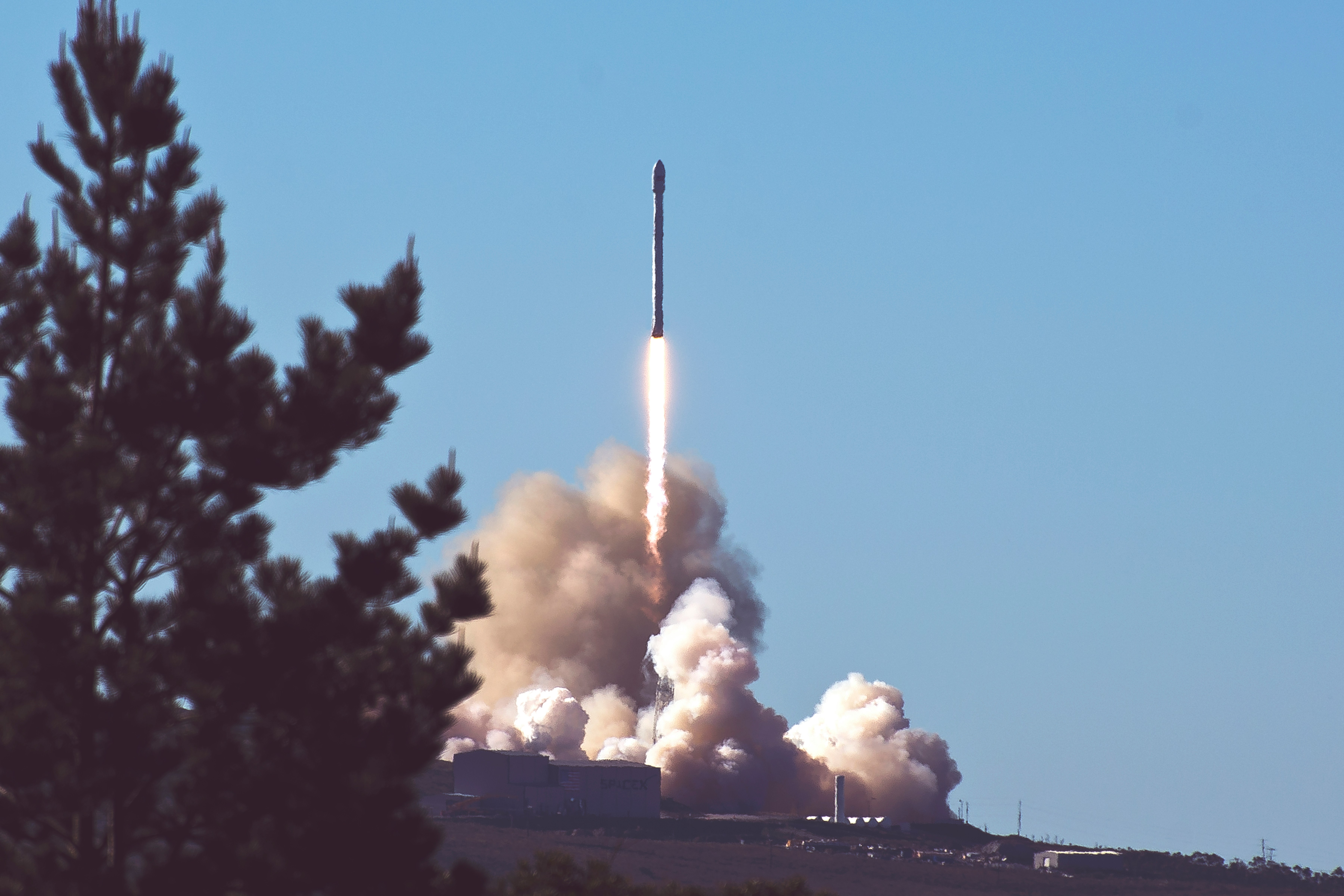
A discarded Falcon 9 second stage is tracking toward a confirmed lunar impact sometime in August 2026, according to orbital analysts. The object — left in a chaotic high-Earth orbit after exhausting its propellant on a mission years prior — has been gradually nudged by lunar and solar gravity onto an intersecting trajectory with the Moon’s surface. Experts note the geometry of the impact may make visual observation from Earth difficult but not impossible, depending on the strike location and local lunar lighting conditions.
The event will draw inevitable comparisons to the 2022 mystery rocket body lunar impact, which was ultimately attributed to a Chinese Long March 3C upper stage. Unlike that case, the Falcon 9 origin is not in dispute, but the impact reignites policy conversations about end-of-life disposal for hardware sent into deep or highly elliptical orbits. No mitigation or diversion is planned. Lunar reconnaissance assets may be repositioned to observe the crater aftermath.
Read the full story: Space.com
Rideshare Bottleneck Squeezes Small Satellite Operators
Small satellite manufacturers built their business models around reliable, affordable access to orbit via SpaceX’s Falcon 9 Transporter and Bandwagon rideshare programs — but that assumption is now under significant strain. As demand for rideshare slots has surged and SpaceX’s internal manifest has grown increasingly packed with Starlink missions, smaller commercial operators are finding it harder to secure timely launches at predictable prices.
The bottleneck has downstream consequences that extend beyond individual operators: it threatens the financing models of startups that promised investors on-orbit demonstrations within specific windows, and it risks consolidating launch dependency even further among a single provider. Industry voices are calling for investment in competing rideshare platforms from Rocket Lab, Exolaunch, and emerging providers — but none currently match SpaceX’s cadence or cost structure. For constellation builders watching the 10,666-satellite Starlink network continue its rapid growth, the irony is sharp: Starlink’s success is partly choking the pipeline for everyone else.
Read the full story: SpaceNews
Constellation Status
There have been no changes to the Starlink constellation since the last check. The constellation currently consists of 12,342 total launched satellites, with 10,682 currently in orbit, 10,666 of which are fully operational, and 1,660 that have decayed from orbit.
- Total Launched: 12342
- Total On Orbit: 10682
- Total Working: 10666
Track Starlink satellites in real-time: Track Starlink

B1049