· space terms · 9 min read
High-Throughput Satellite (HTS)
Spot beams and frequency reuse turned geostationary satellites from one-way TV broadcasters into terabit-per-second pipes - and made consumer satellite broadband actually work.
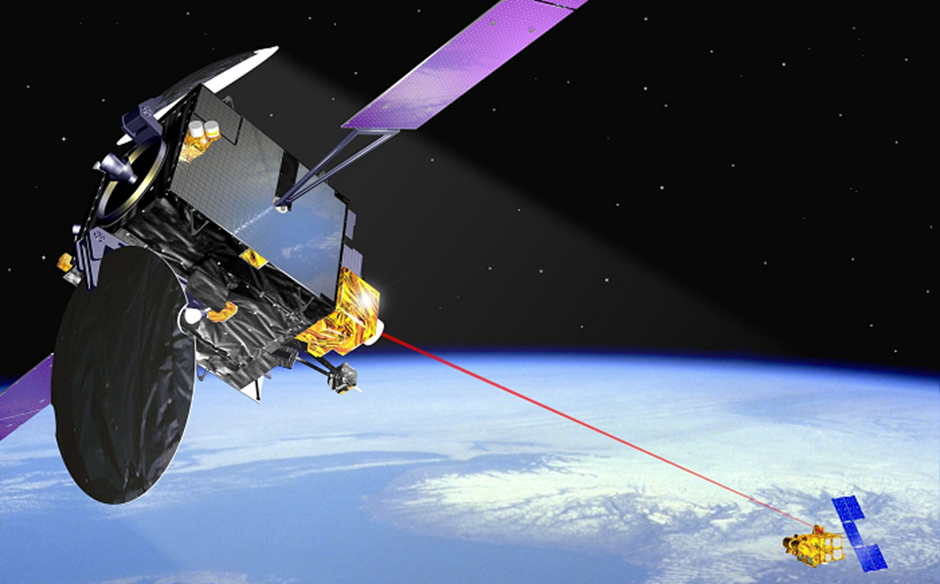
For about forty years, a geostationary communications satellite was basically a giant mirror in the sky. Uplink a television channel from one ground station, and the satellite’s wide-beam transponder would splash the signal back down across an entire continent. It worked beautifully for one-to-many broadcast. It was almost useless for the kind of two-way internet traffic the modern world runs on, because every user in that giant footprint had to share the same fixed slice of bandwidth.
A High-Throughput Satellite, or HTS, is the architecture that broke that ceiling. Instead of one wide beam covering a continent, HTS satellites paint hundreds of narrow spot beams across the same region, then reuse the same frequencies in non-adjacent cells - the same trick a cellular network uses on the ground. The result is a single spacecraft delivering ten to a hundred times the capacity of a traditional satellite at roughly the same build cost, and the reason a satellite in geostationary orbit can now plausibly push a terabit per second.
The Technical Bits
Traditional fixed satellite service (FSS) was built around wide-beam transponders. A typical Ku-band transponder might cover an entire country or half a continent with a single 36 MHz slice of spectrum. Every user inside that footprint shared that one slice. Add more users, and each one’s effective throughput dropped. There was no clever way out, because spectrum is finite and the beam covered too much ground.
HTS flips the geometry. Instead of one wide beam, the satellite produces dozens to hundreds of narrow spot beams, typically 0.5 to 2 degrees wide. Each spot beam covers a small geographic cell - a few hundred kilometers across - and gets the full allocated bandwidth for itself. Because non-adjacent cells are physically separated on the ground, the same frequencies can be reused in cells that are far enough apart not to interfere. Frequency reuse factors of 3 to 7 (or more) are common. The total satellite capacity then scales with the number of beams, not with the bandwidth allocated by regulators.
Most HTS payloads operate in Ka-band (roughly 18-31 GHz), where there is enough contiguous spectrum to make the math work. Some systems use Ku-band (12-18 GHz), and a growing number of next-generation designs are pushing into Q/V band (33-75 GHz). Ka-band is the workhorse here - see our Ka-Band post for the spectrum story, and the Ku-Band and C-Band posts for the older neighborhoods HTS is leaving behind.
The other technical leap is on the spacecraft itself. Older bent-pipe satellites just amplified and repeated whatever came up to them. Modern HTS payloads are software-defined: digital onboard processors that can route traffic between beams, hop a beam between cells on millisecond timescales, and reallocate capacity dynamically based on where the demand is. The antennas range from large reflector dishes with multi-feed-horn arrays (one feed per beam) to fully active phased arrays that steer beams electronically.
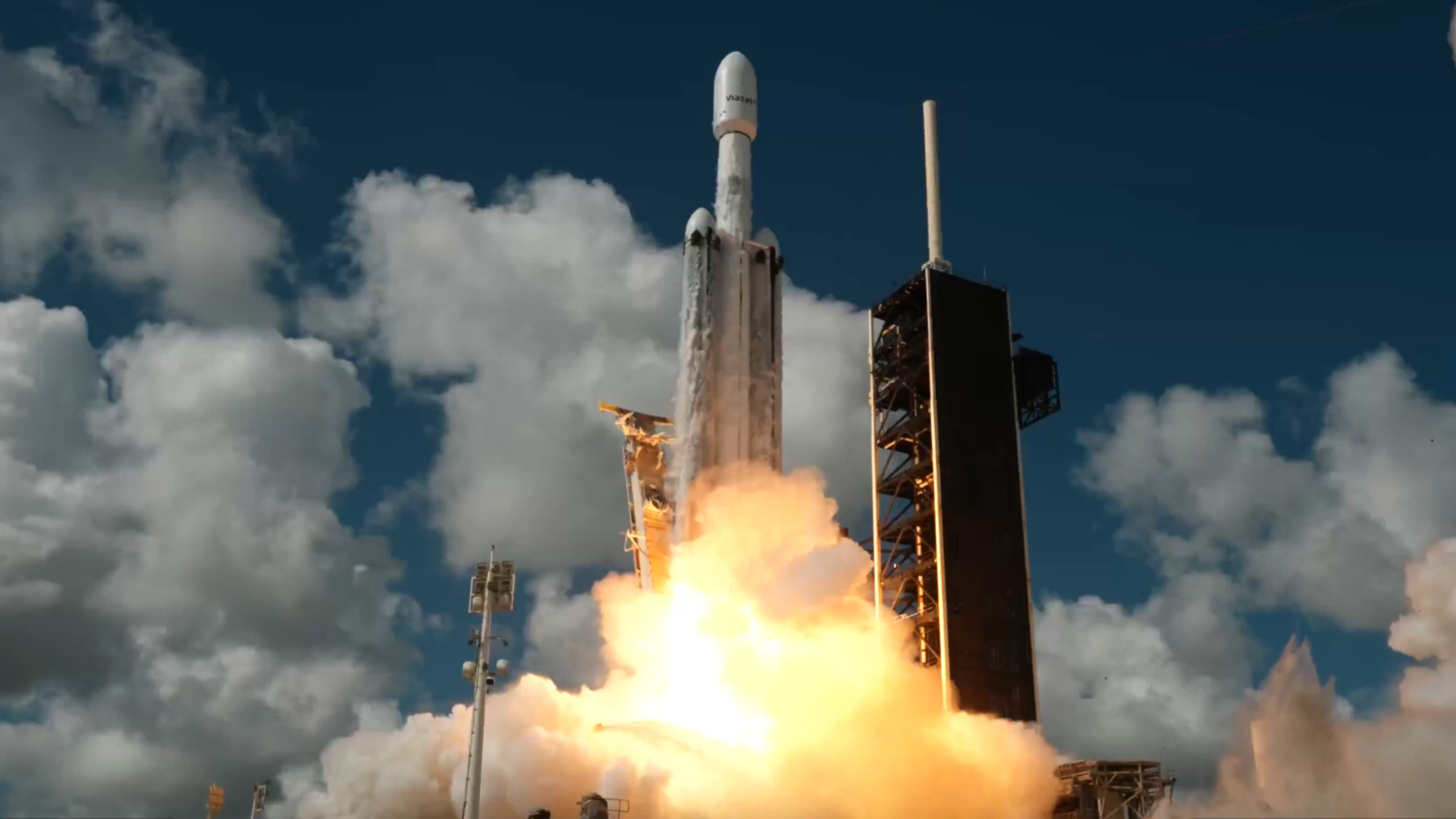
The first commercial HTS, Telesat’s ANIK F2 in 2004, delivered around 2 Gbps - revolutionary at the time. Twenty years later, Hughes JUPITER-3 launched on Falcon Heavy with a published capacity north of 500 Gbps. ViaSat-3, the next step, targets roughly a terabit per second per satellite.
The capacity arc tracks that progression closely. First-generation HTS like Eutelsat’s KA-SAT (2010) sat in the 50-100 Gbps range. Mid-decade systems like SES-17 (2021) cleared 200 Gbps. The current generation - JUPITER-3 (2023), the Inmarsat I-6 series, ViaSat-3 - is the first to credibly push past half a terabit, with Ultra HTS or Very HTS (VHTS) designs explicitly aiming at the 1 Tbps mark.
Why It Matters
The HTS architecture is what made consumer satellite broadband actually viable. Before spot beams and frequency reuse, “satellite internet” meant slow, expensive, oversubscribed service that existed mostly because nothing else was available in rural areas. After HTS, residential broadband over GEO became something people could live with - tens of megabits per second to the home, real video streaming, the ability to support an entire household on one terminal.
The same architecture unlocked the in-flight wifi business. Aircraft are extraordinarily concentrated bandwidth consumers (a few hundred passengers, all in one place, all in one beam), and HTS spot beams are sized almost perfectly for that load. Maritime broadband, cruise ship connectivity, business jets, oil platforms, and remote enterprise sites all became viable markets once HTS lowered the cost-per-bit by an order of magnitude.
There is also a strategic angle. HTS proved that the limiting factor for satellite communications was never spectrum - it was beam architecture. That insight set the precedent for everything that came next. Every modern LEO mega-constellation (Starlink, Kuiper, OneWeb) uses spot beams and frequency reuse as its baseline architecture. HTS in GEO was the proof of concept; LEO is the same idea applied at a different altitude with different latency characteristics.
The Tradeoffs
HTS is not a free lunch. The fundamental constraint of a spot-beam architecture is that coverage is granular: if you live inside a designed cell, you get service; if you live between cells or in a cell the operator decided not to populate, you get nothing. Service maps for HTS satellites are essentially mosaics of “served” and “unserved” tiles, and unserved areas tend to fall along the edges of the satellite’s footprint or in geographies the business case did not justify lighting up.
Capacity is also fixed at design. A spot beam covering a sleepy rural cell delivers the same megabits whether it has ten subscribers or none, and a beam covering a high-demand metro area cannot be magically expanded if the subscriber count doubles. Dynamic beam-hopping helps redistribute capacity, but only within the limits the spacecraft was built for. Once a beam is saturated, the only fix is launching more capacity, and HTS satellites are big, heavy, expensive, and slow - typical build cycles run three to five years.
Pointing precision matters far more than it did for wide-beam birds. A spot beam only a degree or two wide leaves no margin for thermal flexure, station-keeping drift, or antenna misalignment. Cell boundaries shift, users on the edges drop out, and the operator’s coverage map quietly becomes wrong. The engineering tolerance budget on a modern HTS reflector is brutal.
And then there is the catastrophic-failure risk. When a single satellite carries hundreds of beams and a terabit of capacity, an on-orbit failure of the antenna deployment - which is exactly what happened to ViaSat-3 F1 in 2023 - takes most of the planned capacity offline. There is no graceful degradation. A wide-beam FSS bird losing one transponder lost a percentage of its capacity; an HTS losing its main reflector loses essentially all of it.
The latency story is the other competitive pressure. GEO sits at roughly 35,786 km, which means a round trip to the satellite and back imposes about 600 milliseconds of latency at minimum. That is fine for video streaming, fine for web browsing, painful for video calls, and unacceptable for online gaming or real-time control. LEO mega-constellations operate at 50 milliseconds or so, and they are aggressively targeting the same enterprise and mobility markets HTS GEO was built to serve.
Fun Fact Space Nerds Might Not Know
Hughes JUPITER-3, launched in July 2023, is one of the largest commercial communication satellites ever built - around 9.2 metric tons at launch, roughly the mass of a fully fueled school bus. It was so heavy that it required Falcon Heavy to reach geostationary transfer orbit, making it one of only a handful of commercial communications payloads in history to need anything bigger than a Falcon 9 or Ariane-class booster. Most of that mass is the antenna structure and the fuel needed to keep a spacecraft that big on station for fifteen years. The economics only work because that single satellite delivers more than 500 Gbps of capacity from one slot - a payload-to-capacity ratio that would have been pure science fiction a decade earlier.
Looking Forward
The next phase of HTS is already in flight. Software-defined satellites with fully steerable beams and demand-driven capacity allocation are replacing the fixed-cell designs of the 2010s. The idea is that an operator can move capacity around on orbit the same way a cloud provider redistributes compute - watch the demand pattern shift across the day and reshape the beam map in response.
VHTS designs targeting a terabit per second are the current ceiling, and the strategic question for the GEO operators is whether to keep pushing that line or pivot toward hybrid architectures. Inmarsat-Viasat is already going that direction, pairing GEO HTS for fixed broadband with LEO partnerships for low-latency mobility. SES is mixing GEO HTS with its own MEO O3b mPOWER fleet. Eutelsat folded OneWeb into its corporate structure for the same reason.
The Q/V band push is the spectrum side of the same story. There is more bandwidth available higher up the EM spectrum, but rain fade gets dramatically worse, so any operator going there has to engineer aggressive site diversity and adaptive coding to keep links closed in bad weather. It is a bet that the spectrum payoff is worth the link-budget pain.
Whether HTS GEO is obsolete in five years or finds a permanent niche is genuinely unclear. The economic case for a single spacecraft pushing a terabit from one slot is hard to beat for fixed broadcast and broadband. The latency case for LEO is just as hard to beat for everything interactive. Most likely, the two architectures end up complementary rather than substitutional - and the operators who own both sides of that fence will be the ones still standing in 2035.
For KeepTrack users, HTS satellites are some of the easiest objects to pick out of the catalog. They cluster in the geostationary belt at exactly 35,786 km altitude, parked over the equator in carefully assigned longitude slots. Filter for GEO and look for the recent heavyweights: ViaSat-3 F1 and F2 are already on station, and ViaSat-3 F3 - the subject of yesterday’s Falcon Heavy deep dive - is en route to its slot right now. JUPITER-3, SES-17, and the Inmarsat I-6 pair are all visible in the same band, each one a multi-ton spacecraft pushing hundreds of gigabits to the ground from a fixed point in the sky.
References(7)
- High Throughput Satellites: A Market Outlook - Northern Sky Research (NSR)
- KA-SAT and Eutelsat Broadband Technical Overview - Eutelsat
- JUPITER-3 / EchoStar XXIV Press Materials - Hughes Network Systems
- ViaSat-3 Constellation Overview - Viasat Investor Relations
- Radio Regulations and Frequency Allocations - International Telecommunication Union
- SES-17 Mission Overview - SES
- Inmarsat-6 Series Technical Briefing - Inmarsat / Viasat

Theodore Kruczek